


Curtains in Thu Duc: 8 Completed Projects and Lessons from Tall Glass Windows
Eight curtain projects we have completed in Thu Duc City share one factor that determines nearly every choice made afterward: the windows here are tall. This article looks back at those eight projects to answer which curtain types actually perform well in the area, which are chosen out of habit, and which traps apartment owners commonly encounter. The overall picture of the area is presented on the Thu Duc curtains page. Readers can also cross-reference the introduction to auditorium curtains in Can Tho Newspaper.
Height, not area, is the main challenge
Looking back through the files of the eight projects, the existing conditions repeatedly follow the same pattern: floor-to-ceiling glass doors, split-level architecture, high ceilings, windows from two and a half to three meters or more in height, and large glass doors opening onto balconies or yards. These are the hallmarks of an area developing toward high-rise apartments and newly built homes.
Three of the eight projects were apartments, two were townhouses, and the rest were a villa, an office, and a showroom. All fell into the category of spaces where curtains must handle a large, tall expanse of glass rather than a small window.
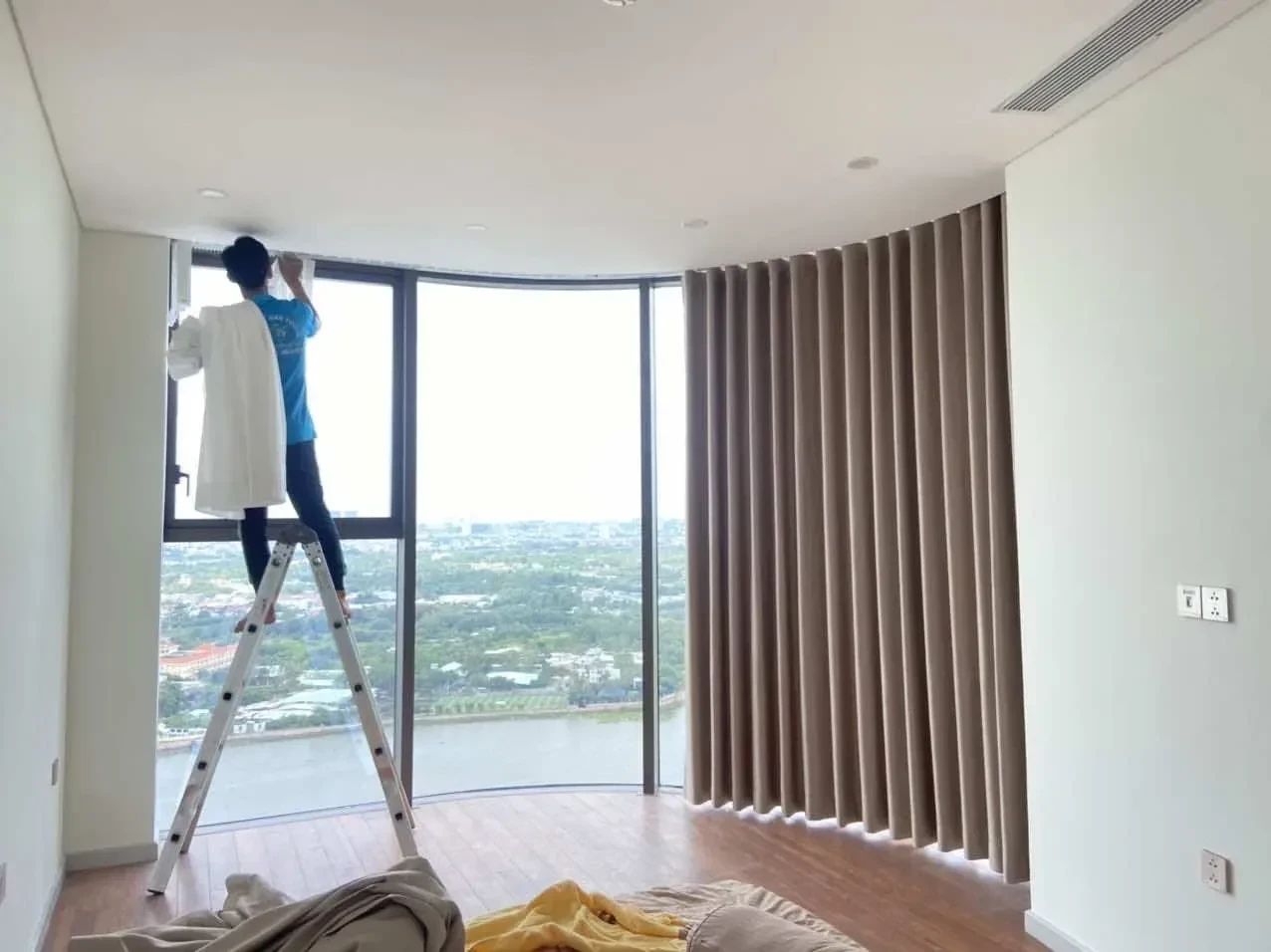
The result is clear: the most important part of a site survey here is not the width but the height and how the area where the curtain meets the ceiling is handled. The taller the curtain, the more errors are magnified; a one-centimeter deviation in the track can become a clearly visible gap at the bottom of the curtain.
Why double-layer curtains win in apartments and offices
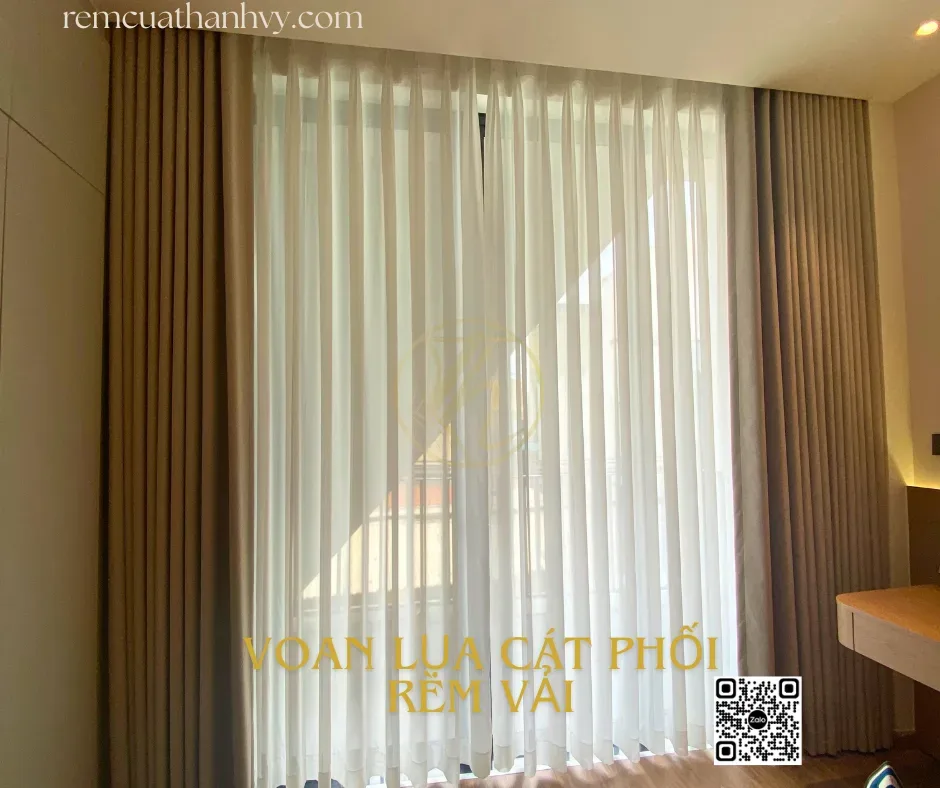
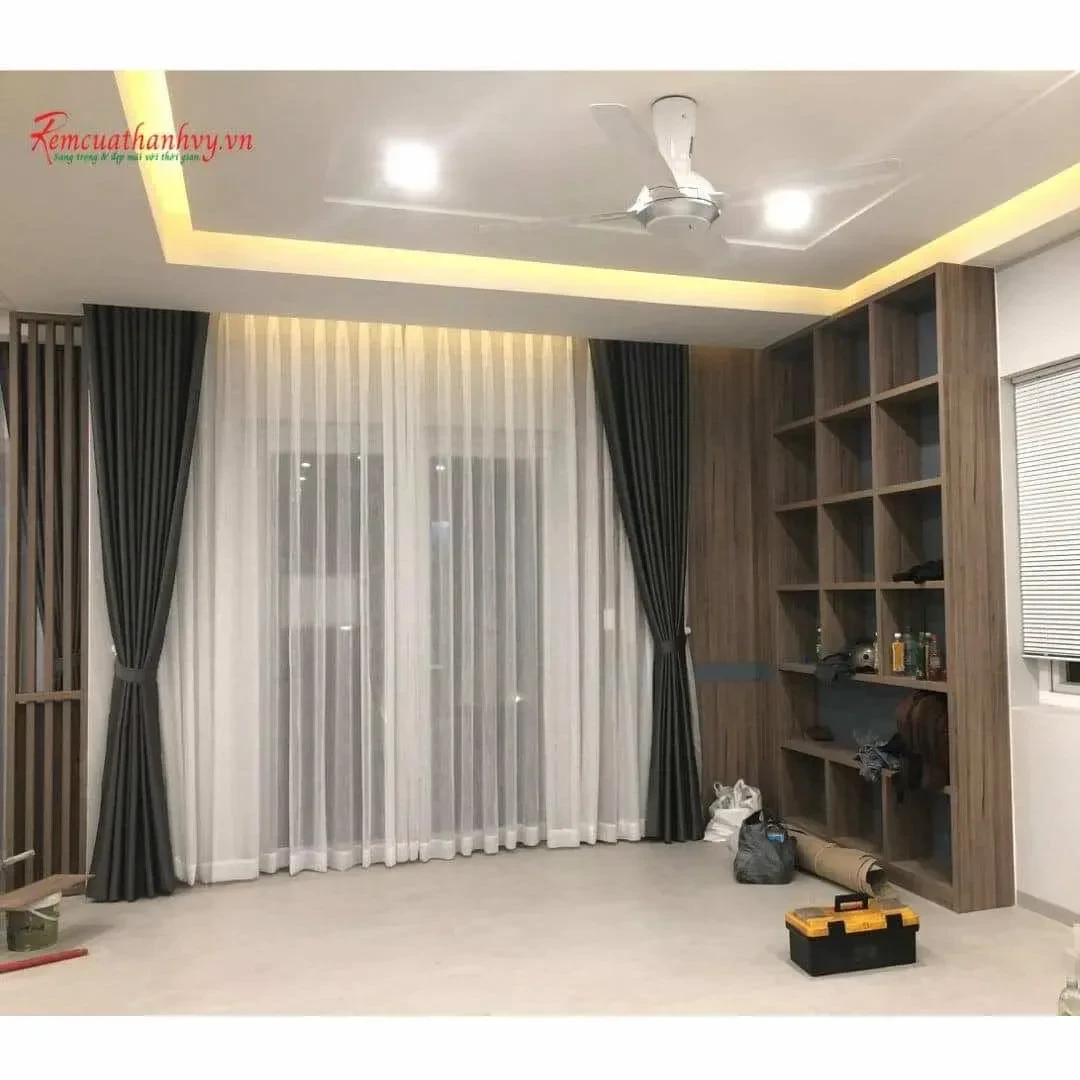
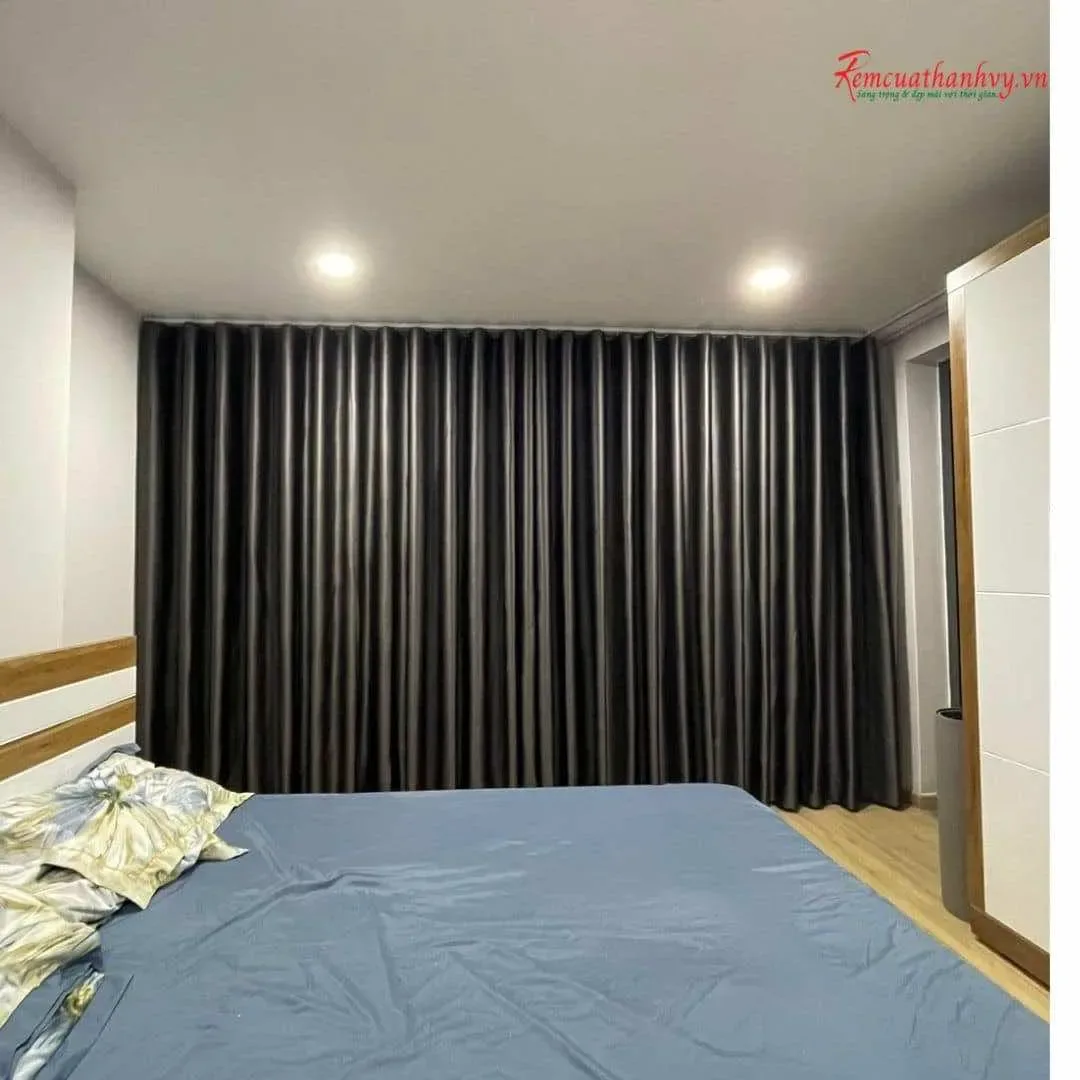
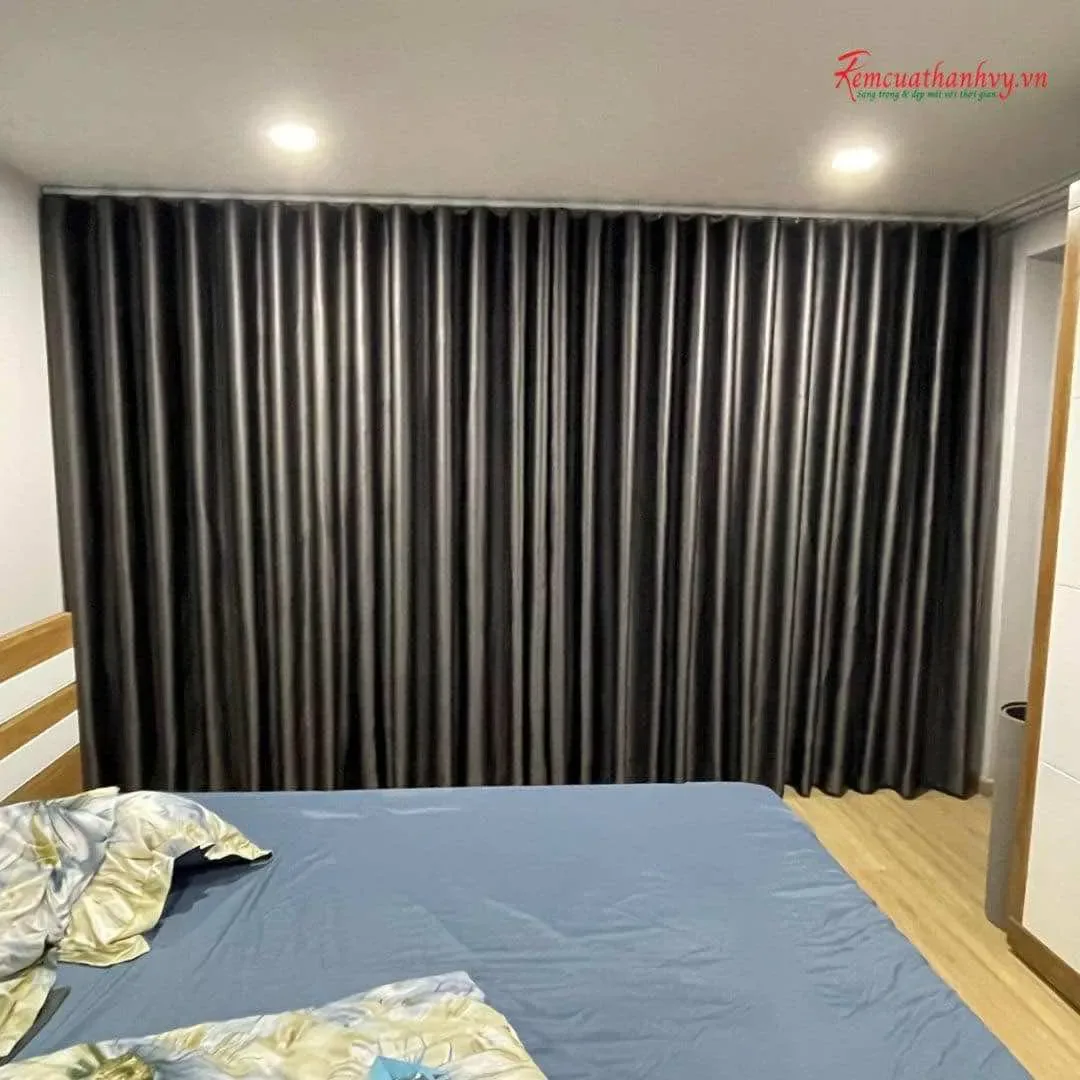
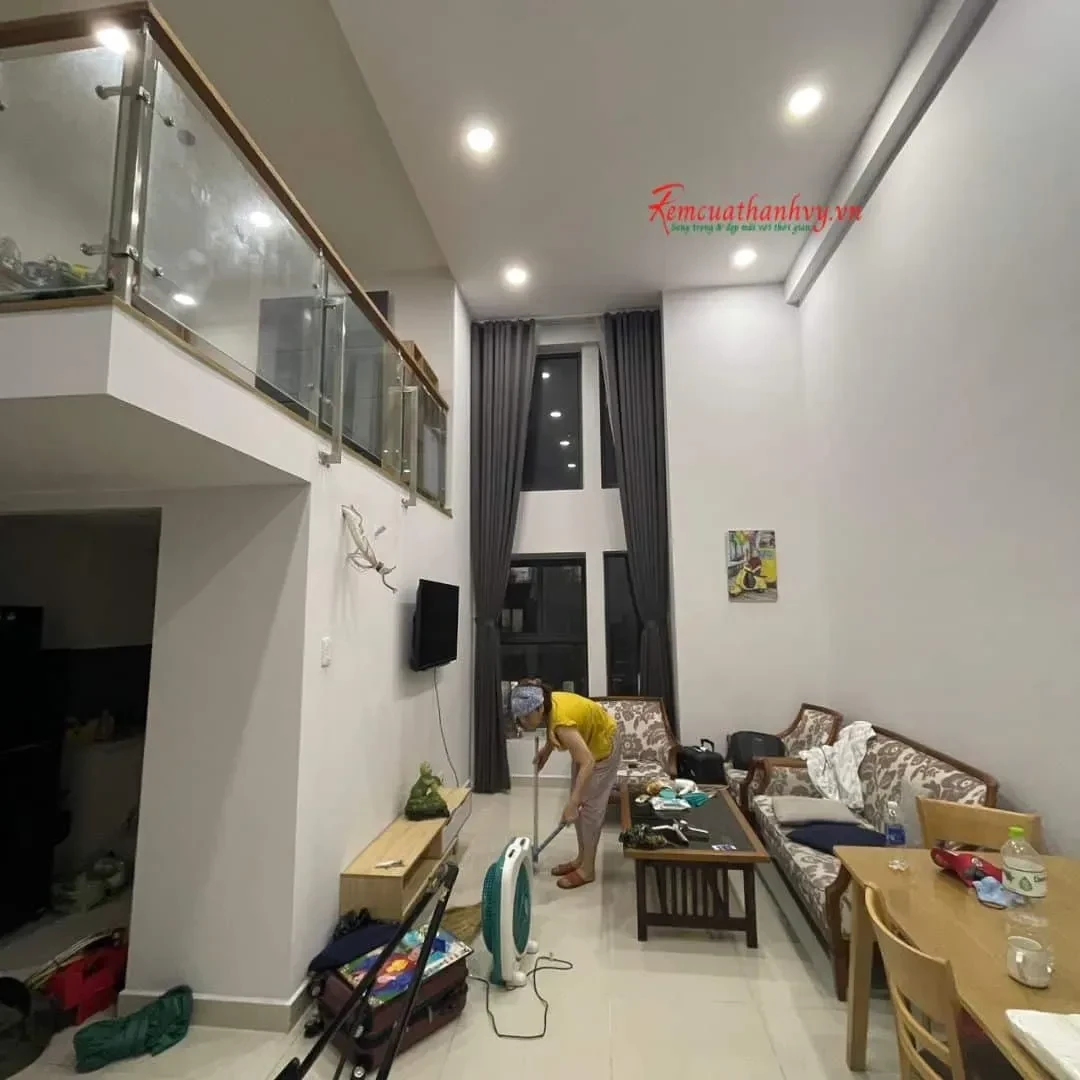
Three projects used a two-layer configuration, and all three were spaces with large windows exposed to strong light. At the split-level apartment at La Astoria Apartments, two-layer curtains in dark gray were installed to cover the entire height of the glass doors. This approach is not only about blocking light: when the fabric runs continuously from ceiling to floor, the eye perceives an uninterrupted height, making the apartment appear taller than it actually is. Interested readers can review polyester fibers in the textile industry before making a decision.
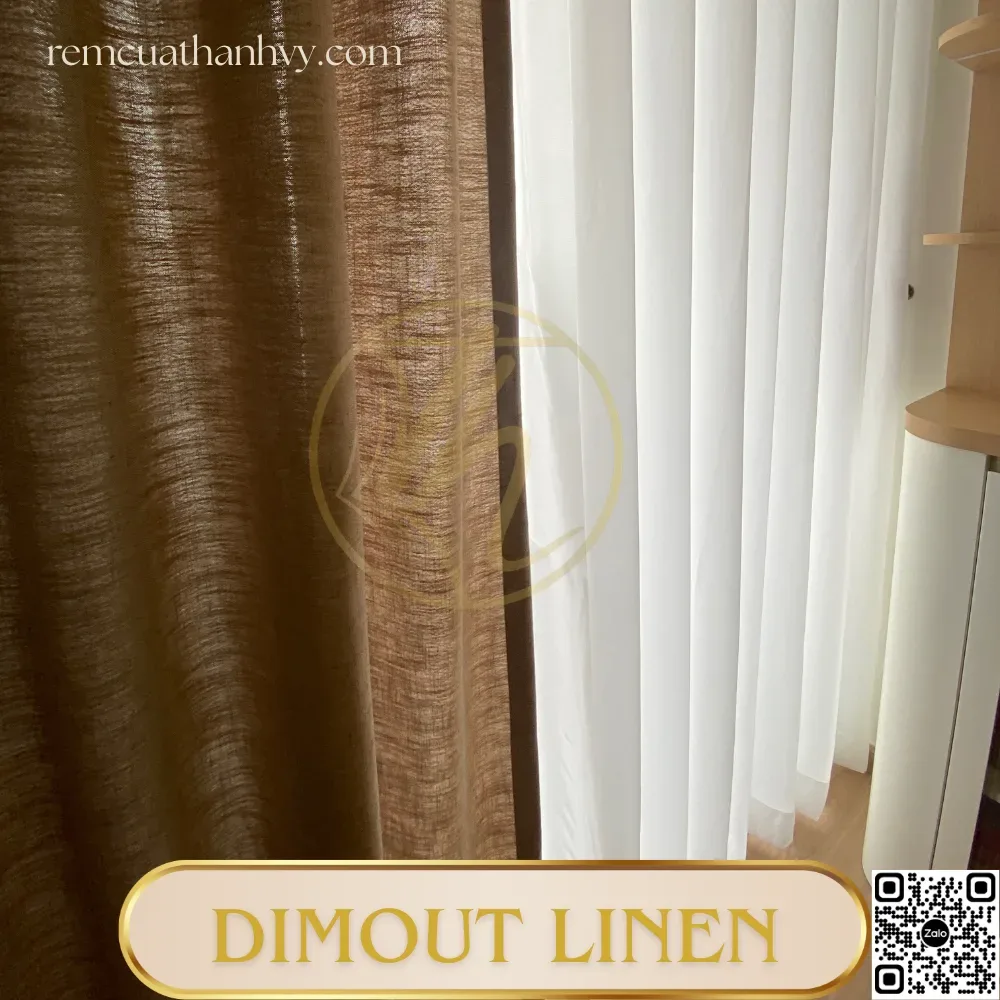
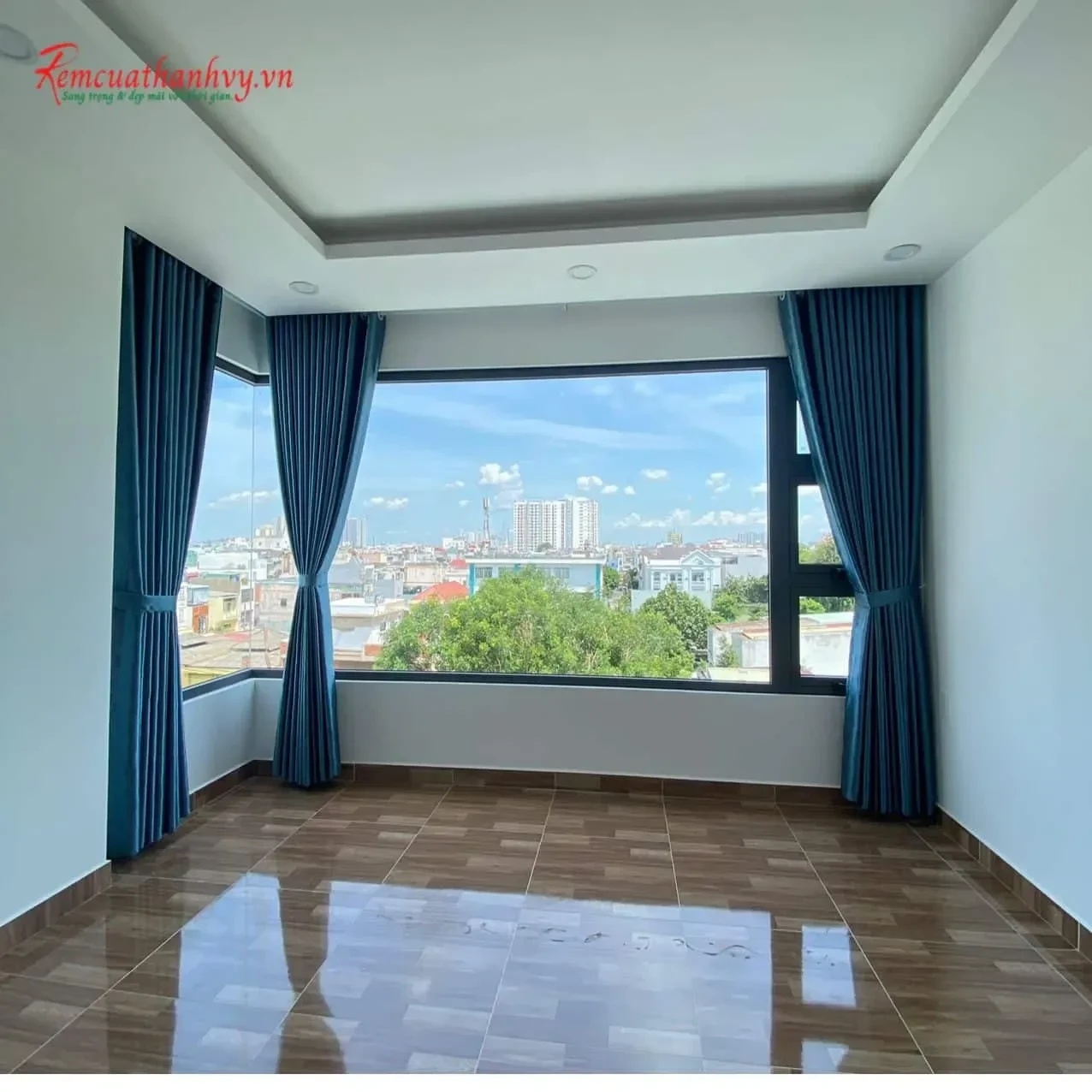
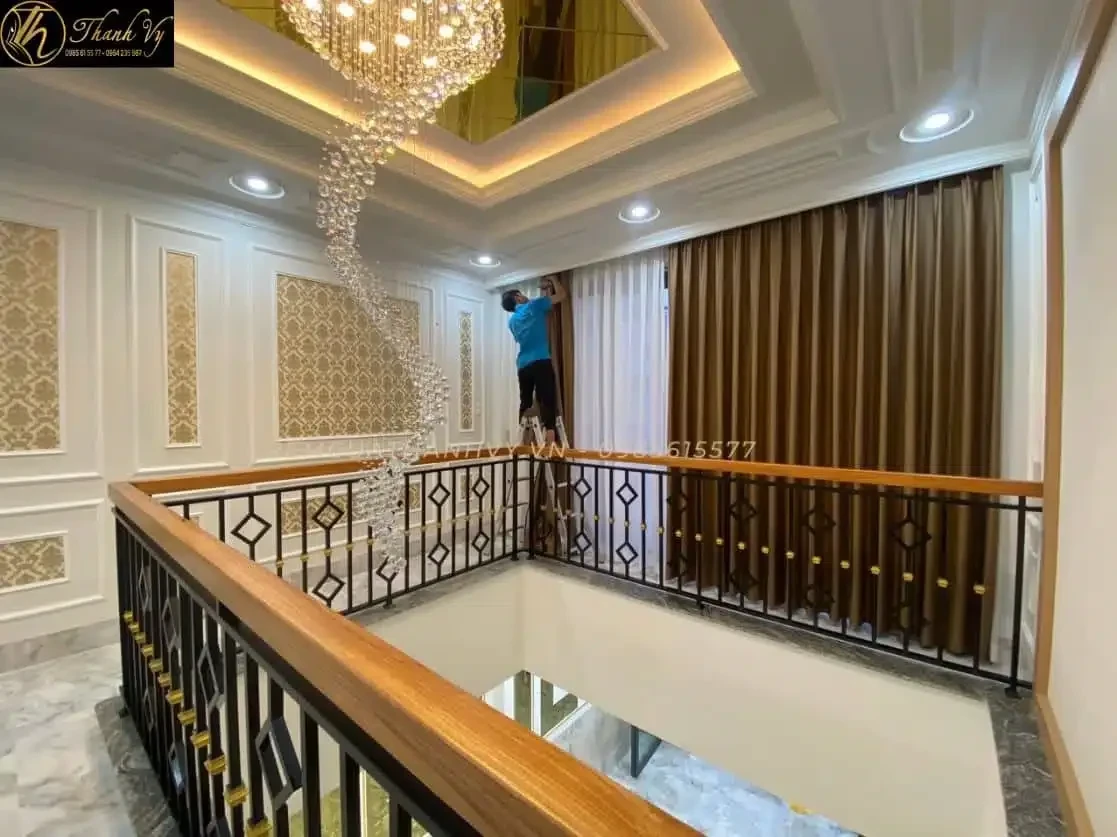
At the Masteri Centre Point apartment, the wide city-view window was fitted with a black outer layer and a cream-white inner layer, with the track mounted close to the ceiling to take advantage of the height. This is the most suitable configuration for a high-floor apartment: the inner layer is used almost all day to filter light and preserve the view, while the outer layer is drawn only when sleeping or when direct sunlight comes in.
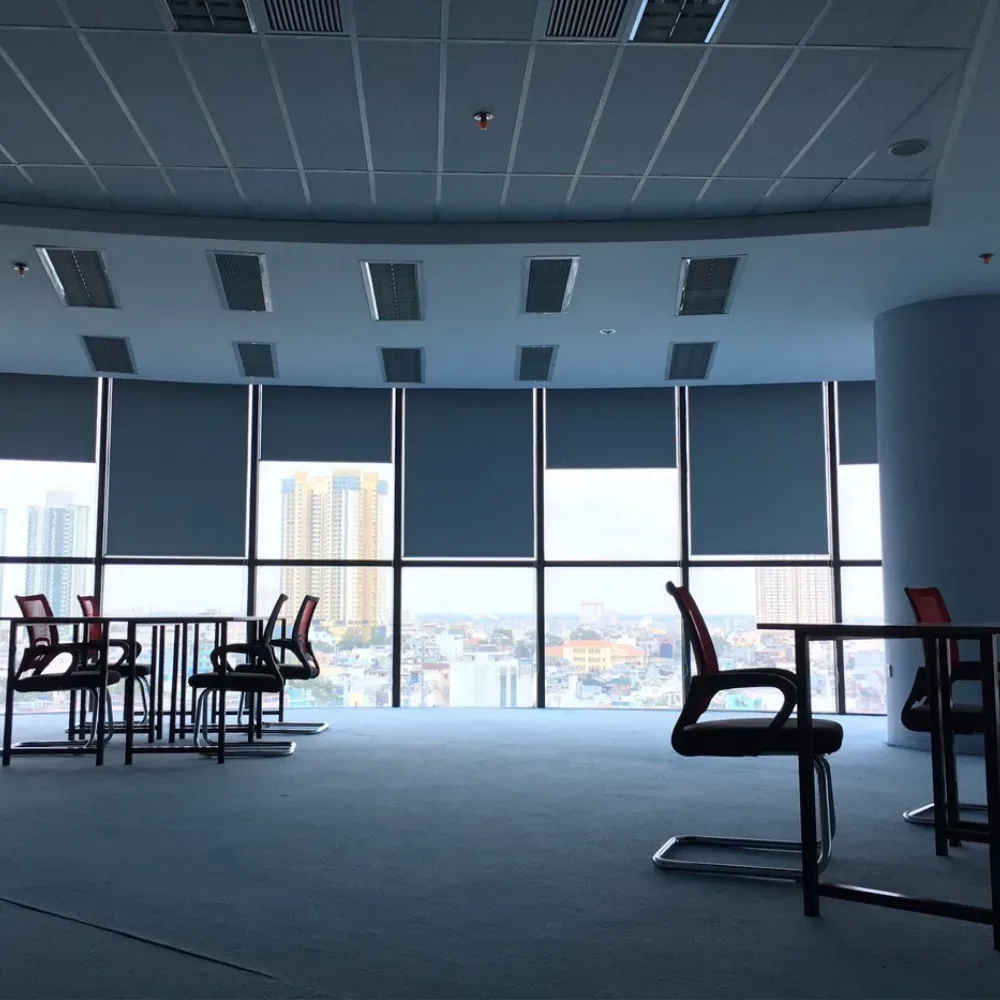
At the MAXEU office in Van Phuc urban area, the logic was similar but the reason was different: the office needed to block glare on screens at certain times without turning the workspace into a cave. A gray blackout layer paired with a fine mesh sheer layer solves exactly that problem.
But two-layer curtains come with a cost few people mention in advance
This is the part most often overlooked during consultations. Two layers mean two tracks, and two tracks need depth. Many apartments handed over in Thu Duc do not have a curtain recess built into the ceiling. In that case, you have only three options: accept exposed tracks, add an externally mounted curtain box, or modify the gypsum ceiling. None of these options is free, and all three should be decided before signing the contract, not on installation day.
The second point is the fabric stackback. Two layers of fabric running three meters high will create a thick mass of fabric on both sides of the door when opened, and that mass takes away part of the glass. For an apartment bought for its view, this is a real loss, not a minor detail.
The third point is operating cost. Twice as much fabric means twice the effort to remove and wash it, and with ceiling-high curtains, removal is not something everyone can do themselves. If complete blackout is not truly necessary, a single layer of fabric with the right thickness is sometimes the more sensible option.
As for the black outer layer used in the Masteri project, you should know in advance that a dark surface exposed to direct sunlight will absorb heat, and the inside of the curtain will become noticeably hot at midday. It is still an attractive choice, but do not expect it to make the room cooler than a light-colored, highly reflective fabric.
Zebra blinds in townhouses: where they excel and where they fall short
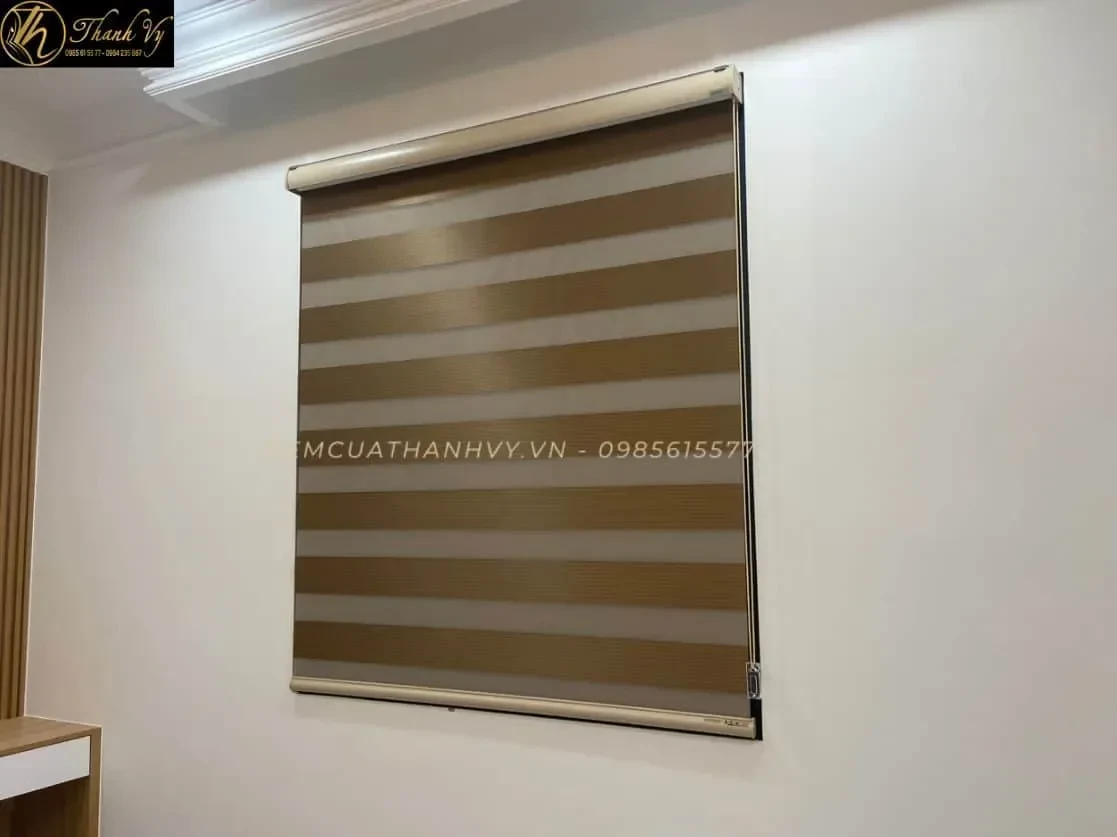
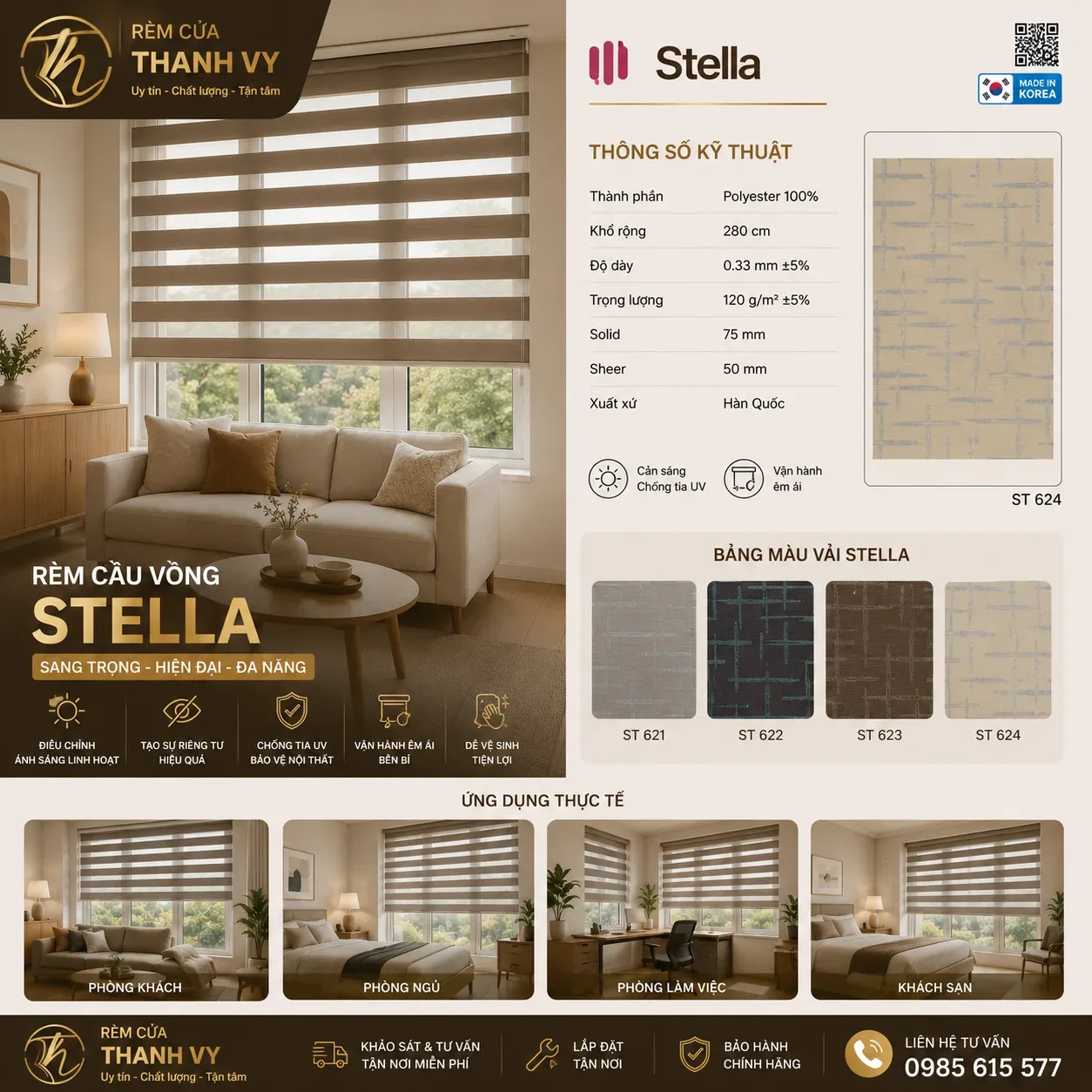
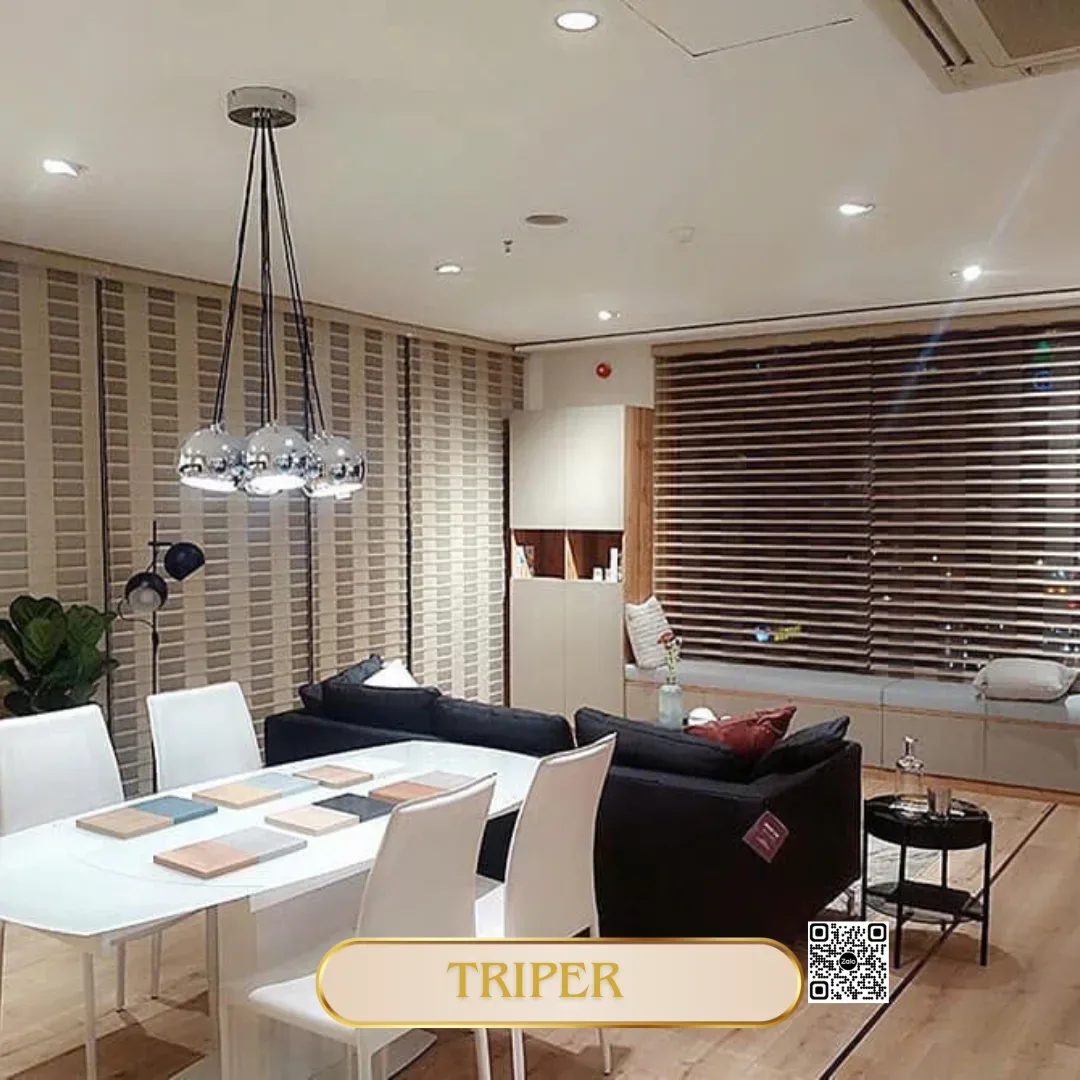
Both townhouse projects in the group used horizontal-striped roller blinds, and that reflects a trend in the area. At the Thao Dien townhouse, the large glass doors opening onto the garden were fitted with dark gray fabric curtains paired with zebra blinds. At the Hiep Binh Chanh townhouse, the high-ceilinged living room facing the balcony also used zebra blinds for the large glass area, while pleated fabric curtains handled the aesthetics.
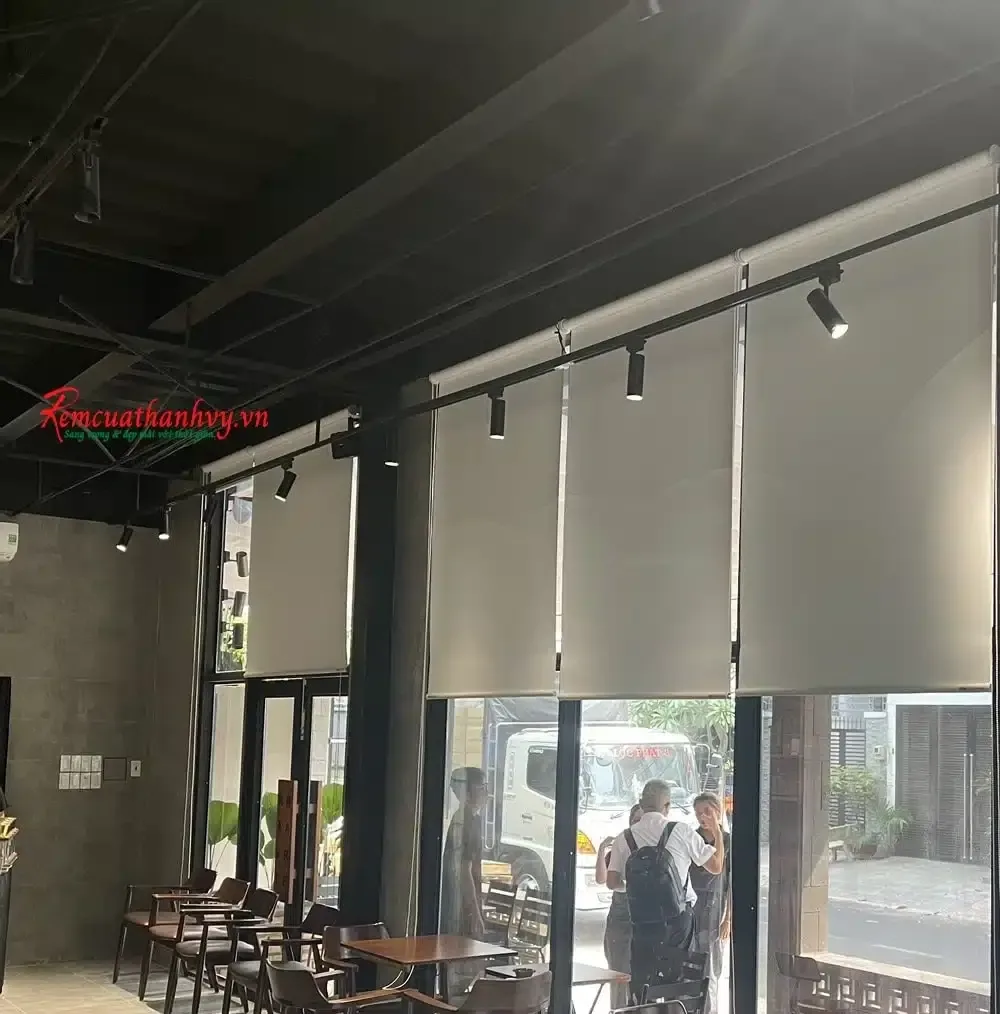
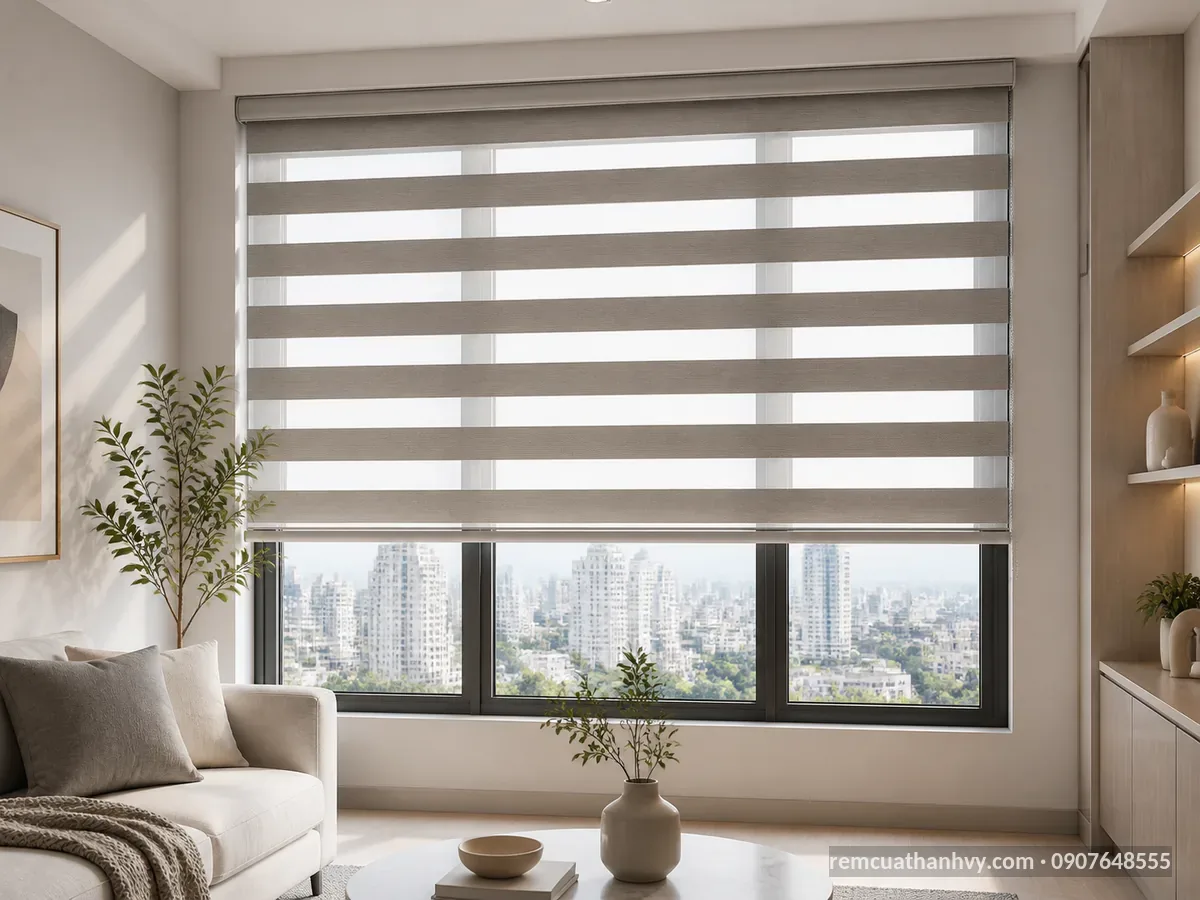
Zebra blinds genuinely excel at one thing: adjusting brightness in increments without needing to open them completely. In a home with a yard or balcony, you often want to look outside without letting people outside look in, and this curtain style addresses that need by rotating two staggered fabric bands.
But this is where they fall short, and it needs to be said plainly. Zebra blinds do not provide complete blackout. Even when fully closed, light still enters through the side edges and the gap between the blind and the wall, so they cannot replace blackout curtains in a bedroom facing the early morning sun. That is precisely why both townhouses mentioned above had to be paired with fabric curtains rather than using zebra blinds alone.
The second weakness is wind. Doors opening onto a balcony or garden are frequently exposed to drafts, and a freely hanging zebra blind will bang against the glass frame. Unless a bottom-retention solution or a sufficiently heavy bottom bar is included, this nuisance will appear within the first week.
Homes with gardens: the most beautiful, but also the most demanding
The Thao Dien townhouse is among the projects with a green garden, high ceilings, and a brass chandelier—in other words, a space already rich in detail. Choosing dark gray curtains there means choosing to create a solid area as a backdrop, not to add more decoration. This is the right decision: when a room already has strong focal points, curtains should step back into the role of framing the view. Information about the unit also appears in the role of the window opening.
But a home opening onto a garden brings two hidden costs. First, dust and pollen cling to the fabric much more than in an enclosed home, so smooth, light-colored fabric requires a more frequent cleaning schedule. Second is humidity: areas near greenery are more humid, and thick fabric hung close to frequently opened doors needs to be pulled aside for ventilation; it should not be gathered in one place throughout the rainy season.
For homeowners in areas such as Tam Binh Ward, where many newly built homes have front yards, these are two things to ask about carefully before deciding on the material.
Send your dimensions and needs, and the Thanh Vy Curtains team will advise on options and quote for your actual space.
Motorized curtains: when they are worth the money and when they are wasteful spending
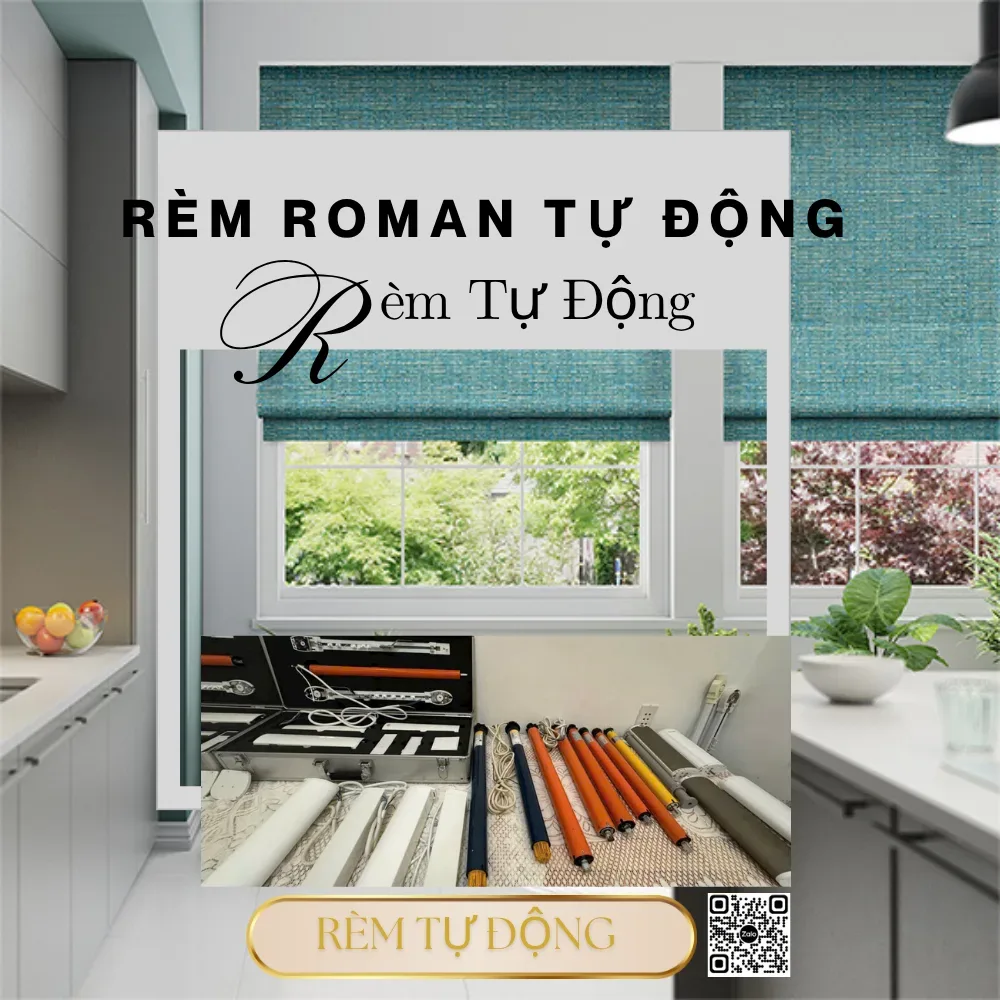
At the Thao Dien villa, we installed a motorized fabric curtain system for a bedroom with tall glass windows, along with vertical blinds and roller blinds for other areas. In exactly this context, the motor is worth the investment: the windows are out of reach, there are multiple curtain sets in one home, and the homeowner wants to control them in groups instead of pulling each panel individually.
But we do not recommend motorized curtains by default for apartments. First, the motor needs a power source, and the outlet location must be decided before the walls are finished; otherwise, you have to accept exposed wiring or a battery-powered option. Second, every electrical mechanism is a potential point of failure, and when it breaks, repairs depend on replacement parts rather than the tailor’s skill. Third, for floor-level windows that can be operated by hand, the added convenience is very small compared with the added cost.
In short: automation should be determined by height and the number of panels, not by the budget.
Offices and showrooms: two problems that look alike but are opposite
People often place offices and showrooms in the same commercial-space category, but the two projects in the portfolio show the opposite.
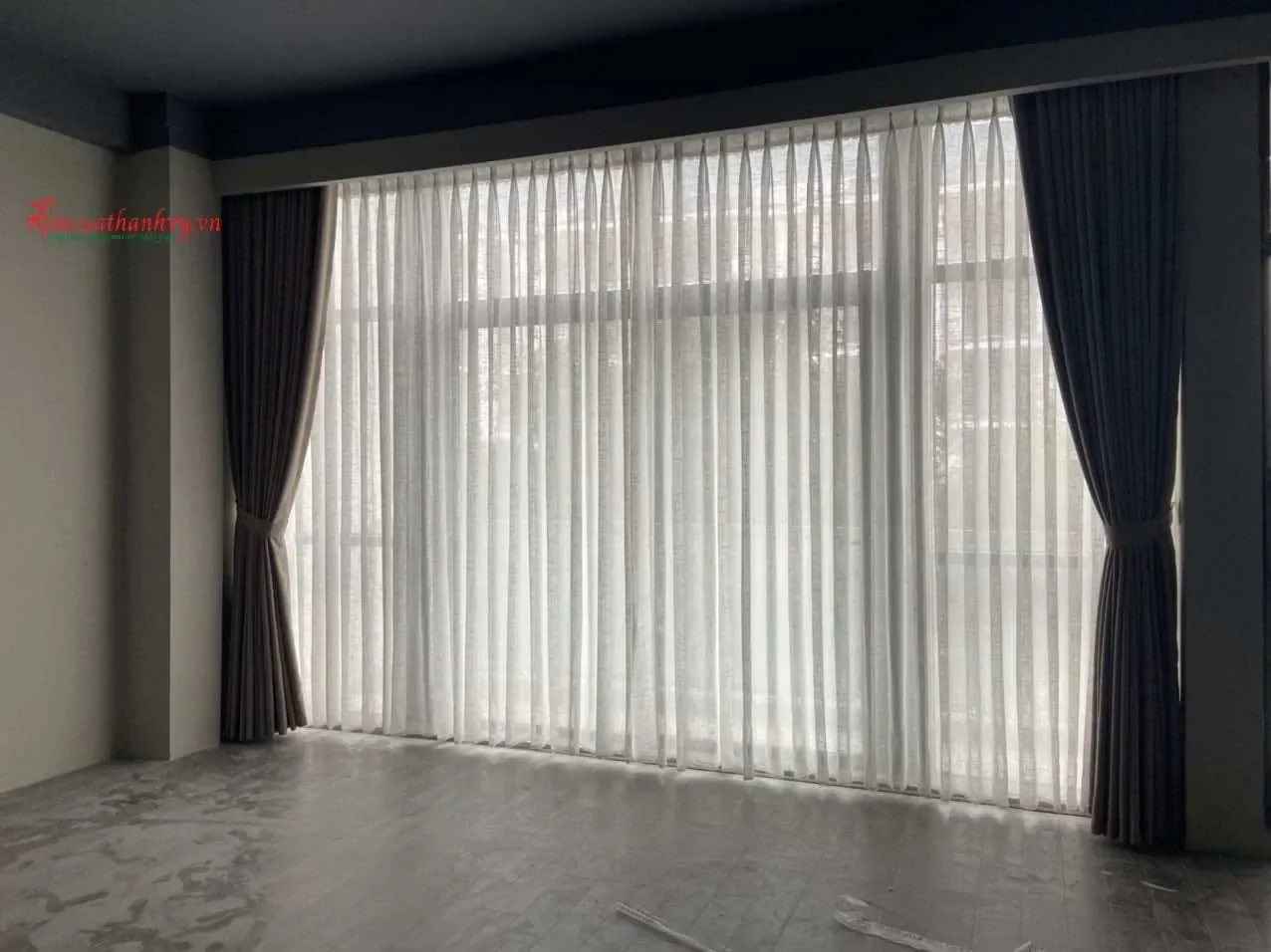
An office needs to block. At the MAXEU project, the goal was to eliminate glare and maintain focus, so the blackout layer was the main layer and the sheer layer was secondary. You can also refer to polyester fibers in the textile industry to better understand the material.
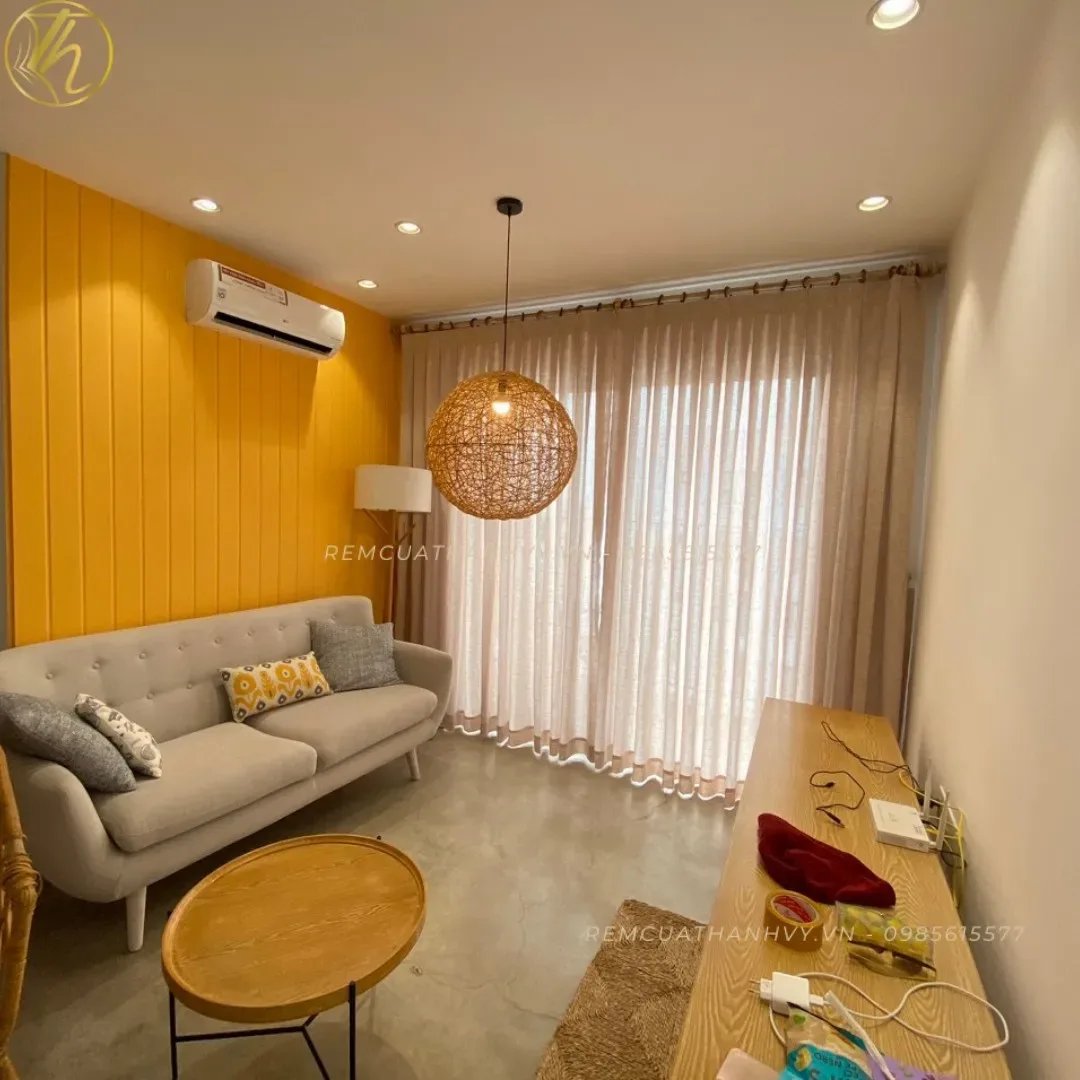
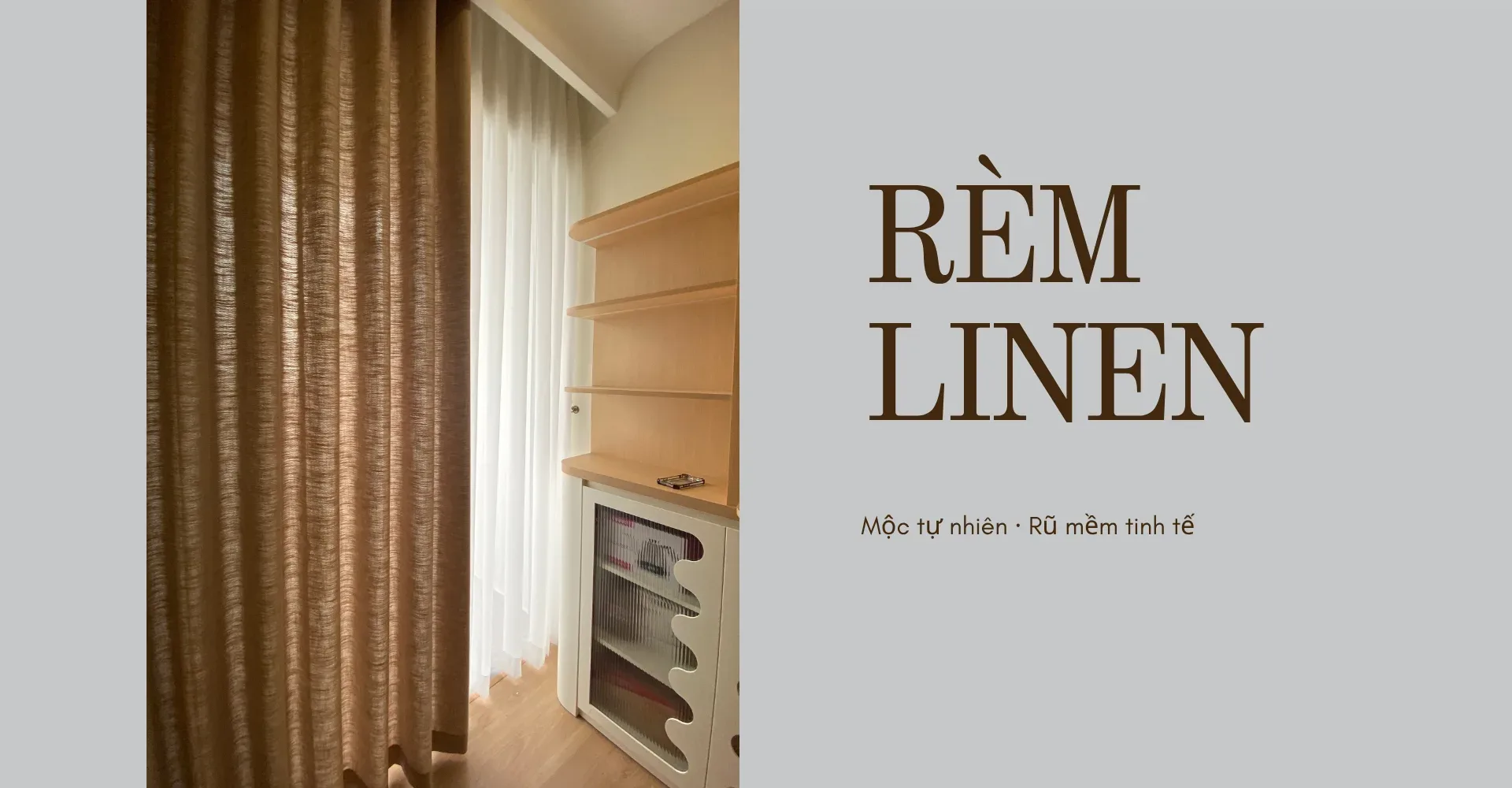
A showroom needs to invite people in. At the MELOSA Garden Khang Dien showroom, the bright white walls and large windows are fitted with single-layer fabric curtains in a gray tone, with tiebacks to create folds. Here, the curtains are almost purely aesthetic, softening the white wall and framing the window opening.
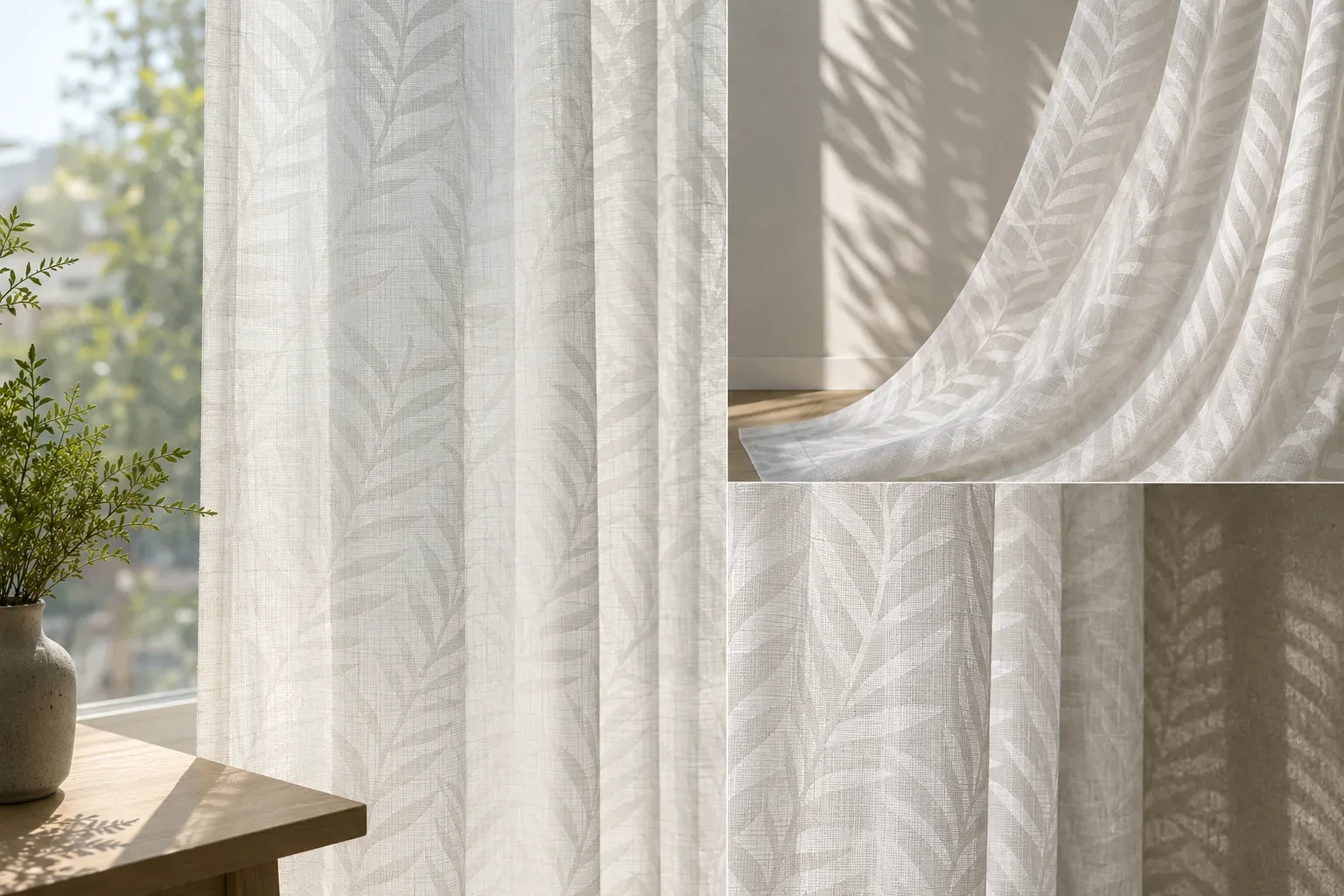
The limitation must be stated clearly: a single layer of thin, light-colored fabric is not a sun-blocking solution. If the display area receives direct sunlight on the products for many hours, a single-layer configuration is insufficient, and choosing it simply because it looks light and elegant means choosing the wrong objective. In that case, a separate blocking layer must be added, or the solution should be switched entirely to roller blinds.
Glass partitions with curtains: a powerful solution for apartments, but do not rush into it
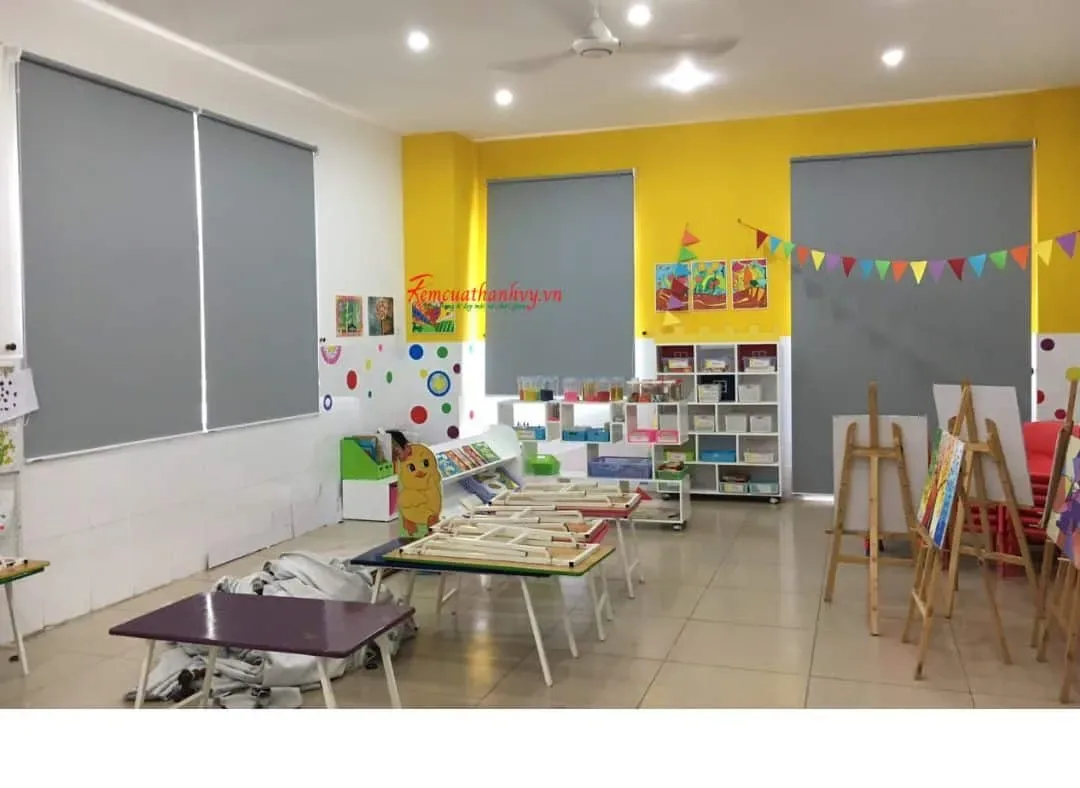
The glass partition with roller blinds at Vinhomes Grandpark is the most distinctive case among the eight projects. Here, the curtains do not merely cover the windows but are part of a room-dividing system comprising a black aluminum-framed tempered-glass partition, sliding doors, and vertical blinds. For an apartment that needs to separate a private area without building a brick wall, this option preserves the most natural light.
Three things need to be considered before going in this direction. First, a glass partition is a fixed and heavy item, completely different from a curtain set that can be removed and replaced after a few years; it should be decided together with the interior design, just as this project did during the finishing stage. Second, many apartment buildings have their own regulations regarding drilling into ceilings, drilling into floors, and modifying fixed elements inside the apartment, so confirming with the management board beforehand is mandatory, not optional. Third, even textured frosted glass transmits sound better than a wall, so do not expect it to provide the quiet of a fully enclosed bedroom.
Three common mistakes in apartments and new homes in Thu Duc
The first mistake is letting curtains touch the floor at doors leading to the balcony. Floor-length curtains look very elegant in photos, but at frequently used entrances, the fabric hem gets dirty fastest and is often stepped on when opening the door. For doors, leave a small gap.
The second mistake is measuring for curtains before the flooring is finished. With three-meter-high curtains, a difference of a few centimeters in floor level is enough for the curtain set either to brush the floor or leave a gap at the bottom. Measure after the finished floor level has been fixed.
The third mistake is choosing curtains based on model-apartment photos. Model apartments are usually staged with standard curtain recesses and carefully arranged lighting; actual handover apartments rarely look the same. Choose based on the actual ceiling conditions and the real sun exposure of your apartment, especially in areas with many newly handed-over projects such as Phuoc Long Ward and Tang Nhon Phu Ward.
Conclusion: in Thu Duc, choose according to the ceiling and the direction of the sunlight
Summarizing the eight projects, the two-layer configuration proved suitable for apartments and offices with large glass surfaces; zebra blinds performed well in townhouses that need both an outside view and privacy from outside; while single-layer curtains should only be used when the goal is truly aesthetic. Automation and glass partition walls are worthwhile investments, but only in the right contexts.
The most important thing to remember: with tall windows, success or failure depends on the area where they meet the ceiling and on whether you finalize the solution early or late. Choosing the fabric is the final step, not the first.
For further information, please contact Thanh Vy Curtains
We provide free consultation and on-site measuring at your home.
Related projects
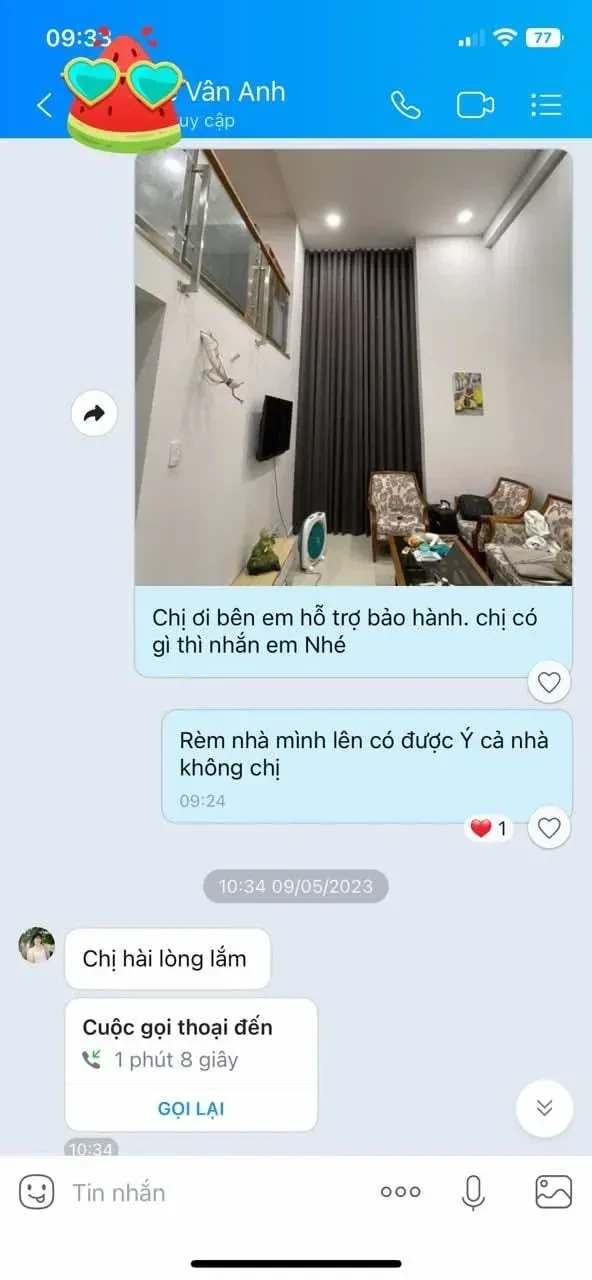
Double-Layer Floor-to-Ceiling Curtains for a La Astoria Apartment, Thu Duc City
The double-layer curtain project at a La Astoria apartment in Thu Duc District is one [...]
Double-Layer Blackout Curtains at the MAXEU Office – Van Phuc Urban Area
The blackout curtain installation at MAXEU interior design company, 189 Nguyen Thi Nhung, Van Phuc [...]
Premium Motorized Fabric Curtains for a Thao Dien Villa, District 2
This project at a villa in the Thao Dien area of District 2 (Ho Chi [...]
Gray Fabric Curtains at the MELOSA Garden Khang Điền Showroom, District 9
The fabric curtain project at the MELOSA Garden Khang Điền sales showroom (District 9, Ho [...]
Dark Gray Fabric Curtains & Zebra Blinds – Thao Dien Townhouse, District 2
This project in Thao Dien, District 2 – one of the most upscale townhouse areas [...]
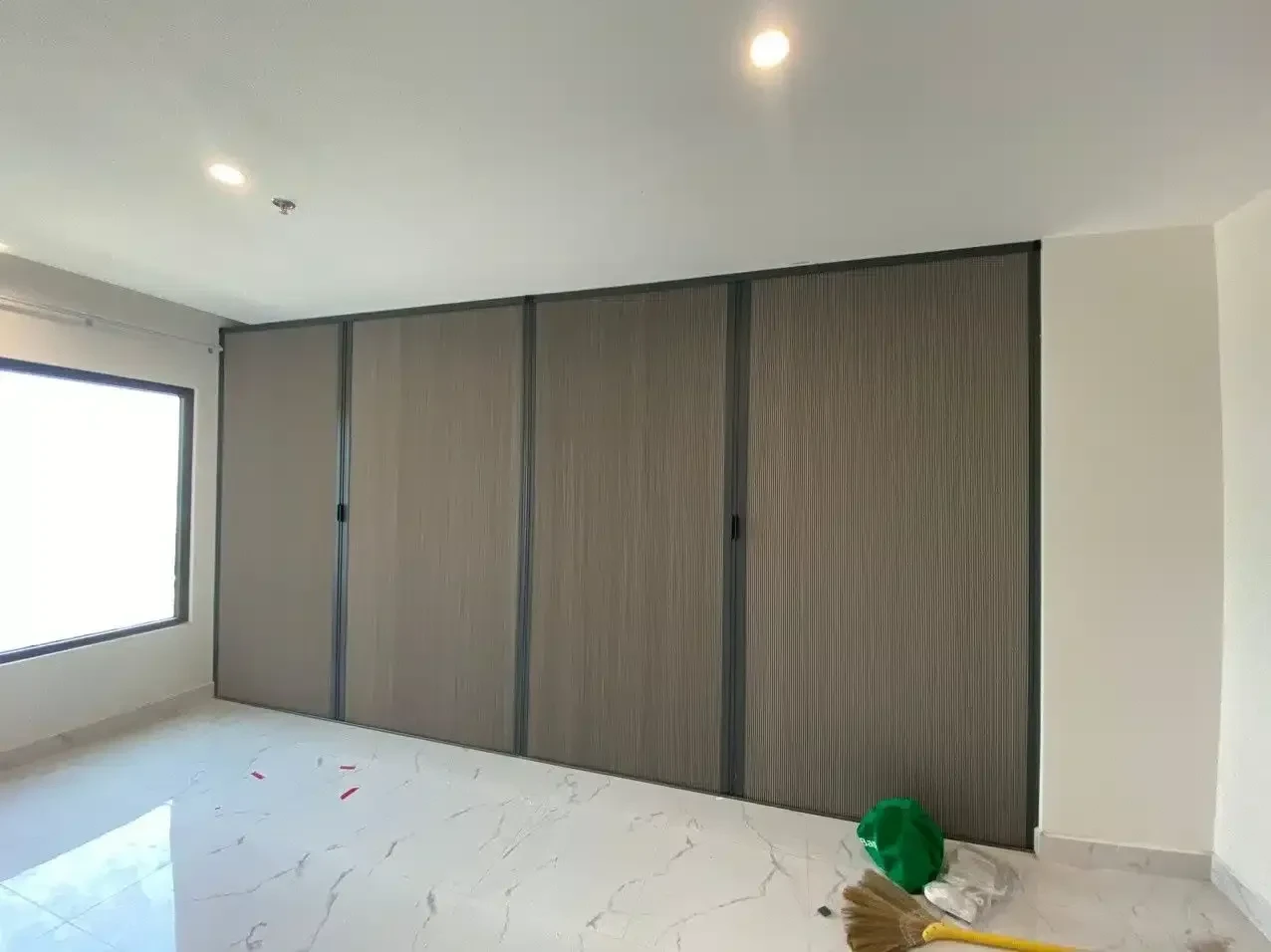
Glass Partition with Roller Blinds at Vinhomes Grand Park – BS-16 Apartment
This project at Vinhomes Grand Park, in the BS-16 tower, was a luxury apartment interior [...]
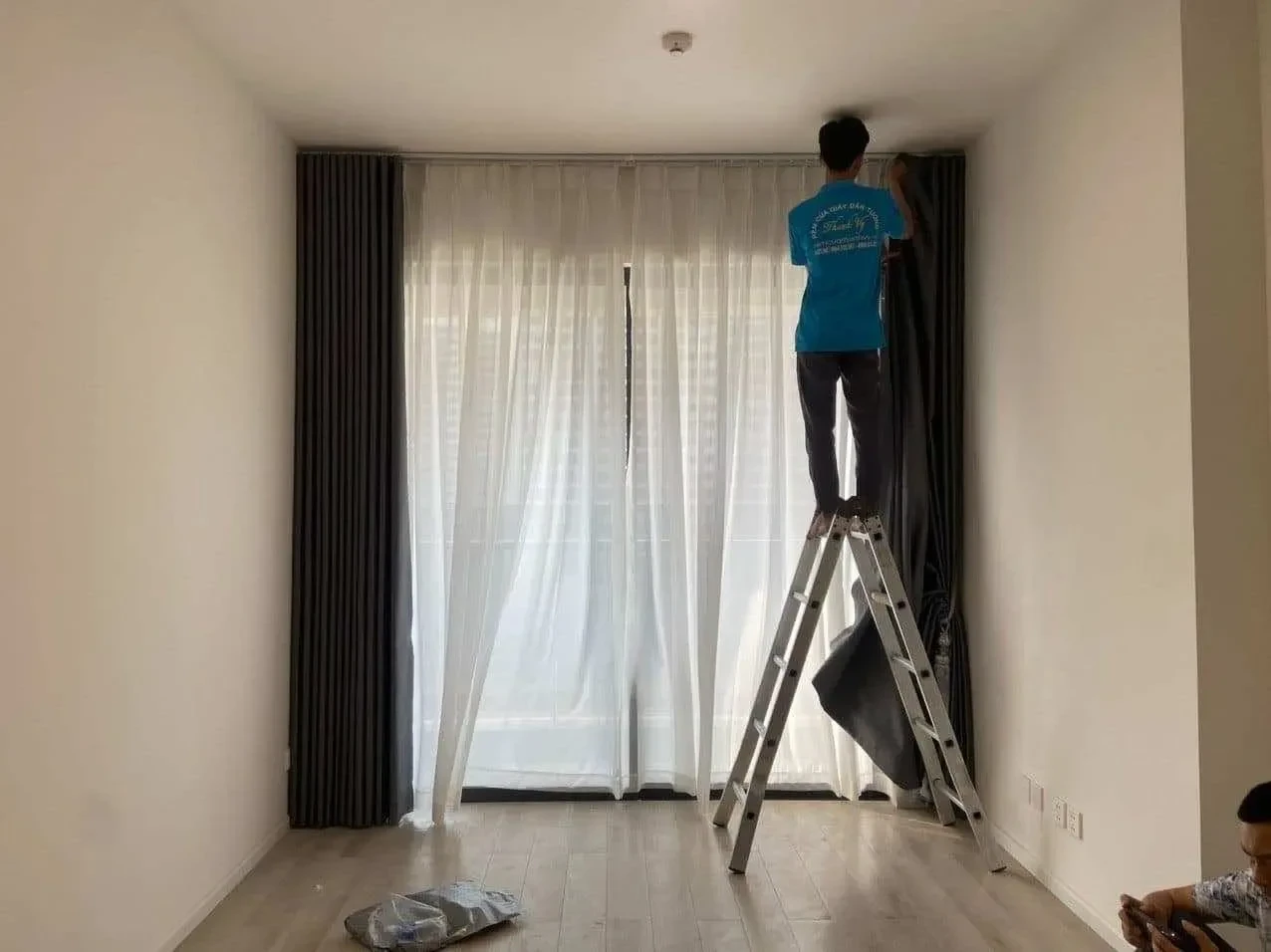
Black-and-White Double-Layer Curtains for a Masteri Centre Point Apartment in District 9
This project involved installing a double-layer curtain system for a high-rise apartment at Masteri Centre [...]
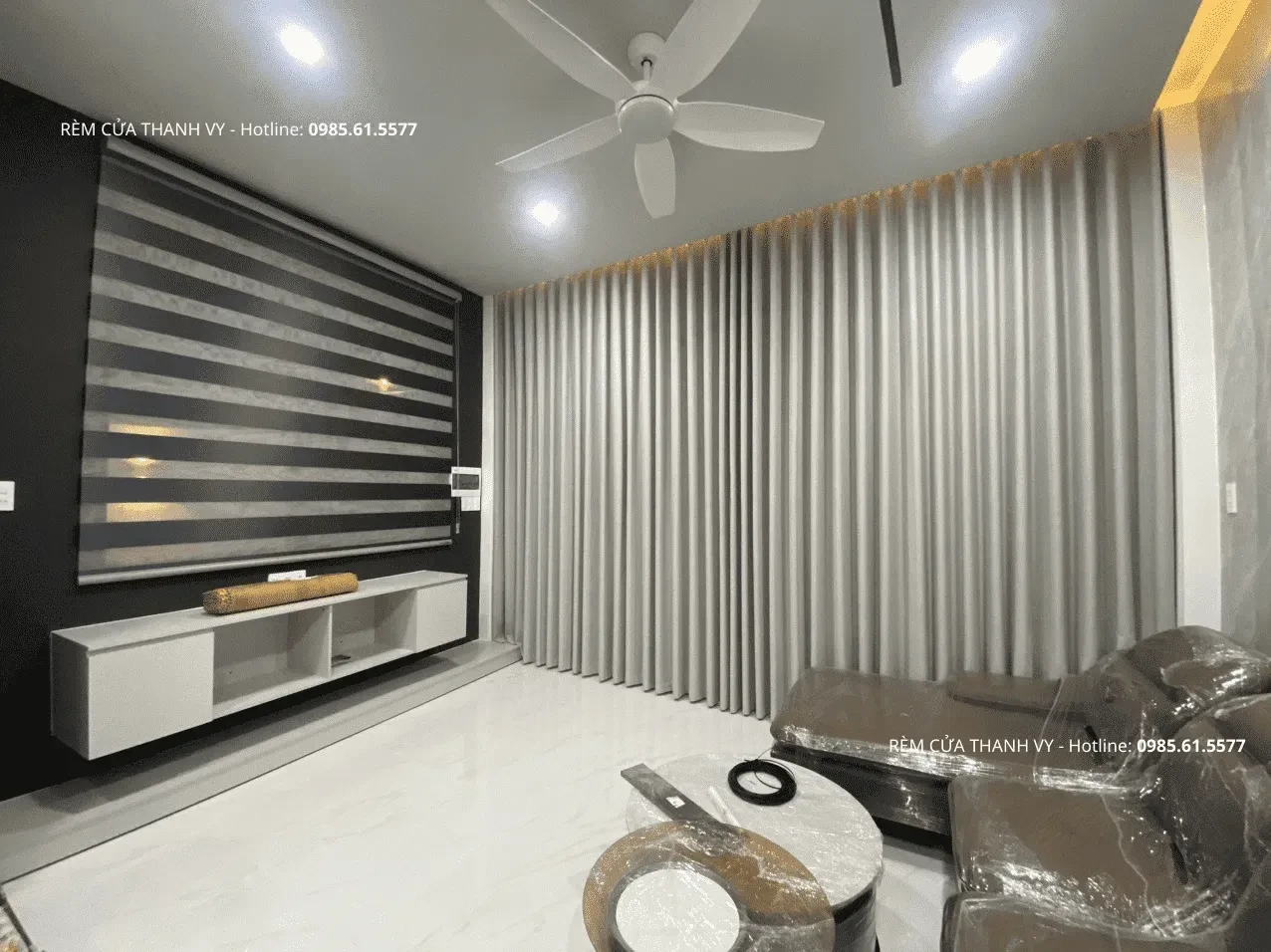
Fabric Curtains Combined with Zebra Blinds – Hiep Binh Chanh, Thu Duc
This project in Hiep Binh Chanh, Thu Duc, features a modern townhouse living room with [...]
Related areas
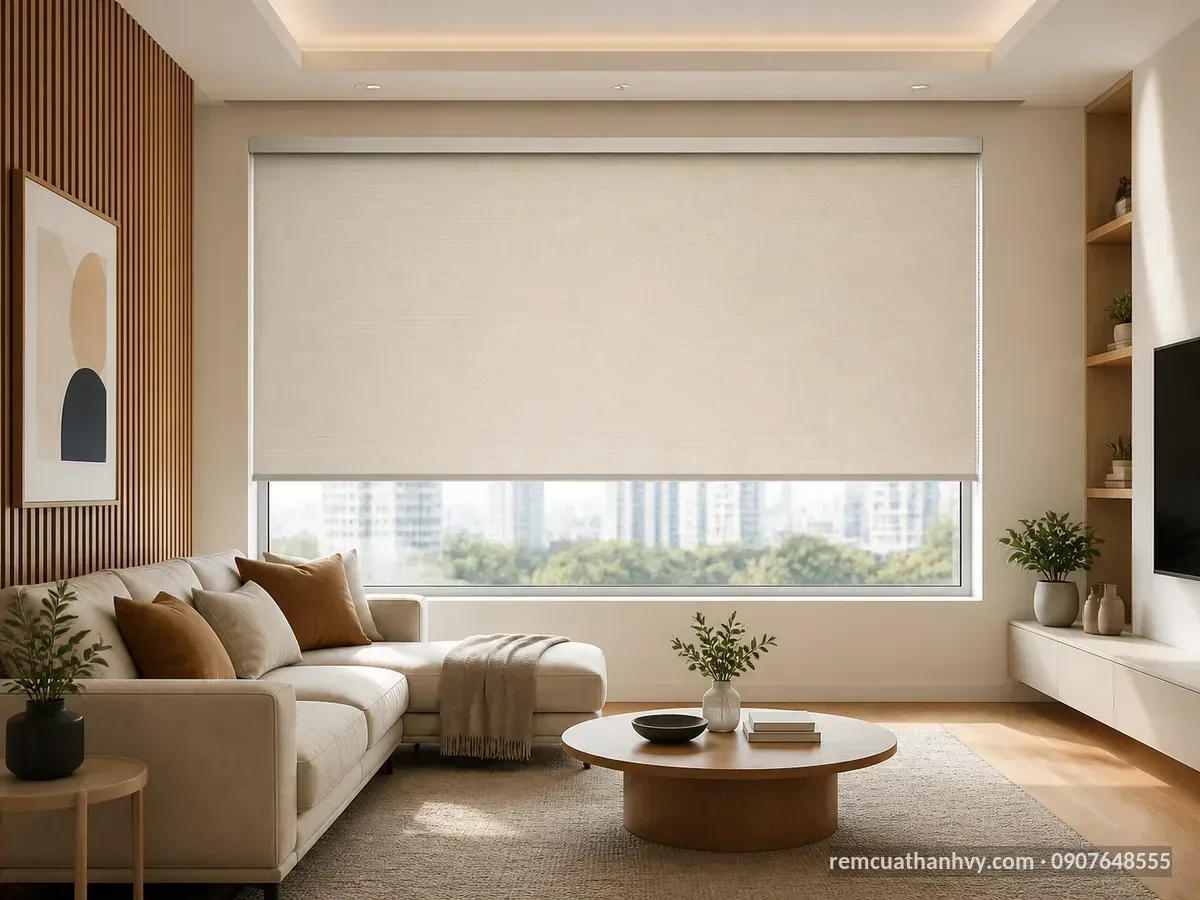
Thu Duc Curtains: Priorities when choosing for each space
With years of hands-on workshop experience, Rem Cua Thanh Vy is ready to advise on [...]
Curtains in Thu Duc Ward, Thu Duc: on-site measuring and installation using the new address
On-site curtain measuring and installation in Thu Duc Ward, Thu Duc. The new ward was [...]
Curtains in Tăng Nhơn Phú Ward, Thủ Đức: On-Site Measuring and Installation at Your Address
Curtain measuring and installation in Tăng Nhơn Phú Ward, Thủ Đức. The new ward was [...]
Curtains in Tam Binh Ward, Thu Duc: on-site measuring and installation at your new address
Curtain measuring and installation in Tam Binh Ward, Thu Duc. The new ward was formed [...]
Curtains in Phuoc Long Ward, Thu Duc: On-site measuring and installation at the new address
On-site curtain measuring and installation in Phuoc Long Ward, Thu Duc. The new ward was [...]
Curtains in Long Truong Ward, Thu Duc: on-site measurement and installation at your new address
Curtain measurement and installation in Long Truong Ward, Thu Duc. The ward was formed by [...]
Curtains in Long Phuoc Ward, Thu Duc: On-site measurement and installation at your new address
Curtain measurement and installation in Long Phuoc Ward, Thu Duc. The ward was newly merged [...]
Curtains in District 12: What to Prioritize for Every Space
With over 15 years of experience working from a private workshop, Rèm Cửa Thanh Vy [...]
No comments yet!