





Curtain Warranty and Maintenance: Checks and Service Under the Policy
Identify the right service: curtain and blind warranty service, maintenance, or repair?
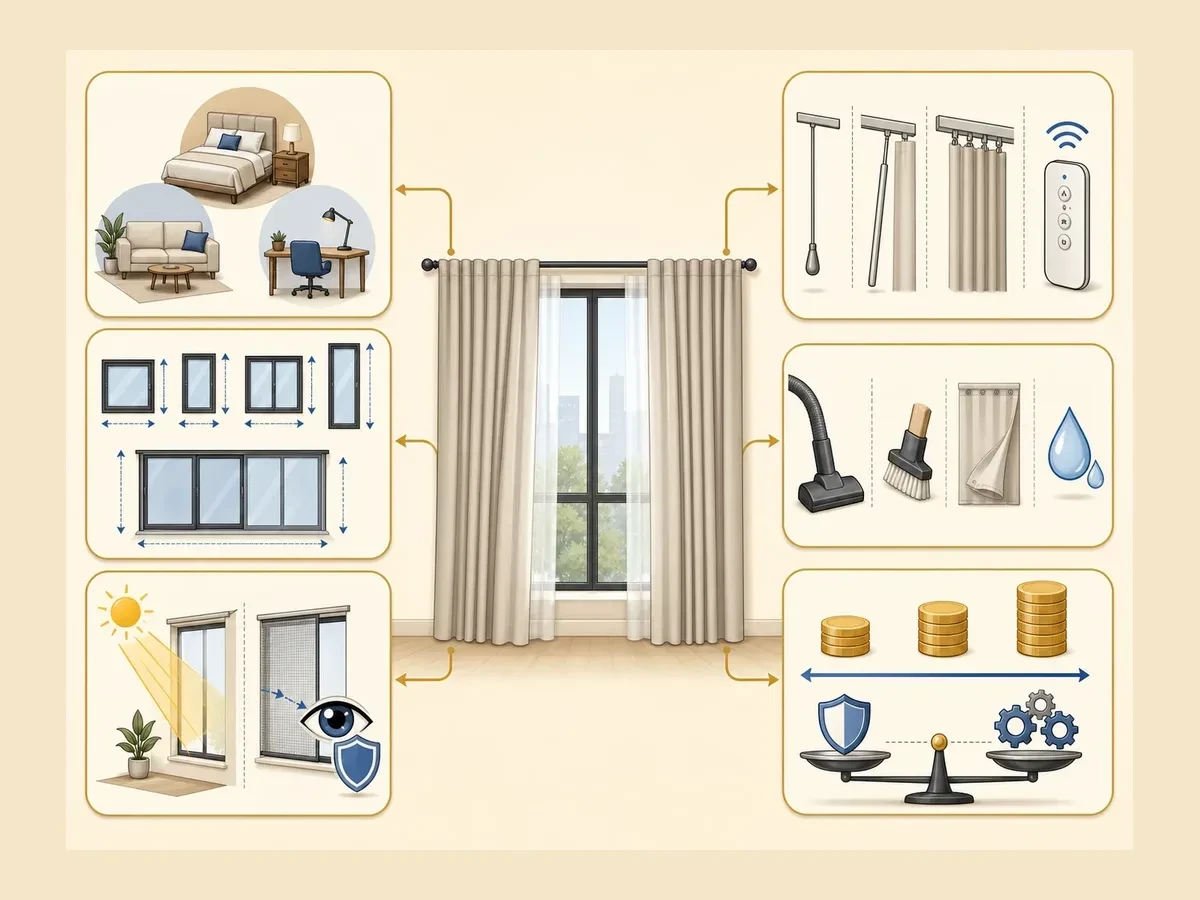
Before submitting a request for curtain and blind warranty service, determine which category the issue falls into: a technical or installation issue that needs to be reported for inspection, dust buildup and stiff operation that require maintenance, or existing damage that requires repair. This initial classification helps you prepare the right information, avoid incomplete descriptions, and choose the appropriate support step.
When should you request curtain and blind warranty service?
Warranty service generally comes into consideration when the product or its accompanying components behave abnormally during use and the user suspects an issue involving materials, manufacturing, installation, or mechanisms. For example, a curtain rod may slip out of position, a track may no longer be straight, a roller shade cassette may become misaligned, a pull cord may jam, or a controller may stop responding. These are only signs to document so the service provider can inspect them; you should not determine the cause based on a single symptom.
For a curtain and blind warranty service request, record when you discovered the issue, the type of curtain or blind, its installation location, and how the issue occurs. A set of fabric curtains in the living room may show different symptoms from zebra blinds at a kitchen window or mesh roller shades on a balcony. A wide-angle photo shows the installation location; close-up photos show the fabric edges, bottom rail, pull cord, mounting brackets, or mechanism housing. A short video of pulling, raising, lowering, or rotating the curtain or blind helps describe the issue more clearly.
When is maintenance appropriate?
Maintenance involves preventive care during use and does not necessarily indicate that the product is defective. Dusty curtains or blinds, fabric creased from being left unused for a long time, dust buildup on the bottom rail, a slightly tangled control cord, or a track that runs stiffly due to dirt may first need cleaning and an operational check. Users should wipe gently with tools suitable for the material, open the curtain or blind as instructed, and observe whether normal movement resumes.
Do not pull forcefully to “test” a curtain or blind when it is jammed. For fabric curtains, pay attention to the pleats, blackout tape, hooks, and drive rod. For zebra blinds, check whether the two fabric layers remain evenly aligned. For roller shades, inspect the fabric edges, bottom rail, pull cord, and roller cassette. If basic cleaning does not improve the symptoms, or if scraping sounds, vibration, tilting, or detached components appear, stop operating the curtain or blind and proceed to request an inspection.
When is repair needed?
Repair is appropriate when a curtain or blind has been affected by external force, improper operation, long-term wear, or components that need adjustment, replacement, or reinforcement. Situations such as a broken cord, bent bottom rail, torn fabric, loose wall bracket, roller tube that cannot hold the shade in place, or a nonworking motor require an on-site assessment before a solution can be determined.
Repair is not the same as curtain and blind warranty service. An issue may be accepted for inspection, but the final outcome still depends on purchase and installation records, the actual condition, and the applicable policy. Therefore, when contacting the provider, describe the issue neutrally: “the roller shade will not stay at the selected height,” “the fabric curtain track is stiff when pulled,” or “the sheer bands of the two zebra blind layers do not align.” This wording is more useful than immediately asserting that the product is definitely covered under warranty.
Quick decision flowchart before contacting support
- Is the curtain or blind showing an unusual issue? Stop forceful operation, take photos, and record a video of its current condition.
- Is it only dirty or slightly stiff to operate? Try cleaning and operating it according to the instructions; do not disassemble the mechanism if you do not know how.
- Are any components bent, broken, torn, detached, or jammed? Clearly identify the affected part and request an inspection for repair or warranty service.
- Unsure of the cause? Send information for classification, and do not purchase replacement parts yourself before an assessment.
To make the curtain and blind warranty service intake process smoother, prepare the curtain or blind type, approximate dimensions, location of use, purchase or installation date if you remember it, a description of the operation that triggers the issue, and its current impact. If an on-site inspection is needed, you can choose to contact the provider, request a quote, schedule a measurement appointment, or view the price list, depending on the situation. Information about warranty coverage, costs, and proposed solutions needs to be checked against the actual policy before you decide.
For further information, please contact Thanh Vy Curtains
We provide free consultation and on-site measuring at your home.
Compare issue symptoms across fabric curtains, zebra blinds, roller shades, and mechanisms
Identify the correct curtain or blind type, the location of the abnormality, and how the issue occurs before submitting a curtain and blind warranty service request. The same “will not pull” symptom may involve the rod or pull cord in fabric curtains; zebra blinds typically require checking the two fabric layers and roller tube; roller shades require examining the fabric, bottom rail, and controller. If the issue lies in the mechanism, wide-angle photos combined with an operating video will help distinguish misalignment, jamming, slipping, or inconsistent response without drawing conclusions about the cause remotely.
Quick comparison matrix by curtain or blind type
| Curtain or blind type | Symptoms to document | Details to photograph or record | Information to provide |
|---|---|---|---|
| Fabric curtains | Fabric panels shift out of place, pleats are uneven, curtains do not slide along the full track, the rod shakes, the pull cord is stiff, or hooks come loose. | The entire window frame, track ends, rollers, hooks, pull cord, fabric edges, and the point where the curtain stops. | Whether the curtains have one or two layers, the track or rod type, the width covered across the window, the pulling side, and when the issue first appeared. |
| Zebra blinds | Sheer and opaque fabric bands do not line up, the two layers are not properly aligned, the blind rolls up unevenly, or the pull cord slips without changing the fabric position. | The headrail cassette, roller tube, left and right edges, bead chain, end caps, bottom rail, and a video of pulling the blind from closed to open. | Whether the blind is open, closed, or in an intermediate position; whether the misalignment is concentrated on one side or extends across the entire width. |
| Roller shades | The fabric rolls up at an angle, the bottom rail is not level, the shade stops midway, the fabric touches the frame, the bead chain is tangled, or the handheld controller does not respond. | Both mounting brackets, roller tube, fabric when lowered, bottom rail, bead chain, motor housing, or switch if present. | Whether it is a plain roller shade, mesh roller shade, or motorized model; the dimensions covering the window opening; the pulling direction and severity of the jam. |
| Shared mechanisms | Scraping or rattling sounds, jerky movement, an unusual increase in pulling force, the curtain or blind drifting on its own, or stopping in the wrong position. | The source of the sound, joints, pulleys, cords, chains, brackets, control box, switch, and the full operating travel. | Whether the issue occurs when pulling manually, using the remote, pressing the switch, or while the curtain or blind is stationary; whether any external force was applied beforehand. |
1. Fabric curtains: separate fabric issues from track and accessory issues
For fabric curtains, first observe how each panel hangs and the spacing between the folds. One side hanging lower than the other, fabric edges touching the floor, or a curtain panel not providing full coverage may simply indicate that the hanging position needs to be checked, but these signs alone are not enough to conclude that the product is defective. Measure the distance from the bottom edge to the floor at both ends and in the middle of the curtain, and take a straight-on photo. If the unevenness appears only when the curtain is pulled, also record its entire travel along the track.
If the curtain is hard to open or close, check the hooks, track rollers, track ends, and pull cord in sequence. Do not yank the curtain past a sticking point, as this could bend the track, dislodge the hooks, or break the cord. In the video, position the camera level with the track, clearly showing where your hand is pulling and how many centimeters the curtain moves before stopping. This information is useful for classifying curtain warranty claims as fabric, accessory, or operating mechanism issues.
If the fabric has localized wrinkles, split seams, frayed edges, or signs of deformation, take close-up photos along with a photo of the entire panel to show the relative scale. Specify whether the mark is on the fabric body, curtain hem, rod pocket, grommet, interfacing, or joining seam. Do not remove grommets, cut threads, or use a high-heat iron before receiving instructions, as alterations may change the condition that needs to be inspected.
2. Zebra blinds: check the alignment of the two fabric layers
Zebra blinds have alternating sheer and opaque fabric bands, so describe the issue in the closed, open, or transitional position. When the bands do not line up, take a straight-on photo with the blind stationary, then record a short video while pulling the bead chain. Note whether the misalignment is present from the start, occurs only near the end of travel, or gradually increases toward one side. Do not simply write “the blind is misaligned”; specify the left side, right side, top edge, bottom edge, and the estimated offset in centimeters.
If the bead chain still moves but the fabric layers do not change position, clearly record your operating hand, the pull chain, the cassette, and the roller tube. If the chain slips, tangles, or makes unusual noises, stop operating the blind and photograph the chain end, drive mechanism, end cap, and mounting location. For wide zebra blinds, also note the width covering the window and whether the blind is mounted inside or outside the recess; these two installation layouts can affect the viewing angle and how straightness is assessed.
Fabric edges touching the frame, a tilted bottom bar, or uneven rolling on the roller tube should also be identified as separate symptoms. Place a ruler or reference object next to the window edge to provide scale in the photo, but do not remove the cassette yourself to look for the cause. A set of photos showing the front, side, left and right cassette ends, and bottom bar usually provides more complete information for processing a curtain or blind warranty claim than a single close-up photo.
3. Roller blinds and screen roller blinds: monitor the roller tube, fabric surface, and bottom bar
For roller blinds, check whether the fabric remains parallel to the window frame as it lowers. If one side touches the frame first, photograph both edges and measure the clearance at the top, middle, and bottom. Record the dimensions covering the window opening, bracket positions, bottom bar length, and roller tube condition. For screen roller blinds, specify whether the mesh is wrinkled, has shifted threads, rubs against the trim, or becomes misaligned only during operation; these descriptions should not be combined into a single general issue.
A blind stopping midway may be related to the pulling action, bead chain, brake mechanism, brackets, or internal mechanism. Users should make only one gentle operating attempt to record a video, then stop if the pulling force increases or a cracking sound occurs. The video should start from the initial position, include the entire pulling sequence without cuts, and show where the bottom bar stops. If the blind is motorized, clearly document the remote, switch, indicator light, or response when a command is pressed; do not change the wiring or remove the motor cover yourself.
For corded roller blinds, observe whether the cord is twisted, has slipped out of its groove, touches the floor, or catches on furniture. For installations in bedrooms, living rooms, offices, or on tall glass doors, also note any obstacles near the blind edges and the direction the door opens. Layout details such as recessed openings, flat walls, aluminum frames, and hinged doors help the person handling the request understand the installation context, but they do not replace an on-site inspection.
4. Mechanisms and accessories: describe abnormalities instead of guessing the cause
The mechanism group includes tracks, curtain rods, pulleys, rollers, pull cords, bead chains, brackets, end caps, bottom bars, roller tubes, cassettes, remotes, switches, and motor units. If there is a rubbing or rattling noise, note when it occurs: at the start of pulling, midway through travel, when reversing direction, or when the curtain or blind stops. A video with its original audio and a sufficiently wide view is often more valuable than multiple photos of individual parts.
Know the cost before you decide
Send estimated dimensions and a few photos of the space, and Thanh Vy Curtains will prepare a quote for exactly the items you need.
Request a quote Call 0985 615 577 Message on ZaloIf a mechanism is loose, tilted, dislodged, or has a gap, do not use a screwdriver to tighten it before submitting the information. Photograph the joints, screws, brackets, and surrounding wall or ceiling area, and note whether there are signs of impact, water intrusion, repairs, or changes to the furniture layout. These details provide information for assessing the actual condition; they are not a basis for users to determine on their own that a claim definitely falls under the curtain or blind warranty.
To avoid confusing mechanism defects with usage-related issues, record three points: who operates it, how it is operated, and under what conditions the issue recurs. For example, a curtain that jams only when pulled at an angle to one side differs from one that jams even when pulled in the correct direction; a blind that stops responding only to the remote differs from one that also does not work with the switch. Describing the sequence of prior circumstances, actions, symptoms, and current condition provides a stronger basis for the subsequent inspection.
Checklist of information to submit for each symptom
- Does not move: curtain or blind type, width, operating method, position where it remains stationary, pulling force, and a video of one test attempt.
- Moves unevenly: photos of both edges, clearance measurements, bracket positions, bottom bar or track, and the direction of misalignment.
- Fabric abnormalities: a photo of the entire panel, close-up photos, and the location on the fabric body, stitched edge, grommet, mesh band, or sheer and opaque layers.
- Makes noise: a video retaining the original audio, when the noise occurs, how often it recurs, and the suspected point on the track, roller tube, or cassette.
- Mechanism does not respond: a photo of the remote or switch, indicator light status if present, actions already attempted, and the curtain or blind’s response.
The more specific the comparison, the clearer the claim classification: fabric curtains require a focus on tracks, hooks, and drape; zebra blinds require a focus on the two fabric layers, bead chain, and roller tube; roller blinds require a focus on the fabric surface, bottom bar, and brackets; and mechanisms require a recording of the entire operating travel. After preparing photos, videos, and descriptions according to the matrix above, you can choose to get in touch to have your request processed, request a quote if additional work arises, schedule a measurement visit, or view the price list based on the actual condition. Any conclusions about curtain or blind warranty coverage still need to be checked against the policy and the specific inspection results.
Check eligibility and documentation before requesting curtain and blind warranty service
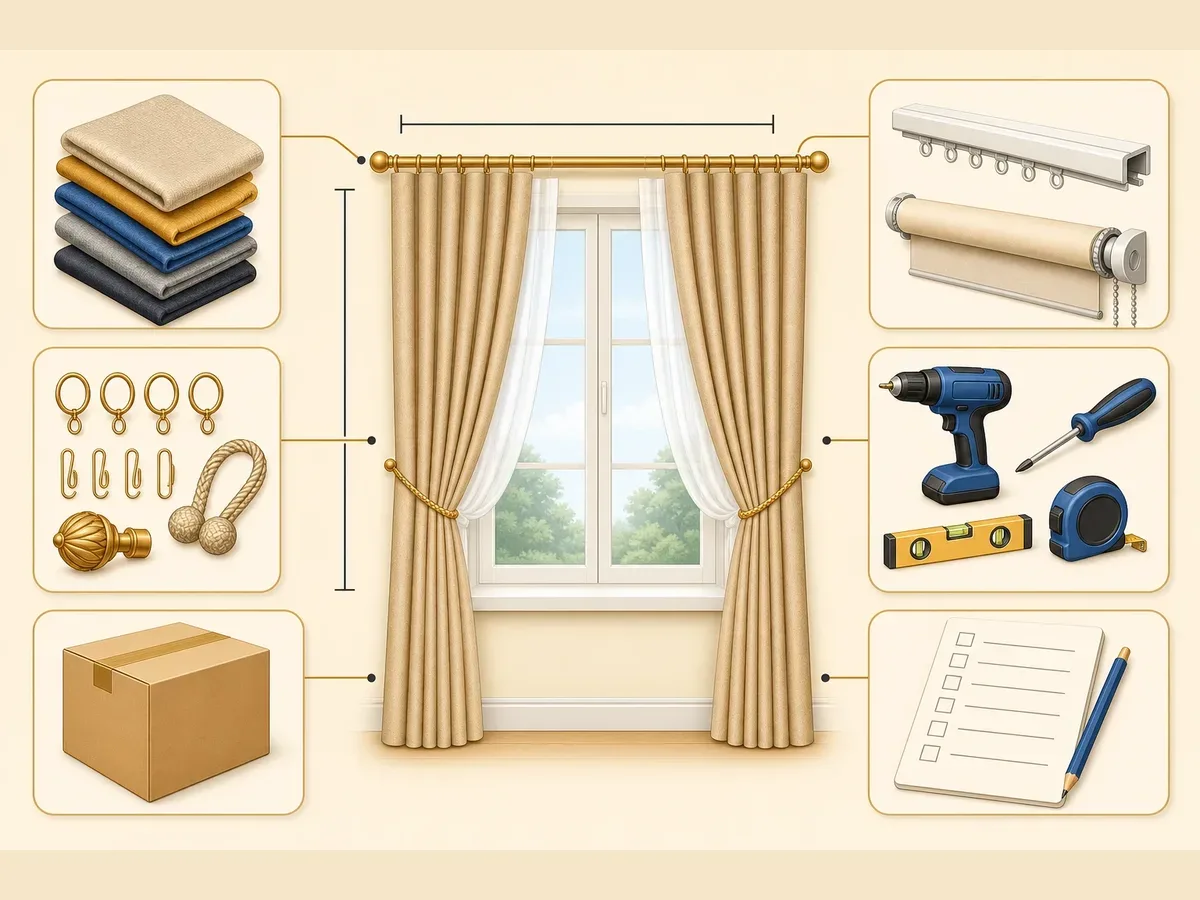
Before submitting a request for curtain and blind warranty service, clearly identify which curtain or blind is having a problem, where the symptoms appear, and what information you still have about the purchase or installation. Documentation that includes wide-angle photos, close-up photos, an operating video, the curtain or blind type, installation location, purchase date, and contact information will help the intake team review your case more quickly. If you do not have enough information yet, you can still contact them for guidance on what to provide, but you should not assume that the issue is definitely covered by the warranty.
1. Identify the correct curtain or blind and the condition that needs inspection
Start by noting the name or description of the curtain or blind: double-layer curtains, zebra blinds, roller shades, solar shades, Roman shades, or another type. If there are multiple sets in the same room, specify the living room window, balcony door, bedroom window, or location code on the drawing. This information helps avoid confusion between the curtain rods, headboxes, roller tubes, pull cords, bottom rails, fabric panels, and accessories for each set.
Next, describe the symptoms in terms of observable actions rather than technical conclusions. For example: the edges of the curtains shift when pulled; the zebra blind does not stop at the desired position; the roller shade does not roll all the way up; the mesh is misaligned on the tube; the control cord is slack; the bottom rail touches the windowsill; or the motor does not respond when a button is pressed. These are initial observations, not conclusions that the fault lies with the fabric, accessories, installation, or mechanism.
2. Prepare information about the purchase and installation dates
On the intake form, enter the order date, handover date, or installation date if you remember it. If you do not remember the exact date, you can note the approximate month, season, or an event associated with the installation, such as moving, completing an apartment, or renovating an office. These reference points help match your records without guessing the coverage period.
Look for the order, quote, handover slip, acceptance report, messages, confirmation emails, measurement appointments, or photos taken upon completion. Not every document is necessarily a requirement; what you need to do is gather the equivalent evidence you have and submit it for review. If you only have the purchaser’s name, installation area, and the phone number previously used, provide those details along with a description of the problem.
For projects with multiple items, note the apartment name, floor, room, office area, or window or door code, if available. If the curtain or blind has been moved from one location to another, removed and reinstalled, or resized, specify when this happened and who did the work. These details are important so that curtain and blind warranty service can be considered based on the actual current condition rather than old photos alone.
3. Review the types of documentation you have
- Purchase records: purchaser’s name, order details, fabric selection, color, ordered dimensions, and number of curtain or blind sets.
- Measurement records: window opening width, installation height, inside-mount or outside-mount style, headbox position, and opening direction.
- Installation records: installation date, photos after completion, bracket type, curtain rod, roller tube, controller, or motor.
- Communication records: messages confirming the selection, size changes, operating instructions, handover schedule, and previous issue reports.
- Evidence of the current condition: photos, videos, handover reports, or notes on when the issue first appeared.
If the documents contain unrelated private information, you can redact account numbers, payment details, or other people’s data before sending them. However, do not obscure the item name, document date, dimensions, order code, or product description if that information is needed for verification. File names should be easy to recognize, such as “phong-khach-rem-cuon-khong-len” or “cua-ban-cong-rem-vai-lech-mep”.
4. Remeasure dimensions that can be checked safely
You do not need to remove the curtain or blind to measure it. You can use a tape measure to measure the overall coverage width, the height from the curtain rod or headbox to the bottom edge, the distance between the curtain or blind and the windowsill, and the difference between the two sides. For roller shades, also note the tube diameter if visible and the position of the bottom rail when the shade is closed. For zebra blinds, you can note the width of the misaligned fabric area or any unusual gaps along the two edges.
Photograph the tape measure in place so the person reviewing the information can understand the start and end points. Do not pull forcefully to “restore the correct dimensions,” remove headbox covers or brackets, disconnect electrical cords, or adjust screws without instructions. If the window is high up, take photos from the ground and note an estimate rather than climbing a ladder just to get a measurement.
One team from drawings to installation
Thanh Vy Curtains surveys, designs and installs based on your actual site. Send us the dimensions and current condition, and we will advise the right solution.
Request a quote Call 0985 615 577 Message on ZaloFor curtains, you can note the distance between the fabric edge and the floor, how much it touches the windowsill, or the condition of the folds. For solar shades, note whether the left or right side is misaligned, whether the bottom rail is level, and whether the mesh rolls evenly onto the tube. For zebra blinds, note where the fabric bands are not straight, the sheer layers do not align, or the pull cord gets stuck. These measurements only describe the current condition.
5. Take photos from three required perspectives
The photo set should include at least three levels of information. A wide-angle photo shows which window or door the curtain or blind is installed on and its relation to the wall, windowsill, and surrounding furniture. A medium shot shows the entire curtain rod, headbox, roller tube, brackets, or controller. A close-up focuses on the fabric edge, stitching, pull cord, bottom rail, tube end, joint, screw, cover, or the area that is scratched, cracked, or coming apart.
Take photos in adequate lighting, hold the camera straight, and avoid filters that alter the fabric color. If the problem only appears when the curtain or blind is in a particular position, photograph it open, closed, and in the stuck position. For misalignment issues, include a natural reference line such as the edge of the window frame, windowsill, or a wall grout line; do not place heavy objects on the curtain or blind to create an artificial straight line.
6. Record an operating video without deliberately forcing the issue to occur
The video should begin with a short view showing the curtain or blind’s location, followed by normal operation. Clearly indicate whether you are pulling a cord, using a control wand, pressing a switch, or using a remote control. If there is rubbing, rattling, motor humming, or an unusual stopping sound, keep the original audio. A continuous video from the start of the operation until the issue appears is usually more useful than several separate clips.
Do not yank the cord, twist the wand with excessive force, push the roller tube by hand, block the bottom rail, or remove the batteries for repeated testing. If the curtain or blind gets stuck, stop at the last safe action and note “stopped to avoid altering the current condition.” For electrically operated curtains or blinds, do not open the electrical box, bypass the switch, or touch the wiring. If there is a burning smell, sparks, or unusual heat, stop using it and report this immediately in the description.
7. Write a brief issue description using a template
You can use the following template when submitting a curtain and blind warranty request:
- Type and location: for example, zebra blinds at the bedroom window.
- Symptoms: describe which operation cannot be performed or which component has changed.
- When first noticed: the date or approximate time when the issue first appeared.
- Frequency: every time, occasionally, only when raising, or only when lowering.
- Prior changes: whether there was any cleaning, furniture moving, removal or installation, power outage, or external impact.
- Supporting materials: overview photos, close-up photos, videos, order details, or equivalent evidence.
An example of a good description is: “The mesh roller blind at the balcony door, approximately 1,2 m wide, has had its right edge about 2 cm lower than its left edge when lowered since yesterday afternoon; the bottom bar still moves, but the mesh rolls up unevenly; I have recorded a video of manual operation; no hardware has been removed or adjusted.” This description shows the blind type, location, dimensions, symptoms, timing, and actions taken without automatically attributing the issue to the mechanism.
8. Submit all documentation at once and keep the originals
Before submitting, check the file names, image quality, whether the videos open, and whether the description matches the photos. If there are multiple sets of curtains or blinds, separate them into groups by room or location. Keep the originals on your phone or computer, and record the submission date and the information provided. When asked for additional materials, send the relevant files rather than repeating the operation multiple times.
Submitting complete documentation does not mean the request will be approved immediately. Coverage, acceptance conditions, product condition, and the proposed resolution still need to be checked against the actual policy and inspection results. If your documentation does not include an invoice or handover form, clearly state what is missing and provide any equivalent evidence you have. Depending on your needs in Ho Chi Minh City, you can get in touch to have your request received, request a quote for any additional work, schedule a measurement appointment, or view the price list.
Identify cases that may be denied or incur charges
Not every curtain or blind issue automatically falls under curtain and blind warranty coverage. Before submitting a request, distinguish between three possibilities: a technical or installation defect that needs to be inspected under the policy; damage caused during use that may require a repair quote; or a condition involving only normal wear, cleaning, and routine adjustment. This classification helps you prepare the right evidence and avoid mistaken expectations about which work will be accepted.
Quick identification matrix before requesting service
| Observed condition | Factors to check | Potential charges |
|---|---|---|
| Curtain rod, headbox, or brackets are bent, cracked, or pulled away from the wall | Impact marks, added hanging loads, wall type, wall anchors, and screw locations | Charges may apply if the cause is external force or site conditions that are no longer suitable |
| Fabric curtains are torn, scratched, scorched, discolored, or shrunken | Signs of tugging, sharp objects, heat, water, cleaning agents, and cleaning methods | May be excluded from curtain and blind warranty coverage if the damage occurred during use |
| Roller blinds or mesh blinds have a misaligned tube, wrinkled edges, or do not stop in the correct position | Obstructions at the bottom of the blind, roller tube, bottom bar, pull cord, and operating actions | An on-site inspection is needed to distinguish a mechanism defect from use that does not follow instructions |
| Zebra blinds have overlapping fabric layers, displaced sheer bands, or a jammed bead chain | Frame squareness, clearance on both sides, control chain, gears, and pulling force | Charges may apply if the chain, clutch, or fabric has been affected by external impact |
| The motor does not run, the remote does not respond, or the blind stops midway through its travel | Power supply, signal receiver, remote batteries, travel limits, and wiring connections | Costs can only be determined after inspecting the equipment and related electrical components |
Common categories of causes that lead to requests being reassessed
External force is a category that needs to be described very clearly. Curtains or blinds may be pulled sideways while caught on a door handle, have their cords yanked by children or pets, have furniture hit the bottom bar, or be raised or lowered while an obstruction remains underneath. With fabric curtains, hooks may come loose from forceful pulling; with roller blinds, the aluminum tube and bottom bar may become deformed; with zebra blinds, the bead chain and clutch assembly may be subjected to off-axis force. Photograph dents, scratches, and impact locations as well, rather than just the curtain or blind itself.
Use that does not follow instructions may include turning the control handle in the wrong direction, jerking the cord, trying to raise the blind while the bottom bar is caught, removing the headbox yourself, redrilling the brackets yourself, or adding electrical wiring for the motor. Using a screwdriver, pliers, adhesive, tape, or incompatible components for temporary repairs also alters the existing condition. When submitting a curtain and blind warranty request, clearly state what you did, when you did it, and whether you still have the removed parts.
Normal wear and tear is not the same as a sudden technical defect. Fabric surfaces may collect dust, curtain edges may need their folds adjusted, pull cords may need cleaning, and colors may change with light and room conditions. Signs such as fading, dirt, fuzzing, slight looseness after a period of use, or faint friction noises should be described along with the installation date and usage environment. Do not decide on your own whether the case is covered by the warranty; let the policy and inspection results determine that.
An expired warranty period or missing proof of transaction is another factor that needs to be checked. The purchase date, installation date, order number, handover form, invoice, confirmation messages, or photos of the completed installation can help the receiving party identify the product and its service history. If one type of document is missing, provide equivalent evidence you have rather than filling in estimated information yourself. The actual policy determines which documentation is accepted for curtain and blind warranty service.
Distinguish between work that may be free and work that requires a quote
During the inspection, the technician may separate the issue submitted for review from any additional work. For example, a misaligned blind may also need bottom bar adjustment, bead chain replacement, bracket repair, wall redrilling, or clutch replacement. If the cause falls within the policy’s coverage, one item may be handled under warranty; other items still require separate confirmation. Therefore, ask for a clear breakdown of each task: inspection, adjustment, hardware replacement, site repairs, transportation, or reinstallation.
Costs may also arise when components that are no longer compatible are needed, a remote has been lost, the motor requires a separate power supply check, the wall is hollow or weak, a drywall ceiling needs reinforcement, the curtain or blind must be taken down for work elsewhere, or the actual dimensions no longer match those at installation. These are illustrative situations, not conclusions that apply to every curtain and blind warranty request. You should only approve the work after receiving the scope of work, the suspected cause, and the corresponding quote.
What should you do if you are unsure whether your claim will be denied?
- Leave everything as it is; do not continue pulling, disassembling, or replacing components.
- Take photos of the entire curtain or blind, close-ups of the problem area, brackets, cords, bottom rail, headbox, and surrounding space.
- Record a short video showing how it operates and the moment the curtain or blind stops, jams, or makes an unusual noise.
- Note the type of curtain or blind, installation location, purchase or installation date, symptoms, and any prior incidents affecting it.
- Submit the information for intake, inspection, and notification of the proposed resolution; if any work falls outside the policy, request a quote before it is performed.
If you need to clarify whether a curtain or blind in Ho Chi Minh City falls under curtain and blind warranty service, maintenance, or paid repair, you can get in touch to submit your request, ask for a quote, schedule measurements, or view pricing by service item. Mention any signs of external force, your most recent DIY repair, and the documents you have available upfront to make the verification process more transparent.
Warranty claim intake, inspection, and resolution process
The curtain and blind warranty service process should begin with accurately recording the symptoms and submitting enough information for verification, then waiting for intake and inspection before choosing a resolution. You do not need to remove the curtain or blind, disassemble the roller housing, or adjust screws yourself without instructions. Leave everything as it is, photograph the entire curtain or blind, record its operation, and clearly note when you first noticed the issue. This preparation helps the intake staff quickly distinguish technical faults, installation errors, accessory issues, or cases requiring further inspection at the installation site.
01
Submit initial information
In the first step of the curtain and blind warranty service process, describe the affected curtain or blind with specific details rather than simply stating “the curtain or blind is broken.” Specify whether it is a fabric curtain, zebra blind, roller blind, or mesh blind; whether it is installed at a window, doorway, living room, bedroom, or commercial premises; its approximate dimensions; and whether it is operated by a pull cord, ball chain, bottom rail, pull handle, or motor. If you have an order number, delivery receipt, invoice, installation photos, or equivalent proof of purchase, prepare them for verification.
02
Receive the claim and document inspection details
After receiving the description, photos, or video, the intake team will record your contact information, product category, symptoms, and supporting documents. These details may include misaligned fabric, an uneven bottom rail, a roller tube that does not roll up the fabric, a slipping ball chain, a jammed pull cord, a noisy track, zebra blind slats that do not rotate correctly, or an unresponsive control mechanism. At this stage, a remote description only helps with initial screening; it should not yet be considered a conclusion about the cause or definite confirmation of warranty coverage.
03
Verify records against the current condition
The inspector will compare the purchase or installation information against the actual product, accessories, and symptoms that have developed. Details to examine may include the curtain rod, track, mounting brackets, fastening screws, headbox, roller tube, gears, clutch, operating cord, bead chain, bottom rail, motor, controller, and power supply for motorized curtains or blinds. Close-up photos of tears, dents, cracks, separated joints, jammed mechanisms, or incorrect installation positions will help make classification more transparent. Additional information will be requested for any areas where the available data is insufficient.
04
Check operation and possible causes
If clarification is needed, record a short video from the curtain or blind’s initial position through its operation. For fabric curtains, the video should show how they are pulled open and closed and the position of the folds; for zebra blinds, it should show the rotation of the fabric bands and the raising and lowering action; for roller blinds or mesh blinds, record the direction of movement of the roller tube, bottom rail, and pull cord. For motorized products, only record the buttons, remote control, or device response; do not reconnect electrical wiring yourself. Any signs of external force, impact, mold, improper cleaning, or DIY accessory replacement should also be clearly stated.
05
Communicate the proposed resolution
Once enough information is available, the intake team will communicate the next steps based on the recorded condition. A claim may require additional photos, videos, or order information; be referred for an on-site inspection; receive recommendations for adjusting operation; or be separated into maintenance or repair items requiring a quote if they fall outside the confirmed coverage. Before inspection results are available, do not assume that every issue will be resolved free of charge or that every component will be replaced with a new one. Ask for the response to clearly specify the items involved, the proposed resolution, and any cooperation needed from you.
06
Conduct an on-site inspection when necessary
Some symptoms cannot be accurately assessed through photos alone, such as sagging caused by bracket placement, an off-center roller tube, an obstructed track, a misaligned operating cord, a bottom rail touching the windowsill, or an unstable motor power supply. In these cases, the on-site inspection should focus on the surrounding space, elevation, clearance, screw mounting points, the squareness of the window frame, and the condition of the accessories. Users should clear the space in front of the curtain or blind, keep any accessory pieces that have fallen off, and avoid continuing to pull forcefully, as doing so may alter the original condition.
07
Carry out the work within the confirmed scope
Once the resolution has been agreed upon, the work may involve aligning the track, adjusting bracket positions, checking the ball chain, replacing an accessory, addressing the rolling mechanism, performing technical cleaning, or checking the controller. This is the time to reconfirm the type of curtain or blind, the parts being worked on, and the condition after the work. If additional work arises beyond the original request, ask for it to be listed separately so you know which items are inspection work and which are paid maintenance or repairs. You should not agree to replace the entire curtain or blind based solely on an unverified symptom.
08
Record the results and close the claim
At the end of the curtain and blind warranty service process, recheck the exact issue you reported: whether the blind raises and lowers evenly, whether the zebra bands rotate into alignment, whether the fabric tracks correctly along the edges, whether the bottom rail is tilted, whether the pull chain operates continuously, and whether the mechanism still makes unusual rubbing noises. If there is a motor, check the controls according to the instructions provided. Keep a record of the work performed, components worked on, photos after completion, and any items that still need monitoring. If the issue has not been resolved, respond immediately using the same claim number or correspondence record.
How to submit a request to reduce back-and-forth
A clear message can follow this template: “Mesh roller shade on a bedroom window, installed on the ground floor; noticed the bottom bar shifting to the right when lowered. The issue started on…, and no parts had been removed or replaced by the user beforehand. Attached are an overall photo, a close-up of the roller tube, and a video of the shade moving from open to closed.” For fabric curtains, add photos of the curtain rod and fabric folds; for zebra shades, add a photo showing the position of the fabric bands when closed; for motorized mechanisms, add photos of the motor, controller, and indicator light status, if applicable.
If you are in Ho Chi Minh City and need to determine the appropriate curtain and blind warranty service path, you can first submit a request for intake, then choose the appropriate next step, such as contacting an advisor, requesting a quote, scheduling measurements, or viewing prices by category. Clearly state whether you need an issue inspected, on-site service, or cost information for work outside the warranty scope. Providing honest information about external force, the most recent adjustments you made yourself, and the records you have helps make the response process more transparent.
Prepare information, photos, and videos to describe the issue clearly
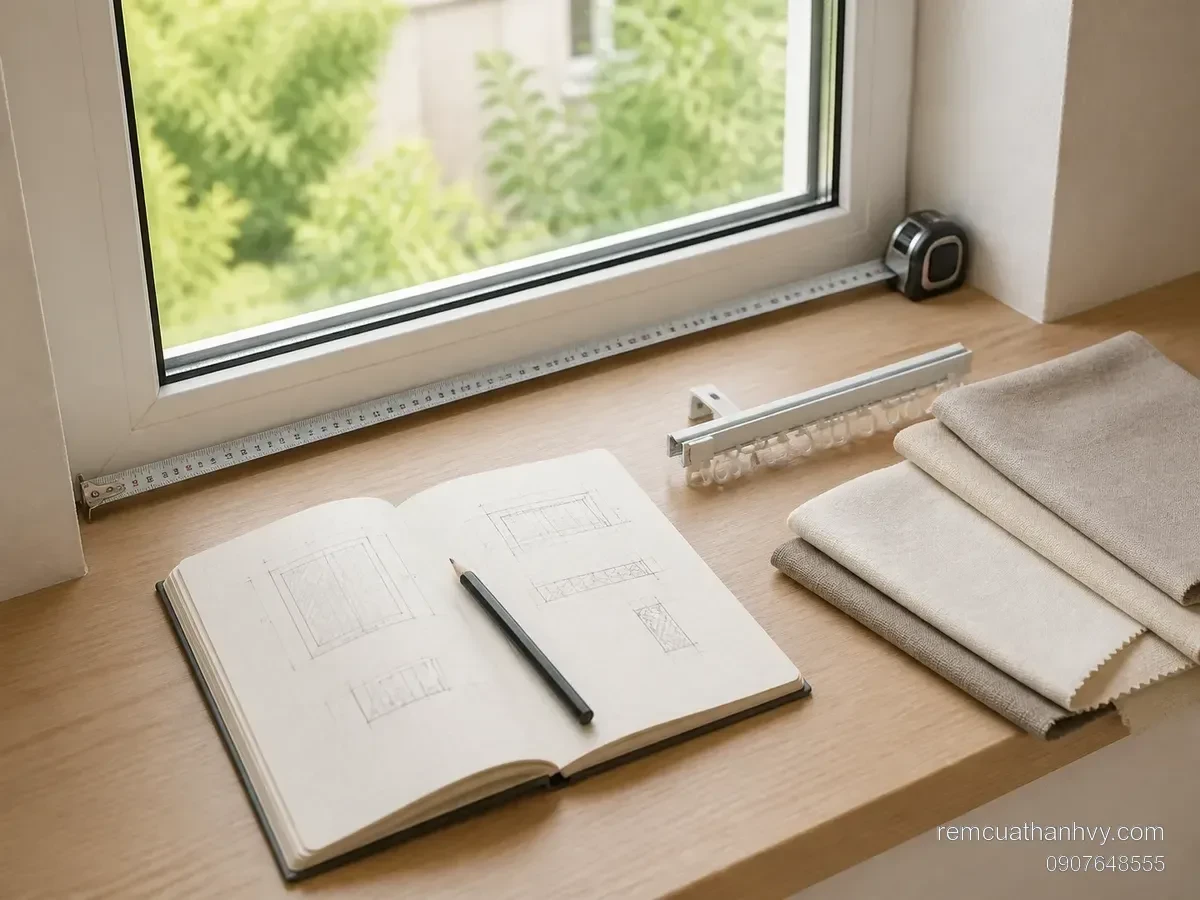
To ensure your curtain and blind warranty request is reviewed appropriately, send enough information to identify the type of window covering, the location of the issue, how it occurs, and the operating condition. At a minimum, include an overall photo, close-up photos, a video of actual operation, the purchase or installation date, and contact information. The more specific your description, the easier it is for the intake team to distinguish an issue requiring inspection from maintenance or repair needs that may incur charges.
1. Specify the type of window covering and installation location
Start your message with the product name if you know it: fabric curtains, zebra shades, roller shades, mesh shades, Roman shades, or a window covering that uses a curtain rod, track, roller tube, or motor. Next, specify the installation location, such as a bedroom window, balcony door, living room glass wall, doorway, or office window. If there are multiple window coverings, label each one with an easily recognizable name, such as “left window” or “2,4 m long curtain set.”
After handover, Thanh Vy Curtains stays with you
Talk directly with the Thanh Vy Curtains team to settle the right plan, from design to handover.
Request a quote Call 0985 615 577 Message on ZaloDo not just write “the curtain is broken.” Identify the component with the problem: curtain fabric, slats, bottom bar, roller housing, pull cord, bead chain, mounting bracket, support bracket, track, roller, connector, remote, switch, power supply, or motor. For zebra shades, you can describe the mesh fabric area, light-blocking fabric bands, and roller tube. For roller shades, specify the fabric edge, roller shaft, bottom bar, or control cord.
2. Describe the issue by timing and operation
Note when the issue occurs: immediately after pulling, only when raising or lowering the shade, when tilting the slats, after a power outage, after cleaning, or at random. State what you did before the issue occurred and which actions can no longer be performed. For example: “When I pull the bead chain down about 20 cm, the roller tube stops but the chain keeps moving” is clearer than “the shade does not work.”
If the window covering is misaligned, note the direction and the extent visible to the eye: the left edge is lower than the right, the bottom bar is tilted, the fabric rolls to one side, or the slats do not close evenly. If it makes noise, describe the sound, such as rubbing, rattling, squeaking, or intermittent motor noise. You do not need to determine the cause yourself; simply describe the symptoms accurately so the curtain and blind warranty process is not misdirected from the start.
3. Take photos from three required angles
The overall photo should include the entire window covering, the window frame, and the wall or ceiling where it is installed. This angle helps identify the location, installation orientation, clearances, and relationship between the window covering and surrounding furnishings. If using a phone, hold it horizontally, avoid backlighting, and keep the top and bottom edges of the window covering in the frame.
Medium shots should focus on the area showing unusual behavior, including the roller housing, track, curtain rod, support brackets, pull cord, or bottom bar. Close-ups should capture details such as opened seams, tears, frayed fabric edges, a cracked housing cover, a displaced bead chain, loose mounting brackets, misaligned rollers, screws that have come out, or separated connectors. Take an additional photo with an object that provides a size reference, such as a ruler, if you need to show the length of a tear or the degree of misalignment.
Before sending, check whether the photos are blurry, dark, affected by glare, or obscuring any details. Do not use color filters that alter the fabric color. If there are multiple photos, name them in order: “01-overall”, “02-roller-housing”, “03-pull-cord”. This organization helps the recipient quickly cross-reference the photos with the description.
4. Record a video showing a complete operating cycle
Record the video from a position where the entire window covering and the hand operating it are visible. First, record it in its initial state, then perform the normal everyday action: pulling the cord, raising or lowering the shade, tilting the slats, drawing the curtains along the track, or pressing the controller. Do not yank, remove the housing cover, or force the window covering past a jammed point just to reproduce the issue.
In the video, briefly state three things: the type of window covering, the action being performed, and the symptom that appears. For example: “Balcony door roller shade, being lowered; the bottom bar stops at an angle and the right side will not lower any further.” If the issue occurs only at a particular point, record a second attempt to demonstrate that it repeats. For motorized window coverings, specify which remote or switch was used, whether the indicator light comes on, and how the window covering responds after pressing it.
Video with sound is helpful when the issue involves squeaking, impact noises, or the motor. Avoid backlighting, camera shake, or cutting out the segment before the issue appears. If the file is too large, you can record separate short clips: one overall shot, one showing operation, and one close-up capturing the sound or damaged detail.
5. Include order information and usage history
Provide the purchase or installation date based on the information you have, along with the name of the person who placed the order, order number, handover document, invoice, or photos of equivalent records, if available. If you no longer have the paperwork, clearly state what you still have and what you have not found; do not guess dates or product codes. This information helps verify the curtain and blind warranty request before moving on to inspection.
Also note the room where the window covering is used, the approximate frequency of operation, the last time it was cleaned or furniture was moved, and whether it has ever been hit, pulled off-center, soaked with water, or disassembled and reassembled by the user. If the issue appeared after furniture changes, the installation of additional equipment, or a power outage, describe those events in chronological order. Honest information helps prevent incorrect conclusions and helps the intake team determine whether an on-site inspection is needed or whether further guidance is sufficient.
6. Message template to fill out before contacting us
- Type of window covering: …
- Installation location: …
- Component showing symptoms: …
- The issue occurs when: …
- Actions already tried: …
- Purchase or installation date: …
- Order information or records still available: …
- Attached photos: overall view, affected area, issue details
- Attached video: operation and sound, if applicable
- Contact person: …
After completing the checklist, you can submit a request for intake and inspection, or choose an appropriate step such as requesting a quote, scheduling measurements, viewing prices by category, or contacting us directly. If you are unsure whether your case falls under the curtain and blind warranty, keep the original photos, videos, and description unchanged so there is sufficient evidence for later verification.
Preventive maintenance and inspection of curtains and blinds during use
Preventive maintenance helps detect early signs of abnormalities before the curtains and blinds lose their operational capacity or require complex handling. Inspect them based on three groups: the surface, the moving parts, and the installation area. If you detect a technical fault, you should stop any forceful operations, save images, and describe the current state for comparison when a curtain and blind warranty is needed. The tasks below are suitable for routine usage inspections and do not replace mechanism disassembly or electrical intervention by a technician.
Inspecting the surface and surrounding area
For fabric curtains, observe the folds, seams, fabric edges, eyelets, curtain rods, and the areas close to the wall. Long-accumulated dust, pulled threads, damp spots, or curtain edges rubbing against the windowsill should all be noted. You can use a soft feather duster, a vacuum cleaner with a suitable attachment, or a clean dry cloth for light cleaning. Do not yank fabric that is caught on objects, and do not use force to push the curtains past an obstructed position.
Know the cost before you decide
Send estimated dimensions and a few photos of the space, and Thanh Vy Curtains will prepare a quote for exactly the items you need.
Request a quote Call 0985 615 577 Message on ZaloFor rainbow blinds, observe the sheer and opaque fabric strips, the bottom rail, the roller tube, and the cassette box. When the two fabric layers are no longer aligned, the fabric strips are wrinkled, or the bottom rail touches the windowsill, record the position and state of the blinds before making adjustments. Clean gently according to the material’s instructions; avoid getting the roller mechanism, pull cords, or headrail accessories wet.
For roller blinds and screen blinds, check the fabric edges, roller tube, bottom rail, pull cord, bead chain, or controller if applicable. Dust in window tracks, plant pots, handles, furniture, and decorative items can obstruct the path of the bottom rail. Clear the space in front of the blinds, ensure the fabric is not pinched in the window, and then try operating them slowly. If the blinds are still misaligned or roll unevenly, do not disassemble the roller tube yourself to avoid altering the mechanism.
Inspecting the mechanism and operation
Before each inspection, ensure that the handle, pull cord, or controller is in normal condition. Pull the curtains/blinds in the correct direction, maintain steady force, and observe the entire travel from start to stop. Signs to note include newly appearing noises, heavier movement, the curtains/blinds stopping midway, slack cords, a vibrating bottom rail, or uneven sides. This data helps distinguish operational handling from issues requiring technical inspection, rather than concluding the cause remotely.
For corded curtains and blinds, keep the cords away from door handles, table edges, toys, and areas where young children can easily reach. Do not tie, shorten, wrap additional weights, or change the position of the cord tensioner without proper instructions. Frayed cords, loose stoppers, noisy pulleys, or cord tensioners coming off the wall should be photographed up close. When the mechanism shows signs of jamming, stop pulling instead of increasing force to try to get the curtains/blinds to the desired position.
For motorized curtains and blinds, check the batteries, switches, controller, and power supply according to the accompanying instructions. Only inspect parts that users are permitted to access; do not open electrical boxes, disassemble motors, or reconnect power cords without guidance. Record whether the error occurs in one direction or both, and whether it happens only when using the remote control or also during manual operation. This information is useful when requesting a curtain and blind warranty or determining repair items.
Inspection checklist by usage scenario
- Misaligned curtains/blinds: stop operation, check for obstructions on both sides, take a wide shot and close-up photos of the bottom rail or fabric edge.
- Stiff pulling: do not yank; record the pulling direction, the position where it starts to feel heavy, and any accompanying sounds.
- Uneven rolling: check if the fabric is pinched, touching the frame, or caught on furniture.
- Loose cords or accessories: do not replace them with other parts yourself; take close-up photos of the loose point and the installation position.
- Damp or dusty fabric: perform light cleaning according to the material, and check for moisture sources around the window.
- Noisy mechanism: record a short video at a distance close enough to hear, do not disassemble the box or cover the moving parts.
- Curtains/blinds used in children’s rooms: check cords, cord tensioners, sharp edges, and distance from play areas.
- Curtains/blinds in commercial premises: additionally check operating frequency, impacts from customers, tables, chairs, and display equipment.
Practical inspection schedule and recording methods
Instead of waiting until the curtains/blinds are unusable, integrate inspections into house cleaning, furniture rearranging, or room function changes. After each cleaning, test a gentle open-and-close cycle and observe the stopping point. When moving house, repairing windows, installing additional cabinets, or replacing nearby curtains/blinds, recheck the clearances and operational path. Do not set a fixed warranty milestone for all products yourself; the actual condition, materials, and user manual are the proper basis.
A brief note should include the inspection date, curtain/blind type, installation location, observed symptoms, attempted operations, and changes after cleaning. If there are photos or videos, name them by area, such as “living room – roller blind – misaligned bottom rail” for easy reference. Avoid deleting old photos immediately after a temporary issue disappears, as the progression before and after the operation can help the receiving team make a more accurate assessment when reviewing a curtain and blind warranty.
When to stop self-inspection?
Stop operating immediately if there is a burning smell, signs of an electrical short, an abnormally hot motor, loose screws or brackets, a bent rod, severely frayed cords, cracked glass, or if the mechanism falls out of place. Do not use temporary chairs or ladders to reach high-up blind boxes if safety cannot be guaranteed. For faults related to the power source, motor, brackets, or parts beyond your reach, send a description and photos to receive instructions on the next steps. Stopping in time helps limit further damage and preserves the basis for inspection.
If your need is periodic cleaning, operational adjustment, or a general inspection, you can submit a maintenance request. If you detect abnormal symptoms, clearly state the condition before and after the inspection. If you have not identified the appropriate category, sending wide shots, close-up photos, and an operational video will facilitate the initial classification. You can also choose to contact us for support, request a quote by item, schedule a measurement, or view the price list suitable for your needs in HCMC.
One team from drawings to installation
Thanh Vy Curtains surveys, designs and installs based on your actual site. Send us the dimensions and current condition, and we will advise the right solution.
Request a quote Call 0985 615 577 Message on ZaloDo not wait until the curtains/blinds stop working completely to inspect them. A simple sequence of recording—including light cleaning, clearing obstructions, testing operation according to instructions, and saving abnormal signs—helps you be more proactive during use. When a curtain and blind warranty is needed, a clear photo record and inspection history also help the discussion focus on the actual current state instead of having to describe everything from scratch.
Acceptance Testing and Next Support Steps in Ho Chi Minh City

After the curtains have been inspected or serviced, perform acceptance testing immediately at the installation site before concluding the curtain warranty request. Acceptance testing should be based on the actual condition of the curtain set, its operational capability, the stability of the mechanism, and its conformity with the initially recorded information. If the fault persists, new symptoms arise, or it’s unclear which part has been serviced, you should make a note and contact us for guidance on the next steps in Ho Chi Minh City.
Visual Inspection at the Installation Site
Begin by observing the entire curtain set from a sufficient distance to assess the balance of the curtain panel, curtain rod, headrail, bottom rail, and both side edges. For fabric curtains, check the drape, the flatness of the pleats, the straightness of the track, and the condition of the eyelets. For roller blinds, observe the roller tube, fabric, bottom rail, and both brackets. For zebra blinds, check if the sheer and opaque fabric strips, the headrail, and the fabric edges are correctly aligned.
Use your eyes, combined with a tape measure or spirit level if clear deviations need to be identified. Check the distance between the curtain edge and the wall, window frame, door handle, and nearby furniture. Do not remove the headrail cover, detach brackets, or adjust screws without instruction, as these actions can alter the current state of acceptance and make it harder to accurately cross-reference the curtain warranty record.
Test Operation According to Correct Usage
Next, test the curtain through a full operating cycle, from closed to open or from rolled down to rolled up, depending on its structure. Perform slowly, holding the handle or pull cord in the correct position, without jerking sideways and without applying additional force to push the curtain further. For fabric curtains on a track, check the smooth gliding of the rollers and the ability to stop at both ends. For roller blinds, observe the straightness of the fabric when rolling. For zebra blinds, test both the fabric strip rotation and the raising/lowering operations.
If the product has a motor, remote control, switch, or receiver, check each control button according to the provided instructions. Note any signal loss, intermittent movement, unusual noise, stopping at the wrong position, or slow response. Do not replace batteries, change power sources, reprogram the travel limits, or interfere with the control unit unless it has been determined that these steps are permitted in the support process.
Compare Results with Recorded Faults
Reopen the photos, videos, and descriptions submitted at the time of the curtain warranty request to compare before and after. If the curtain initially had an uneven edge, recheck the position of both edges after operation. If the problem was difficulty pulling, track jamming, or uneven rolling, retest the exact operation under the same usage conditions. If there was a noise from the track, headrail, pull cord, or motor, specify at which step the noise occurred instead of just concluding that the curtain is fixed or still faulty.
A satisfactory result should be evaluated based on the actual condition and the scope of inspection, not just on a distant visual impression. You can use your phone to record a short video showing the entire curtain set, the operation, and any remaining abnormalities. In the video, maintain a stable camera angle, sufficient lighting, and avoid obstructing the track, pull cord, bottom rail, brackets, or the area adjacent to the window frame.
Record Acceptance Testing Content
If the inspection is complete, you should record the acceptance date, the curtain’s location, curtain type, inspected items, and the condition after servicing. In case of a report, reception slip, or electronic communication, keep a copy along with photos of the current state. This data provides a concrete basis for future contact, especially when needing to distinguish between old faults that were not fixed and new faults arising during use.
The recorded content may include: whether the curtain opens and closes normally, whether the fabric rolls straight, whether the sheer strips are evenly aligned, whether the track is jammed, whether the pull cord is slack, whether the motor receives commands, and whether there are still obstructions in the installation area. If there are points that could not be checked due to insufficient conditions, clearly state “not checked” instead of marking as complete.
Choose Next Support Steps in Ho Chi Minh City
If the curtain operates stably and shows no further abnormalities, you can conclude the inspection, continue to use it according to instructions, and save the acceptance record. If a new solution is needed for another window, a change in size, material, or an additional curtain set, the appropriate step is to submit your requirements for consultation and quotation. The information should include the type of space, window dimensions, installation location, light-blocking or control needs, and actual photos of the area.
If the fault persists or recurs, choose to contact us to provide the request code again, post-service photos, operation video, and a description of when the fault appeared. If the cause is undetermined, you can request further inspection instead of self-concluding it’s a mechanism fault, installation error, or wear and tear. Accurately describing the current condition helps the curtain warranty process continue based on specific data.
After handover, Thanh Vy Curtains stays with you
Talk directly with the Thanh Vy Curtains team to settle the right plan, from design to handover.
Request a quote Call 0985 615 577 Message on ZaloFor apartments, townhouses, offices, bedrooms, living rooms, or spaces with multiple windows, you can request measurements when needing to replace, add, or adjust curtain solutions. Before measuring, clear obstructions around the windowsill, clearly note the door opening direction, power outlet locations, technical boxes, gypsum ceilings, and fixed furniture. These details affect the choice of track, brackets, headrail, and operating clearance.
If you don’t have a basis for choosing a curtain type or need an estimate for multiple locations, request a quote or view the price list according to your actual needs. Do not just send a disconnected size number if you haven’t determined the measuring method, number of curtain sets, fabric type, lining, track, accessories, and control option. A panoramic photo with approximate dimensions will help clarify initial discussions, but the final measurements still need to be verified according to installation conditions.
When Should You Request Further Inspection?
Contact us again if the curtain becomes misaligned after a few operations, the bottom rail touches the windowsill, the fabric rubs against the wall, the zebra blind strips are unevenly aligned, the pull cord comes off, the track makes a loud noise, or the motor stops mid-travel. These are signs that need to be described with the latest photos and videos. Do not try to operate continuously to “test further” if you notice the mechanism is jammed, the cord is twisted, or there’s an unusual smell from electrical equipment.
In cases where a curtain warranty needs to transition to maintenance or repair that may incur costs, ask the recipient to clearly explain the inspection items, related materials, estimated work, and the basis for the quote before agreeing. For accessories like track rollers, pull cords, brackets, bottom rails, clutches, remotes, or motors, confirm which parts need servicing and which parts are still functioning normally.
In Ho Chi Minh City, the appropriate support step depends on your acceptance testing results and subsequent needs: contact us to clarify faults, submit a quote request, schedule measurements, view the price list, or provide information for a new curtain set. Always submit a consistent set of data including curtain type, installation location, approximate dimensions, panoramic photos, close-up photos, operation videos, and the content of your acceptance testing. This preparation helps keep discussions concise, reduces the need for repeated descriptions, and provides a clear basis for the next steps.
Related projects
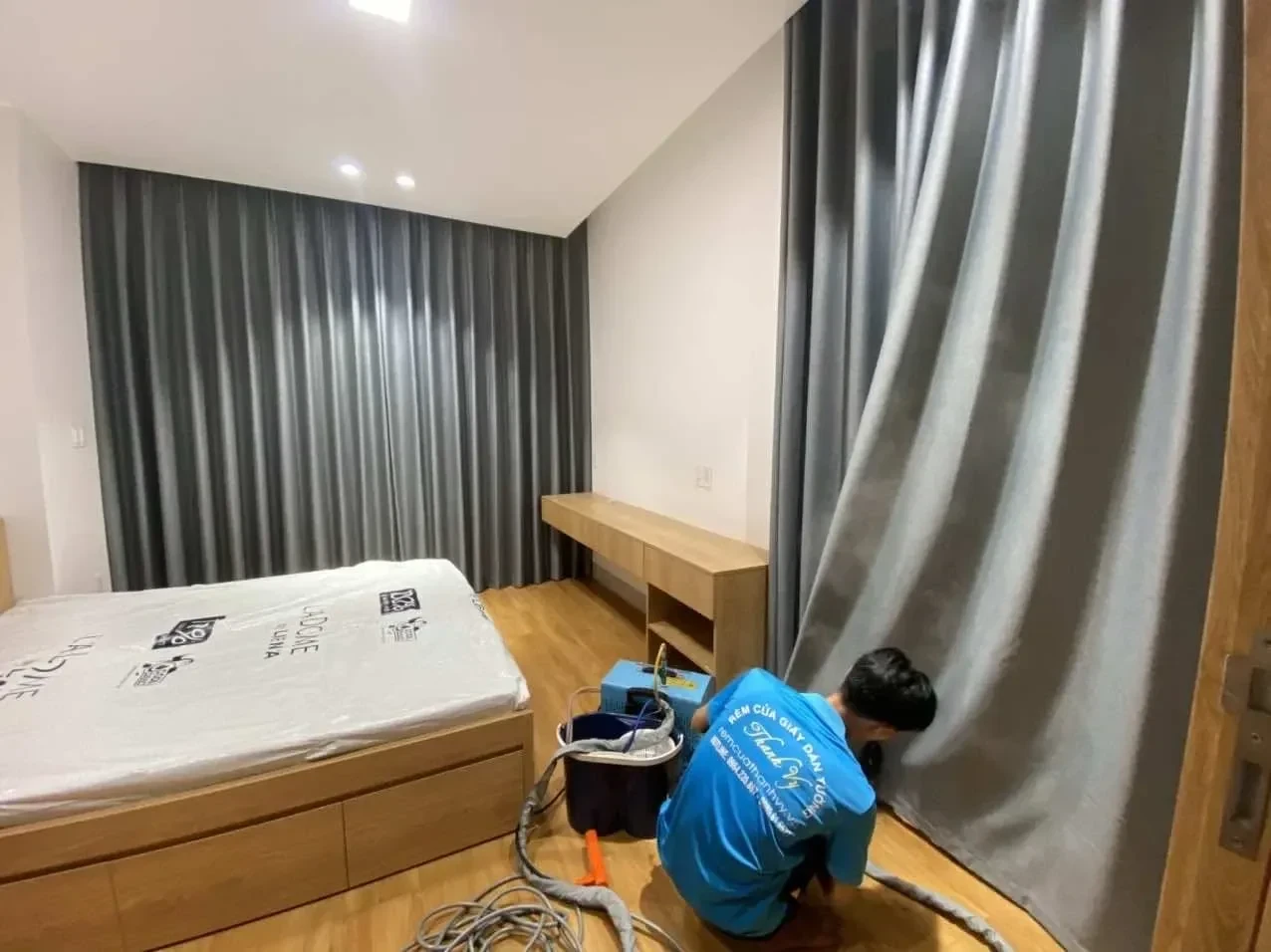
2-Layer Wave-Fold Fabric Curtains for Ho Tram Villa Bedroom
In 2024, Thanh Vy Curtains completed a 2-layer wave-fold fabric curtain project for the master [...]
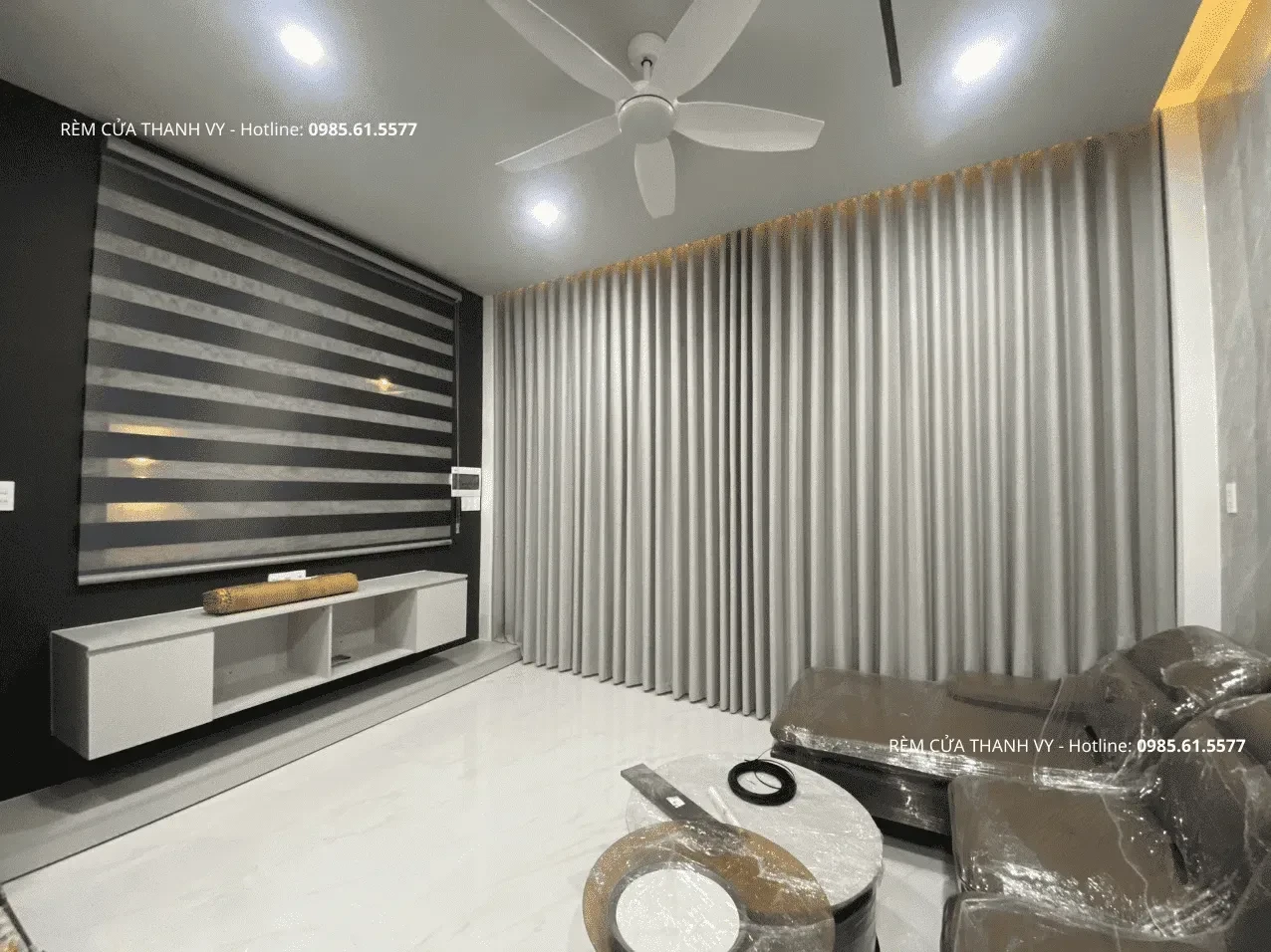
2-Layer Fabric Curtains + Horizontal Striped Roller Blinds – Duc Hoa Apartment, Long An
This project was carried out in a modern apartment in Duc Hoa, Long An – [...]
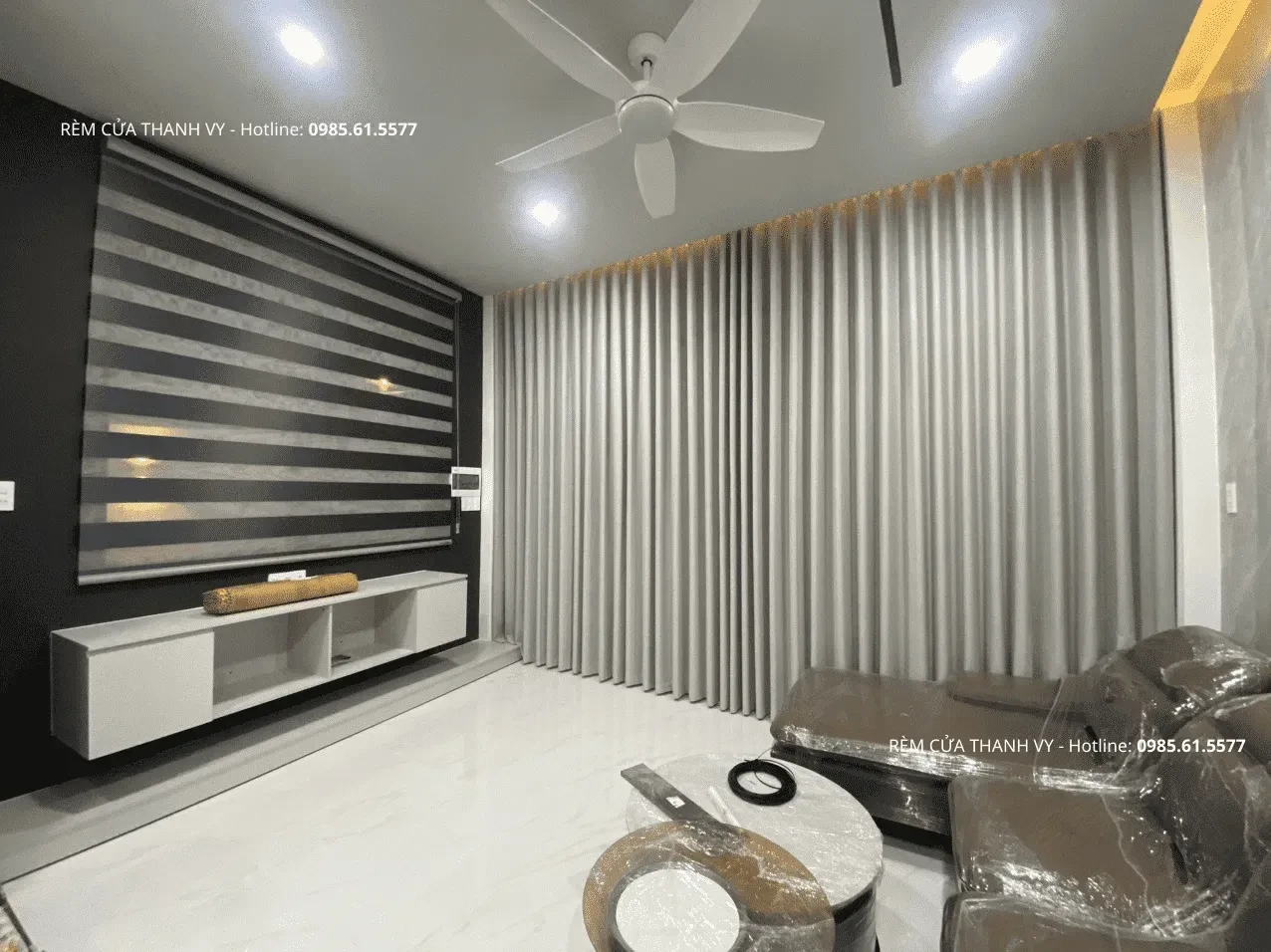
Fabric Curtains Combined with Zebra Blinds – Hiep Binh Chanh, Thu Duc
This project in Hiep Binh Chanh, Thu Duc, features a modern townhouse living room with [...]
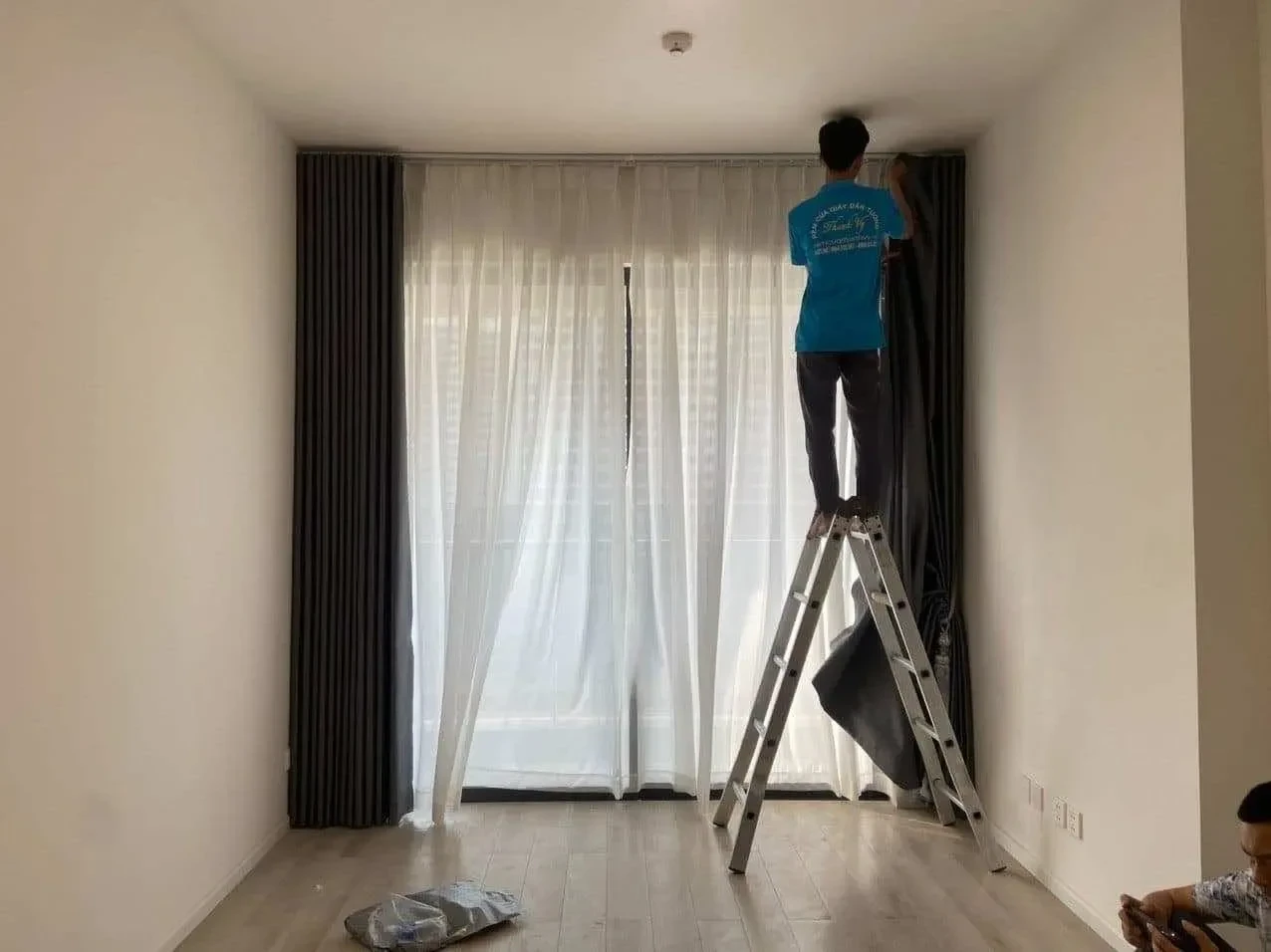
Black-and-White Double-Layer Curtains for a Masteri Centre Point Apartment in District 9
This project involved installing a double-layer curtain system for a high-rise apartment at Masteri Centre [...]
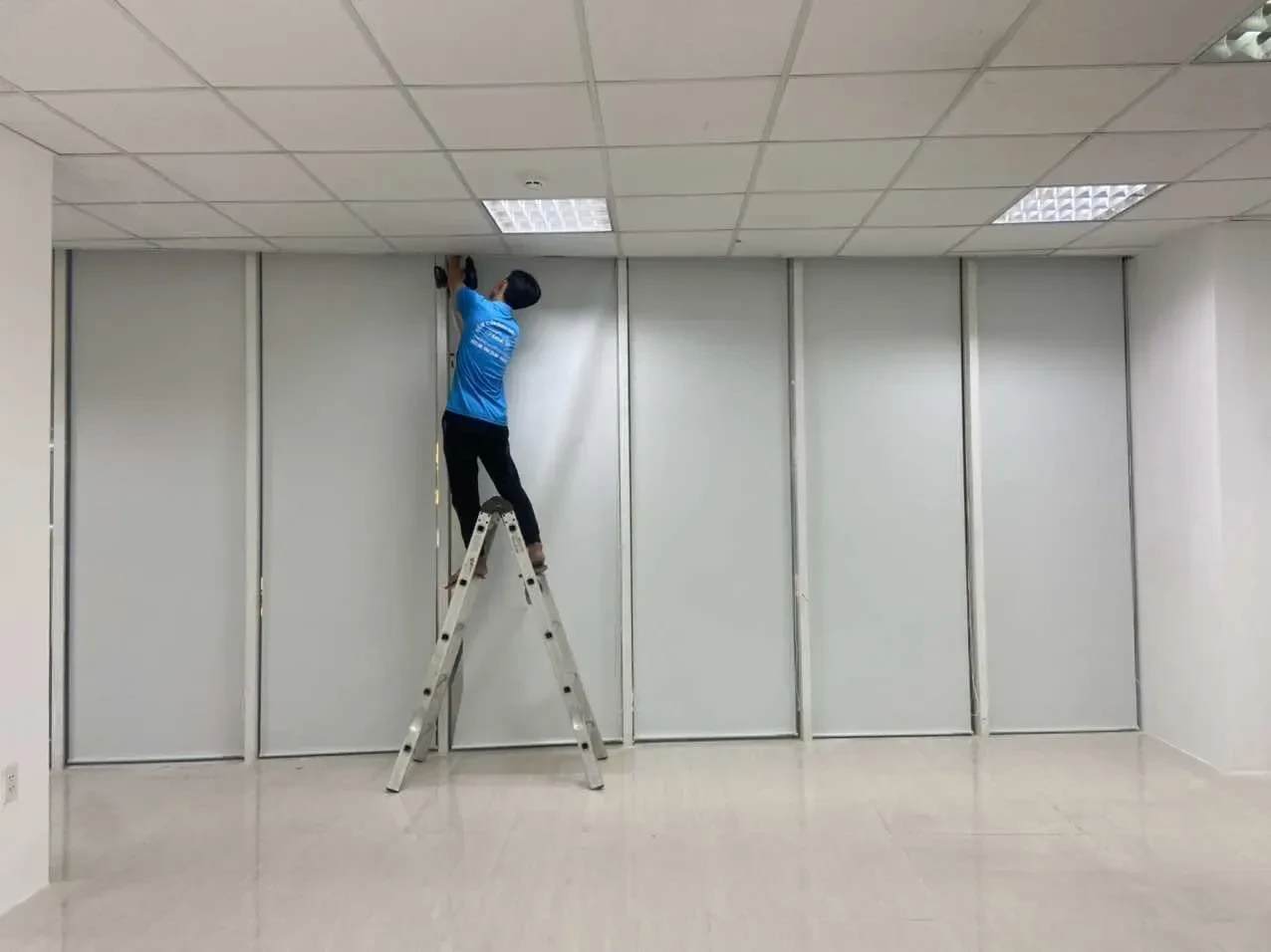
Office Roller Blinds in District 11 – Le Dai Hanh Street
This project involved installing roller blinds on an upper floor of a modern office building [...]
Blue Roman Shade Blinds for The Western Capital Apartment, District 6
This project at The Western Capital apartment complex (District 6) is a typical example of [...]
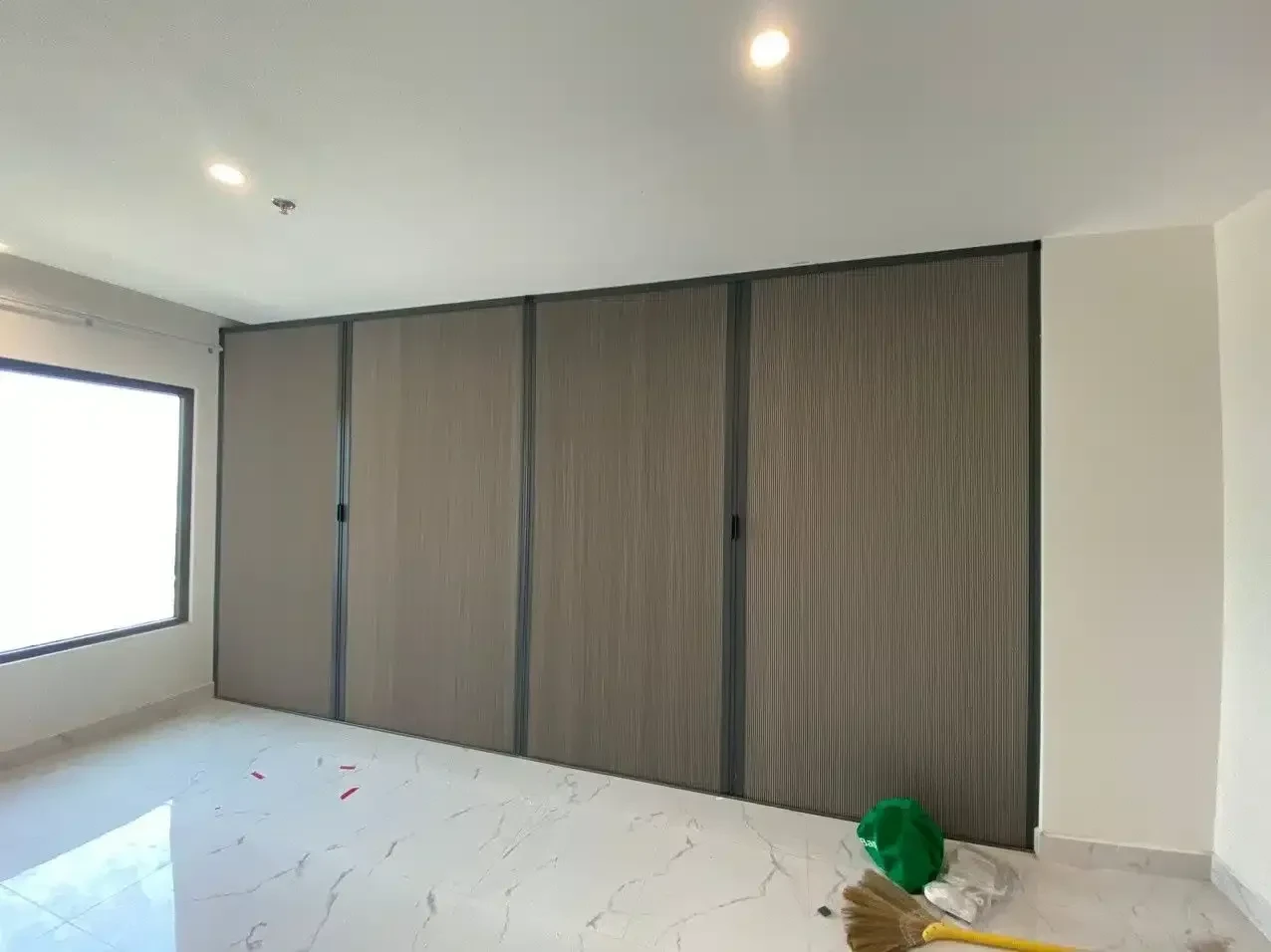
Glass Partition with Roller Blinds at Vinhomes Grand Park – BS-16 Apartment
This project at Vinhomes Grand Park, in the BS-16 tower, was a luxury apartment interior [...]
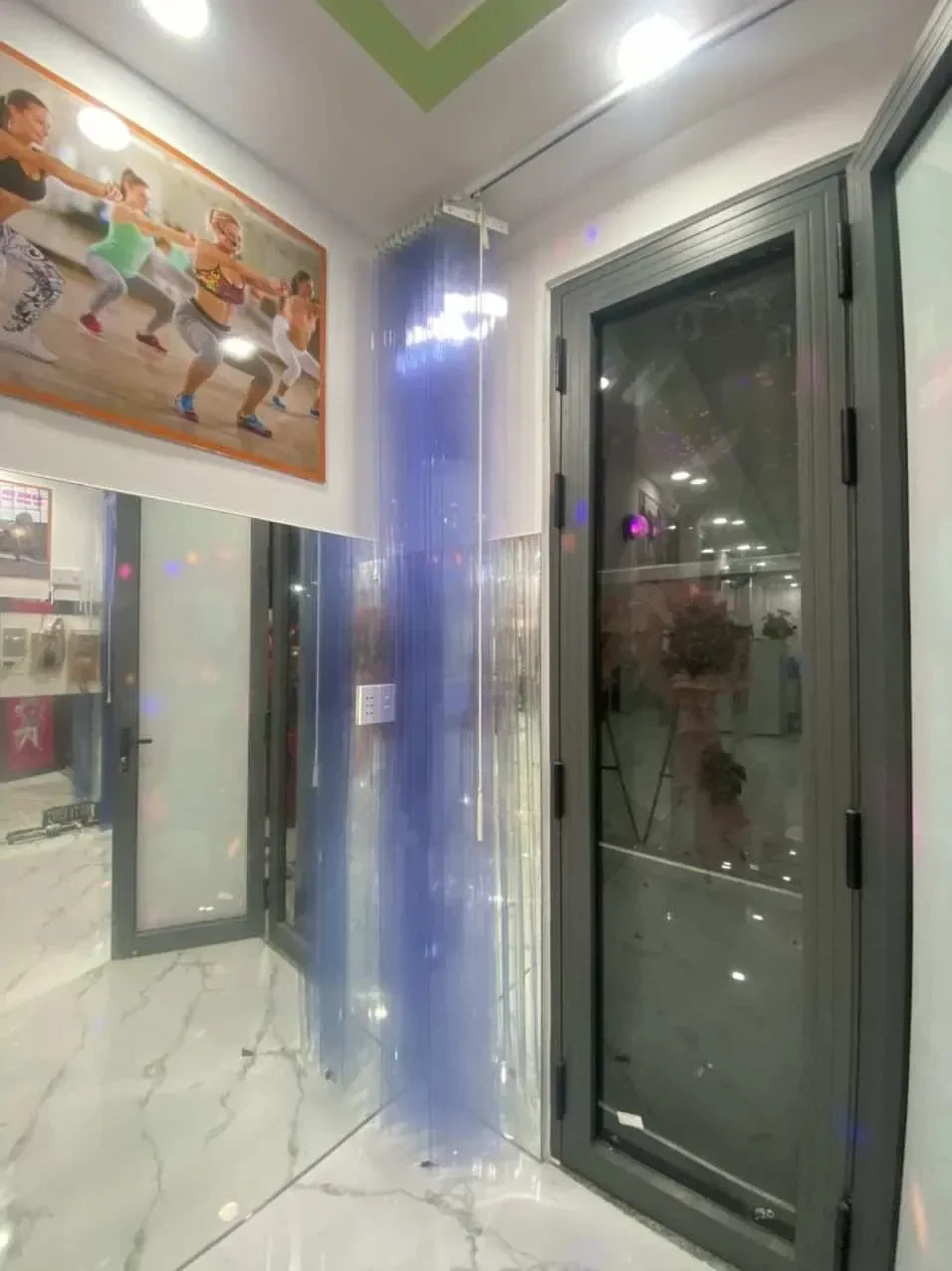
PVC Curtains in Bình Tân District – Ngọc Liên Club
Ngọc Liên Club, a modern fitness and yoga space in Bình Tân District, required a [...]
Related services

In-Home Curtain Measuring: Checking Windows, Ceilings, Recesses and Obstructions
In-home curtain measuring service in Ho Chi Minh City, checking window openings, ceilings, curtain recesses [...]

Motorized Curtain Installation in Ho Chi Minh City: Site Surveys and Technical Advice
Motorized curtain installation in Ho Chi Minh City, including curtain recess surveys, power supply checks, [...]
Apartment Curtains in Ho Chi Minh City: Consultation, Measuring, Sewing, and Installation
Apartment curtain services in Ho Chi Minh City include consultation based on sun exposure, measuring, [...]
Related posts
Curtain Price Quotes in District 8: How to Compare Configurations Correctly
A curtain price quote in District 8 is only reliable when you are comparing the [...]
Curtain price quotes in Tan Phu: How to read and compare based on your needs
A curtain price quote in Tan Phu should be read as a complete configuration, not [...]
How to Clean & Maintain Zebra Blinds for Lasting Beauty
A step-by-step guide to cleaning zebra blinds, from identifying your needs and checking the window’s [...]
Trusted Curtain Tailoring Address in Binh Duong
A guide on choosing custom curtains in Binh Duong based on living space, lighting, privacy, [...]
Rainbow Blinds for Windows: Tips for Choosing & Styling Well
A guide on choosing window rainbow blinds based on windows, lighting, privacy, materials, finish styles, [...]
Roller Blinds for Windows: Selection & Styling Tips
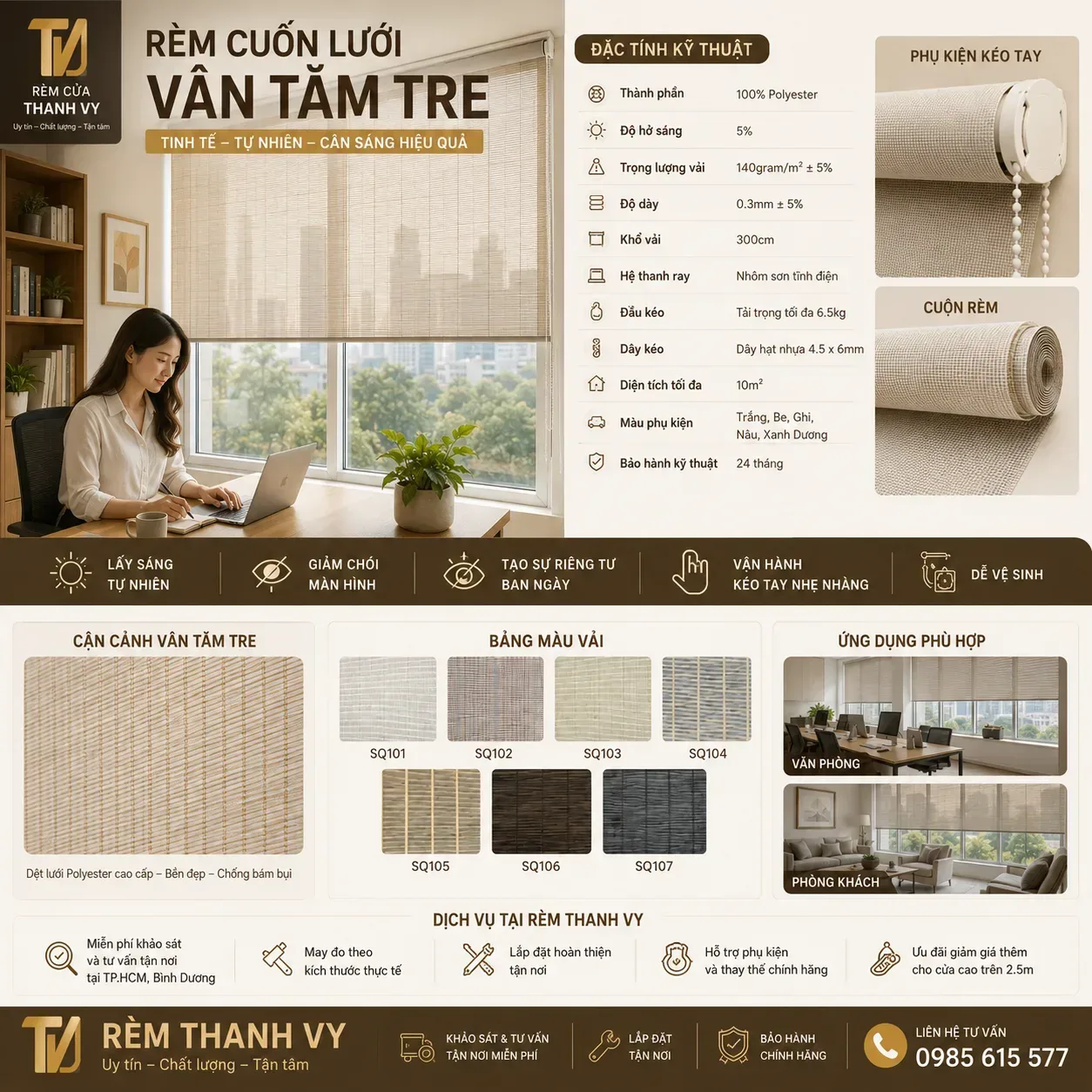
A guide to choosing window roller blinds based on window type, lighting, privacy, materials, finishing [...]
Roman Shades in District 7: How to Choose and Measure Your Windows Correctly
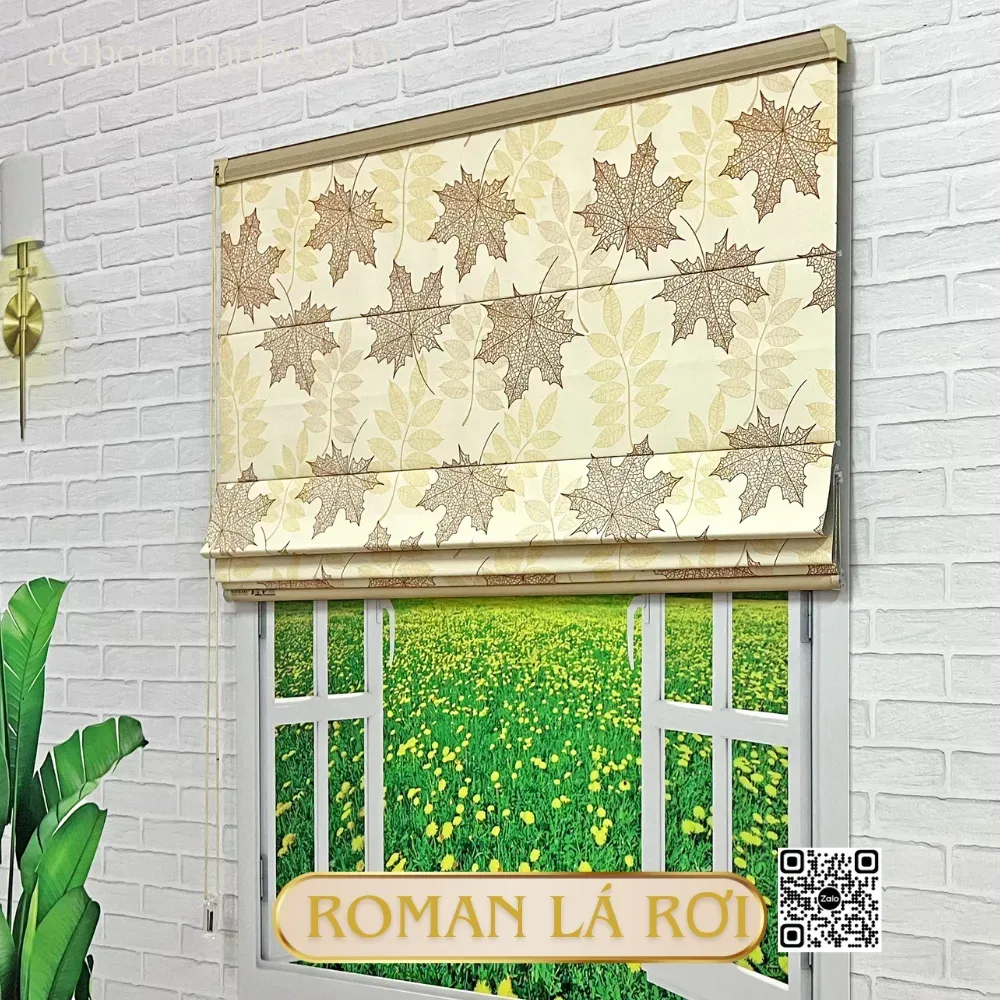
This guide explains how to choose Roman shades in District 7 based on your window’s [...]
Fabric Curtains for Windows: Tips for Choosing & Styling
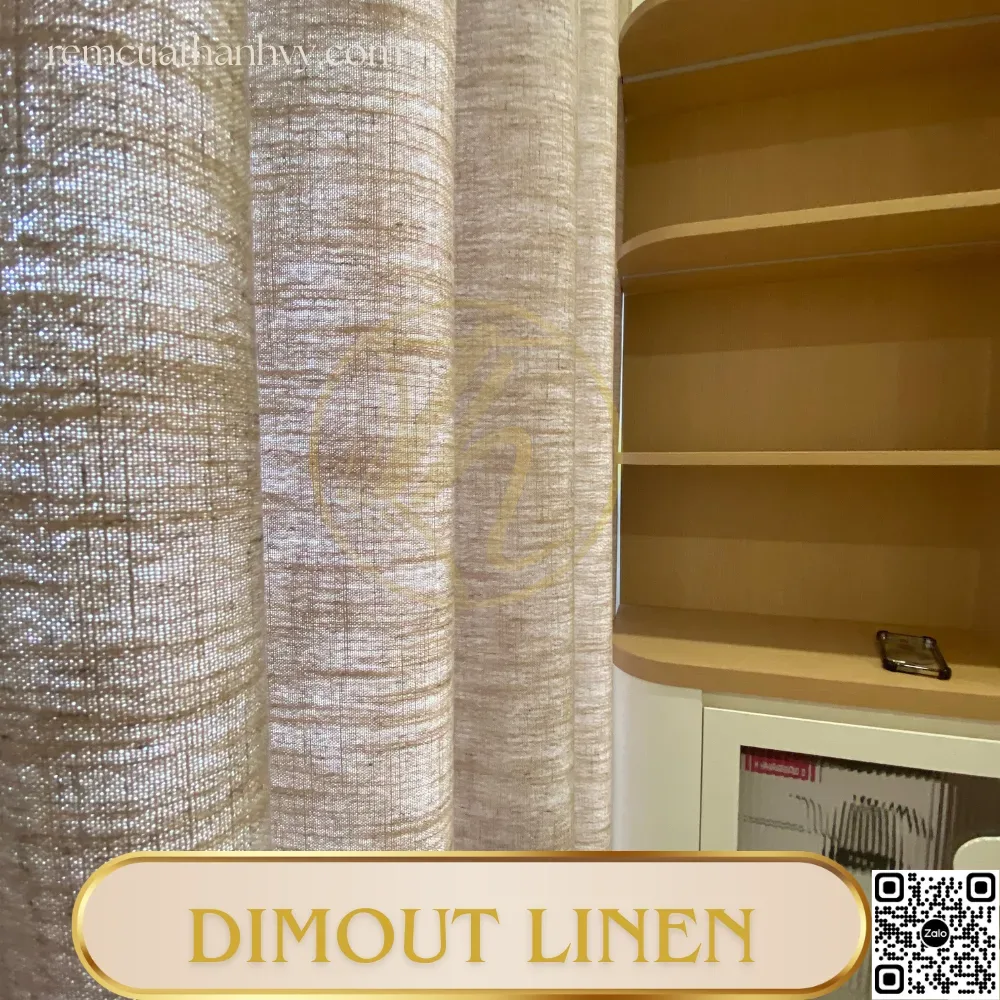
A guide to choosing window curtains based on window type, lighting, privacy, materials, finishing styles, [...]

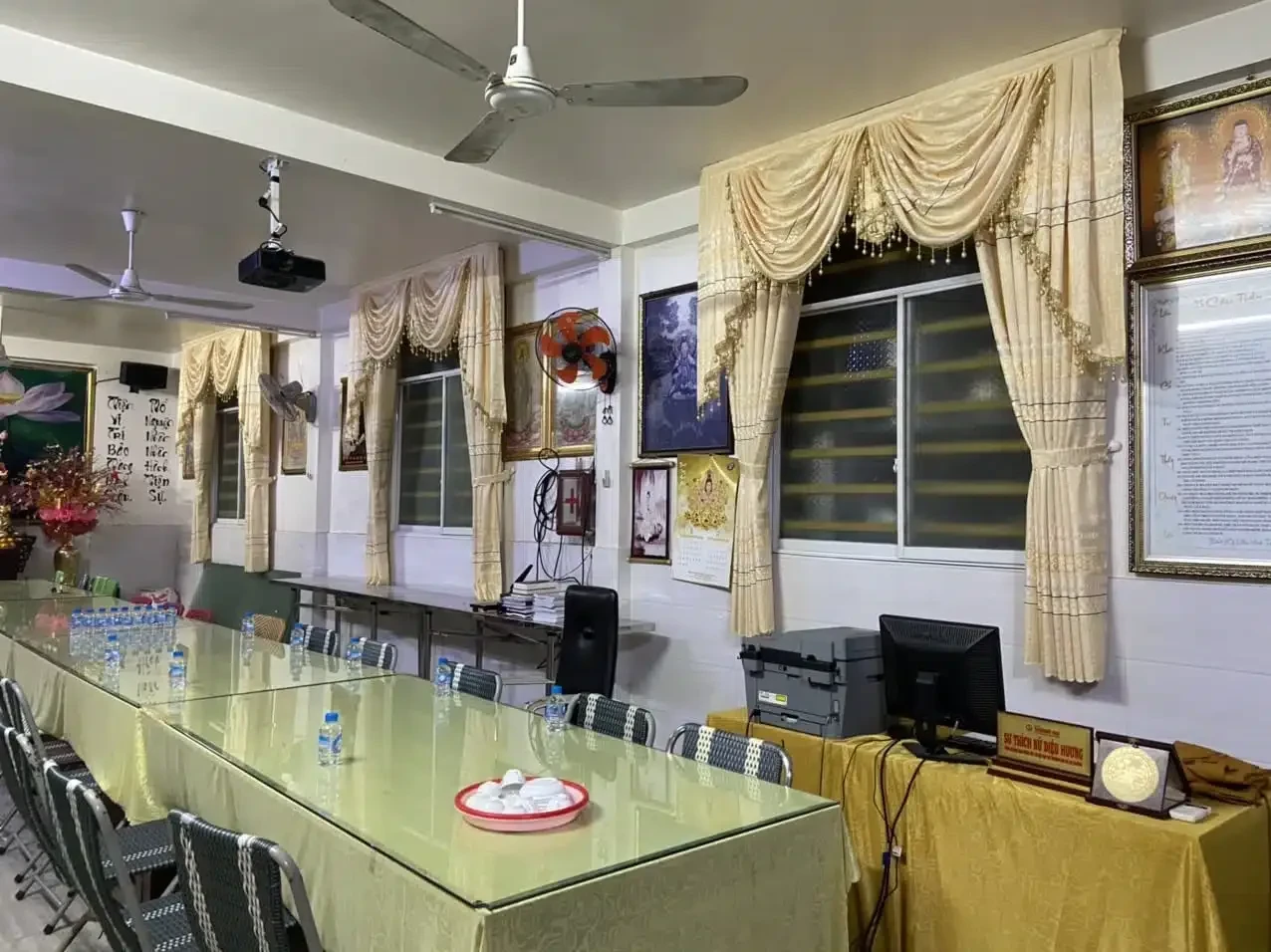
No comments yet!