



Apartment Curtains in Ho Chi Minh City: Consultation, Measuring, Sewing, and Installation
Apartment curtains in Ho Chi Minh City: consultation, measuring, sewing, and installation
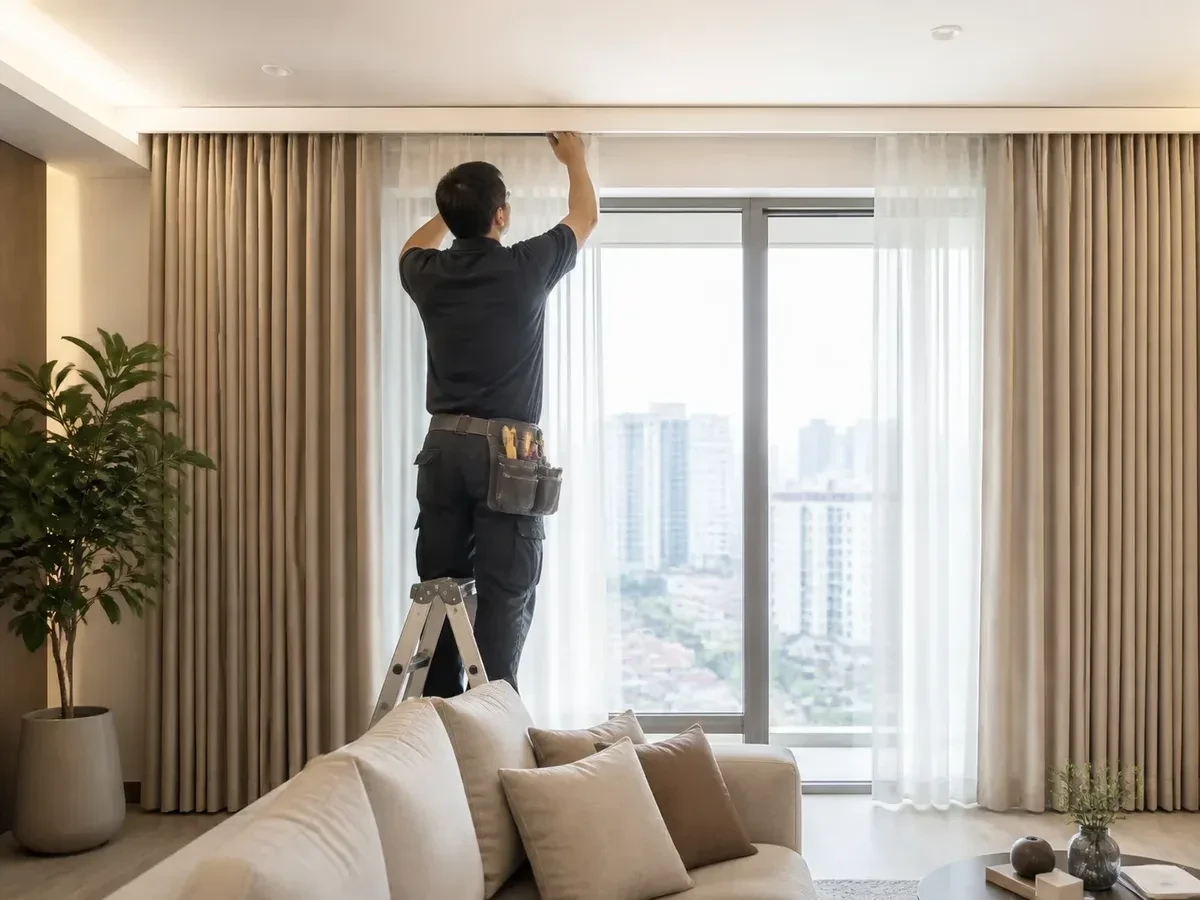
Apartments in Ho Chi Minh City often face three issues at once: strong sunlight through large glass surfaces, drafts on high floors, and limited usable space. A well-chosen set of apartment curtains not only blocks light but also makes the space feel cooler, provides privacy from buildings across the way, and gives the interior a finished look. For effective results, the window openings, ceiling height, electrical outlet locations, door handles, and balcony door opening direction need to be inspected on-site before finalizing the curtain selection.
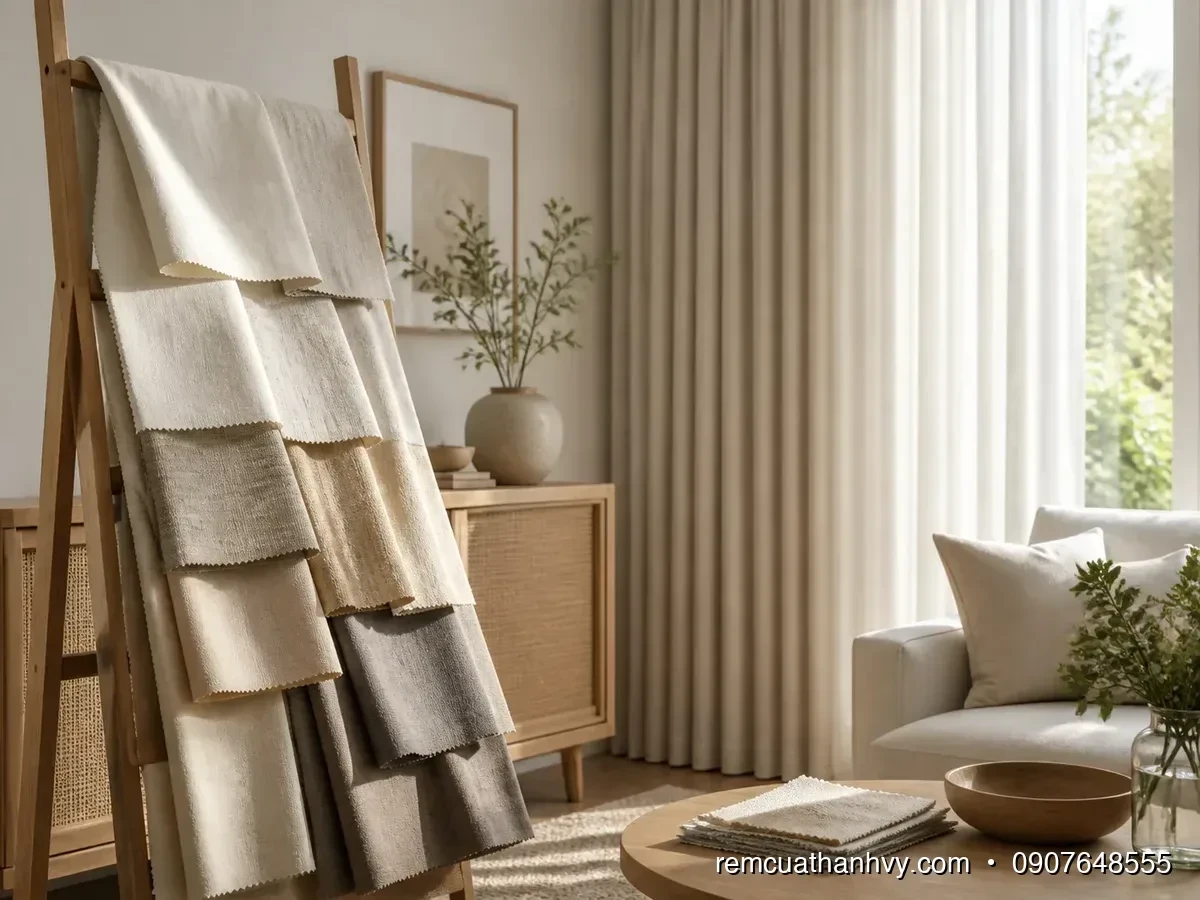
For newly handed-over apartments, homeowners should schedule a consultation as soon as the wall painting and flooring are complete. A technician can bring a fabric catalog and samples of zebra blinds, roller shades, Roman shades, and wood blinds to the home to compare colors under actual lighting conditions. Viewing samples in the apartment helps avoid choosing the wrong shade because of showroom lighting, while also determining which type of window treatment suits the living room, bedroom, home office, or balcony door.
Assessing existing conditions before sewing curtains
The measuring process begins by identifying the type of opening: single-sash windows, sliding doors, hinged doors, floor-to-ceiling glass doors, or glass panels spanning the room. The technician measures the overall coverage width, floor-to-ceiling height, window recess depth, and clearance on either side of the wall. For balcony doors, the handle’s swing radius, the direction the door panel slides, and the distance to the air conditioner also need to be checked so the curtains do not interfere during operation.
For inside-mounted treatments, measurements must follow the smallest dimensions of the recess at multiple points, since apartment walls and ceilings may not be perfectly square. For outside-mounted treatments, the technician will calculate the edge overlap to minimize light gaps. Fabric curtains typically need sufficient clearance for the curtain track, track end caps, and folds; roller shades and zebra blinds require checking that the frame is level so the fabric does not rub against the edges.
If the apartment has a drywall curtain pocket, its clear width, depth, and the location of the internal reinforcement must be measured. A single-track pocket generally needs a minimum width of about 15–18 cm; a double-track pocket for sheer and light-blocking curtains should allow about 22–25 cm so the two layers can move independently. If the ceiling is low or no pocket has been built, mounting close to the ceiling with an aluminum track, curtain rod, or decorative pelmet will help make the opening appear taller without taking up much space.
Choosing curtain configurations for each area
Living rooms with large glass surfaces are often well suited to double-layer fabric curtains: a sheer layer filters daylight, while the main fabric layer blocks light when privacy is needed. For small windows or desks placed against the wall, Korean zebra blinds offer a compact design, easily adjustable light-filtering bands, and a lightweight look. For high-floor balcony doors with frequent drafts, heavier-weight fabric curtains or inside-mounted roller shades can be considered to reduce fabric blowing into walkways.
Bedrooms should prioritize light blocking, full coverage, and quiet operation. Blackout fabric, light-blocking coatings, or double-layer curtains can meet these needs better than a single layer of thin fabric. For children’s rooms, choose safe operating mechanisms, neatly secured pull cords, and easy-to-clean materials. Kitchen or utility balcony areas should avoid fabrics that absorb odors, while maintaining clearance from the stove, washing machine, and water sources.
Curtain colors should be compared with the flooring, walls, sofa, kitchen cabinets, and metal handles. Cream, beige, and light gray tones generally make small apartments feel more spacious; brown, blue-gray, or dark gray add depth but need to be balanced with light-colored walls and artificial lighting. When choosing fabric, check its reverse side, thickness, drape, wrinkle resistance, and expected fading rather than relying solely on sample photos.
For further information, please contact Thanh Vy Curtains
We provide free consultation and on-site measuring at your home.
Sewing, finishing, and installation at the apartment
Once the selection is finalized, the installer should prepare a confirmation form listing the fabric code, color, sewing style, fullness ratio, finished height, draw direction, and mounting location. For fabric curtains, the fullness ratio is typically calculated based on the track length to create even folds; curtain tiebacks, hanging hooks, heading tape, and curtain grommets must match the sewing style. If the customer chooses wave folds, the fabric can be steam-set at the workshop before being delivered to the site to help maintain a consistent drape.
On installation day, the technician rechecks the space, marks the track centerline, identifies screw locations, and covers the furniture for protection. A concrete drill, anchors, specialized screws, a laser measuring tool, and a spirit level are used according to the wall or ceiling construction. For drywall pockets, mounting points must align with the reinforced framing; screws should not be fastened only into the thin board. After securing the curtain track or curtain rod, the installer fits the operating mechanism, rollers, and curtain panels, then checks the opening and closing travel.
Customers should immediately check coverage at both edges, light gaps at the top, floor contact, alignment between curtain sets, and the pulling force required for operation. Fabric curtains need their folds arranged, headers adjusted, and sufficient hanging time to settle into their drape; roller shades and zebra blinds require checking the roller tube, pull cord, bottom rail, and ability to stop at the correct position. Any discrepancies in dimensions or fabric color should be recorded before final acceptance.
Scheduling a consultation and measuring visit in Ho Chi Minh City
To receive a suitable proposal, homeowners should prepare the apartment floor plan, photos of the window openings, approximate dimensions, and the desired installation date. During the on-site assessment, ask to compare fabric samples in actual sunlight, confirm whether pricing is calculated per linear meter or square meter, identify included accessories, and clarify any additional work that may arise from specific ceiling or wall conditions. The final quote should only be confirmed after actual measurements and a specific curtain configuration are available.
You can submit a measuring request for an apartment in Ho Chi Minh City to receive advice on styles, have the curtain pocket checked, establish production dimensions, and agree on a sewing and installation schedule. A clear process from assessment to handover helps ensure that your apartment curtains both fit the proportions of the openings and operate reliably in the sun and wind conditions typical of high-rise buildings.
Optimizing curtains for the sun exposure of apartments in Ho Chi Minh City
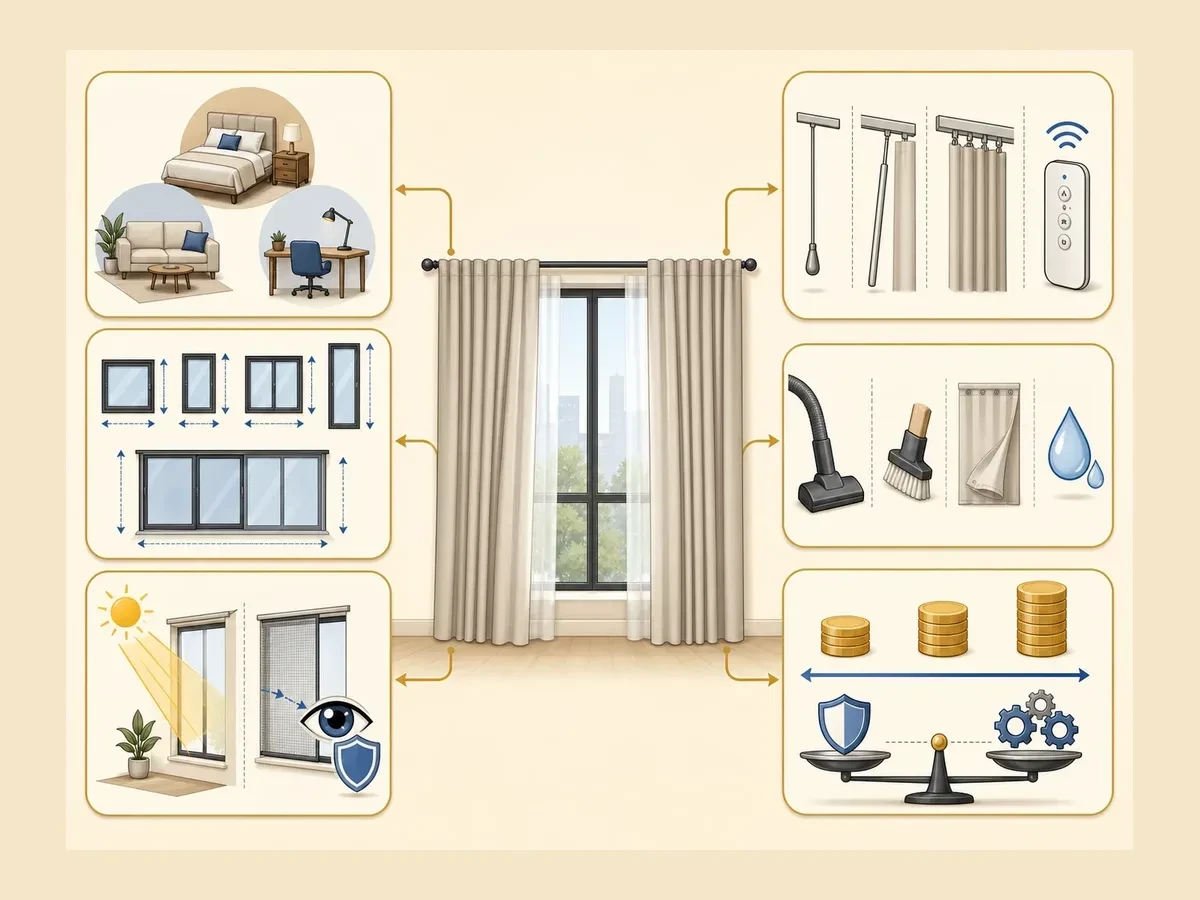
For apartments in Ho Chi Minh City, the direction the windows face directly determines the amount of heat, UV rays, and glare entering the room. West- or southwest-facing glass doors need curtains with strong light-blocking and heat-reducing performance; east-facing openings generally need to soften morning sunlight while preserving natural light; north- and south-facing openings can prioritize lightweight, glare-reducing fabrics. When choosing apartment curtains, start with the balcony’s orientation, the times it receives direct sunlight, and draft conditions rather than choosing solely based on interior colors.
Assessing sun exposure before choosing window treatments
The technician needs to determine the direction the glazing faces using a phone compass or floor plan, then record when sunlight enters through each opening. A west-facing opening may receive angled sunlight from around 14:00 until before sunset; an east-facing opening receives strong solar radiation from early morning. Measurements should include the width of the aluminum frame, the height of the glass, handle positions, clearance for opening the balcony door, and the distance from the ceiling edge to the top of the frame.
Sun exposure should not be assessed solely by how it feels at a single moment. The building opposite, loggias, overhangs, and balconies on the floor above can partially block sunlight seasonally. Conversely, high-floor apartments with few obstructions generally receive direct solar radiation for longer. The survey form should record the opening’s orientation, peak sunlight hours, perceived temperature, screen glare, and whether curtains are pulled by drafts when the door is open.
Window treatment selection matrix for four orientations
| Orientation | Common situation | Configuration to consider | Details to check |
|---|---|---|---|
| East | Low-angle, glaring morning sunlight that can wake bedroom occupants early | Light-blocking zebra blinds, roller shades with a sun-blocking coating, or double-layer curtains with a light-blocking layer | Light gaps on both sides, headbox position, and the ability to adjust individual fabric bands |
| West | Angled afternoon sunlight, hot glass, and interior surfaces prone to fading | Rubber-coated canvas curtains that block 100% of light, blackout roller shades, or wooden blinds with thick slats | Fabric weight, backing coating, overlap, and coverage near the floor |
| Southwest | Prolonged sunlight and heat buildup in living rooms and bedrooms | Double-layer curtains consisting of sheers and blackout curtains, combined with inside-mount roller shades for large glass panels | Load-bearing curtain track, gaps at the top, and measures to reduce drafts |
| North or South | Diffused light, with privacy and glare reduction as the main needs | Dimout curtains, Roman shades, light-filtering zebra blinds, or polyester-blend linen fabric | Light transmission, fabric color, opening operation, and space occupied beside the opening |
Options for west- and southwest-facing openings
For west-facing openings, reducing heat gain should take priority over decoration. Rubber-coated canvas curtains that block 100% of light have a backing that limits light passing through the fabric fibers, making them suitable for living rooms with large glass areas or bedrooms that need deep darkness. For balcony doors that are opened frequently, blackout roller shades can be mounted inside the frame to prevent fabric panels from flapping against handles and door panels.
Double-layer curtains also suit southwest-facing apartments: use the sheer layer when daylight is needed and close the blackout layer in the afternoon. Choose fabric with sufficient weight, securely sewn heading tape, and a curtain track with a corresponding load capacity. Curtain edges should extend at least 10–15 cm beyond both sides of the frame if the layout allows, helping reduce angled light leakage. For doors close to a wall, leave clearance for handles and sliding door panels.
Natural wood blinds can reduce glare and provide an additional thermal barrier, but the stability of the slats in humid conditions needs to be checked. Tilting the slats allows sunlight to be redirected rather than blocked completely. If there are young children in the apartment, use safety controls, secure pull cords, and prevent fittings from striking the glass in strong winds.
Options for east-facing openings
East-facing openings often cause glare when the family is getting ready for work or resting on weekends. Korean light-blocking zebra blinds allow the solid fabric bands to be closed at eye level while leaving the upper section open for daylight. When mounted inside the frame, the blinds have a more compact profile and are less likely to be struck when the balcony door opens. The depth of the glazing bead must be measured precisely so the roller headbox does not interfere with the handle.
East-facing bedrooms can use blackout roller shades combined with a thin sheer layer in front. Roller shades provide a neat, flat surface, are easy to dust, and suit narrow openings. For a softer feel, choose double-layer fabric curtains, but use a curtain track with end stops to prevent the fabric from bunching on one side and letting in morning light.
Managing drafts in high-floor apartments
Sunlight and wind often occur together in high-floor apartments. When the balcony door opens, pressure changes can cause fabric curtains to billow, hit the wall, or wrap around handles. For small openings, inside-mount roller shades or zebra blinds are a more stable choice. For wide openings, use a smooth-running curtain track, load-bearing rollers, fabric with sufficient weight, and magnets to hold the curtain bottoms where needed.
Curtains should not extend right down to the floor if the door opens directly into the fabric. The hem can be left 1–2 cm above the floor, or curtains can be arranged by individual door sections rather than as one continuous panel. The technician needs to open and close the door several times and turn on a fan or create a gentle airflow to check movement, impact noise, and how well the curtains draw back. This is an important step when finishing window treatments in high-floor apartments.
How to limit UV exposure and interior fading
UV rays not only heat the room but also cause wood floors, sofas, sheer curtains, and cabinet surfaces near the glass to discolor over time. For openings that receive direct sunlight, prioritize fabric with a backing coating or a dense weave, and keep curtains fully closed during periods of high solar radiation. Sheers only filter light and cannot fully replace a light-blocking layer when the goal is to protect furnishings.
Know the cost before you decide
Send estimated dimensions and a few photos of the space, and Thanh Vy Curtains will prepare a quote for exactly the items you need.
Request a quote Call 0985 615 577 Message on ZaloAreas exposed to angled sunlight should be measured according to the actual width of the sunlit patch, not just the glass dimensions. If the patch extends beyond the curtain edge, increase the coverage on both sides or add an inside-mount shade for the secondary door panel. Neutral fabric colors such as cream, light gray, or beige help reduce surface heat absorption compared with very dark colors, but the final effectiveness still depends on the fiber structure and coating.
Checking fabric samples in the apartment itself
Fabric samples should be placed against the glass at three times: morning, midday, and late afternoon. Observe how much light passes through, the color reflected onto the wall, the reduction in glare on the TV screen, and how hot the inner surface of the fabric feels. A sample that looks attractive under showroom lighting may appear a different color in angled sunlight. Testing samples on-site helps avoid choosing the wrong color tone or level of light blocking.
For fabric curtains, check the front, backing, drape, thickness, and ability to hold pleats. For zebra blinds or roller shades, check the light-blocking coverage of the fabric bands, roller tube, bottom rail, and operating mechanism. If the opening is close to a bed or desk, prioritize a mechanism that operates easily and quietly and does not obstruct the walkway. These details determine the everyday practicality of apartment window treatments.
Suggested configurations for specific situations
- West-facing living room with tall, floor-level glazing: use double-layer fabric curtains, with the blackout layer extending beyond the frame, a load-bearing curtain track, and hems above the floor to reduce interference during cleaning.
- East-facing bedroom with a narrow opening: use inside-mount light-blocking zebra blinds, checking for light gaps beside the glazing bead and ensuring the operating mechanism is conveniently positioned beside the bed.
- Frequently opened southwest-facing balcony door: use blackout roller shades for the frequently operated door section, combined with fabric curtains over the fixed glazing.
- High-floor apartment with drafts: choose medium- to heavyweight fabric, a sturdy curtain track, and magnets at the curtain bottoms or another suitable edge-securing solution.
- South-facing home office: use light-filtering shades or Roman shades, prioritizing reduced screen glare while maintaining daylight.
To finalize the right configuration, homeowners should request separate measurements for each opening, clearly recording sun exposure, door-opening positions, frame depth, and the desired level of light blocking. When arranging a site survey in Ho Chi Minh City, ask to have samples of blackout, dimout, rubber-coated canvas fabric, zebra blinds, and roller shades brought along for on-site testing. This approach helps base the quote on actual dimensions, avoiding excess material purchases or window treatments unsuited to the sun exposure. Schedule a site survey if you need to assess light, drafts, and installation options for your apartment at the same time.
The Most Popular Types of Window and Balcony Door Curtains and Blinds for Apartments
With apartment curtains and blinds, no single style suits every opening. Bedroom windows need compact coverings that block light and take up little space; living room glass doors need an elegant drape; balcony doors, meanwhile, must withstand sunlight, drafts, and frequent opening and closing. The five types commonly used in Ho Chi Minh City apartments are fabric curtains, Korean zebra blinds, Roman shades, roller shades, and wood blinds. Choosing the right type should depend on the opening dimensions, the direction the door or window swings, clearance from furniture, and the level of privacy needed.
1. Single-Layer Fabric Curtains: Soft and Easy to Coordinate for Windows and Balconies
Single-layer fabric curtains consist of the main fabric, heading tape, a curtain rod or track, and accessories such as hooks, rings, and end caps. Voile, lightweight linen, plain-woven polyester, or lightweight canvas are often used to filter light and reduce direct views inside while keeping the room bright. This style suits living room windows with little harsh sunlight, glass-enclosed loggias, or minimalist apartments.
A major advantage is that the fabric surface creates a sense of warmth and coordinates well with sofas, rugs, and wood cabinets. When made to extend from ceiling to floor, curtains make the opening look taller and more airy. However, single-layer curtains cannot completely block light; light-colored fabrics readily let sunlight through, and thin fabrics may flutter when the balcony door is open. For high-rise apartments, side clearances also need to be measured so the curtain panels do not hit handles, aluminum frames, or plant pots.
2. Double-Layer Fabric Curtains: A Flexible Choice for Large Glass Doors
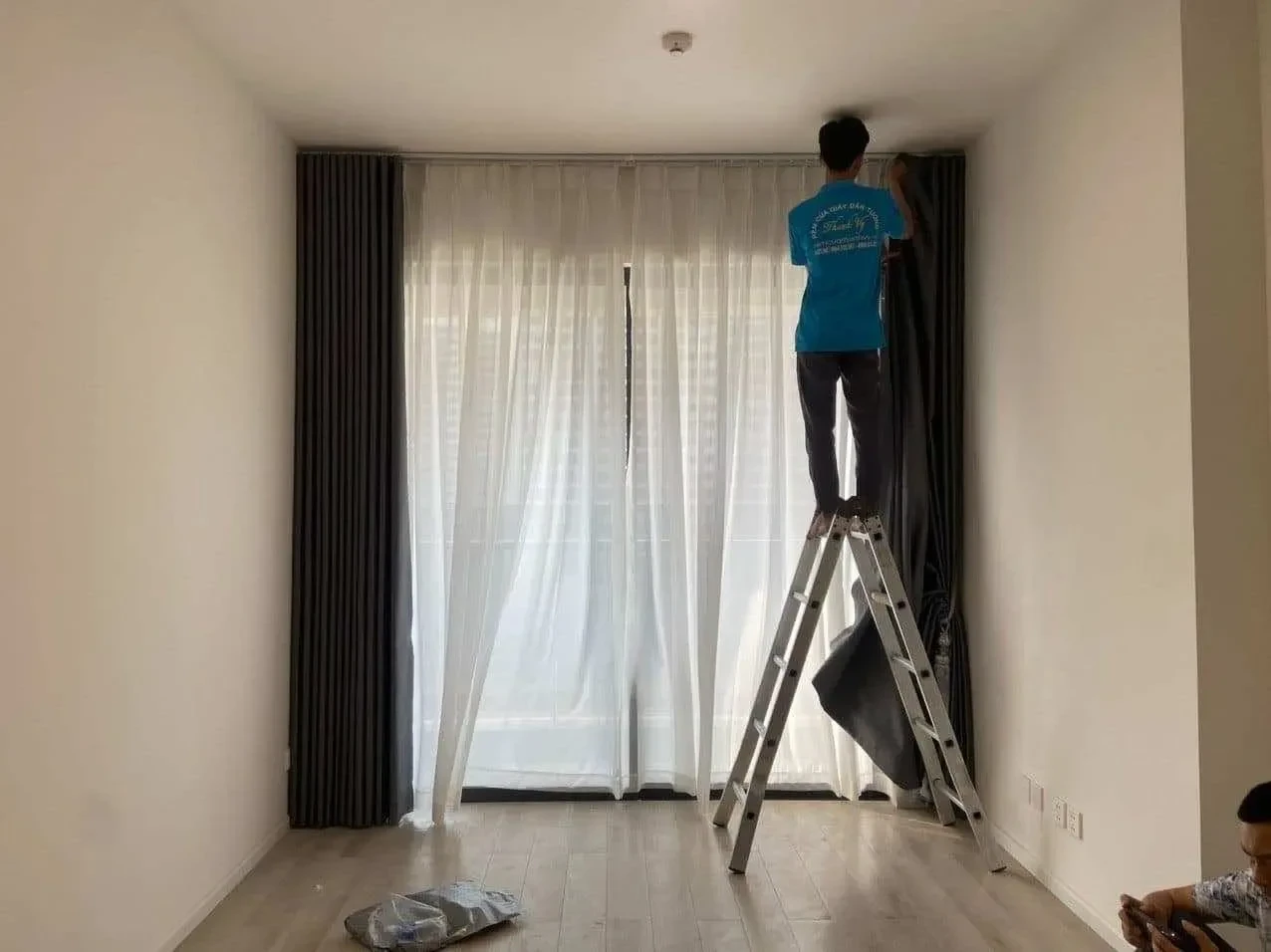
Double-layer fabric curtains combine a voile layer with a thick light-blocking fabric layer. A double track allows each layer to be drawn independently: the voile layer is used during the day to reduce glare and maintain privacy, while the thick fabric layer is closed for sleeping, watching movies, or limiting heat coming through the glass. This is a common option for living room balcony doors, glass doors leading to loggias, and tall, nearly ceiling-height glass panels.
For double-layer apartment curtains and blinds, check the width of the curtain recess or the ceiling setback before finalizing the style. A double-track system takes up more depth than a single track; if surface-mounted, the distance from the track to the wall must be sufficient to keep both layers from rubbing against door handles. For doors that swing inward, divide the curtains into two panels or use a one-way draw in a direction that does not block the walkway. Rubber-coated blackout fabric or densely woven fabric is more suitable for balconies exposed to strong sunlight.
Fabric curtains can be made with structured pleats, grommets, wave headings, or pinched pleats. Wave headings create even folds without looking too heavy; pleated styles suit classic interiors; grommets require a sturdy rod and enough clearance above. Fabric weight, fullness, and track weight directly affect the drape. Do not judge solely by a small hanging sample without also checking the reverse side, light transmission, and ease of cleaning.
3. Korean Zebra Blinds: A Compact Option for Apartment Windows
Zebra blinds consist of alternating light-blocking fabric strips and sheer mesh strips, rolled onto an aluminum tube and operated by a cord or control mechanism. When the fabric strips overlap, light is blocked; when the mesh strips align, the room receives soft light. This construction allows quick privacy adjustments without having to draw the entire covering to the sides.
This type of blind suits bedroom windows, home offices, small glass openings, and infrequently used balcony doors. Inside-mounted blinds reduce projection and keep the fabric from blowing around in drafts. For wide openings, check fabric width limits and divide the covering into multiple units to prevent the roller tube from sagging. The gaps between the blind edges and the frame need to be calculated carefully; if they are too large, light will still enter in strips along both sides.
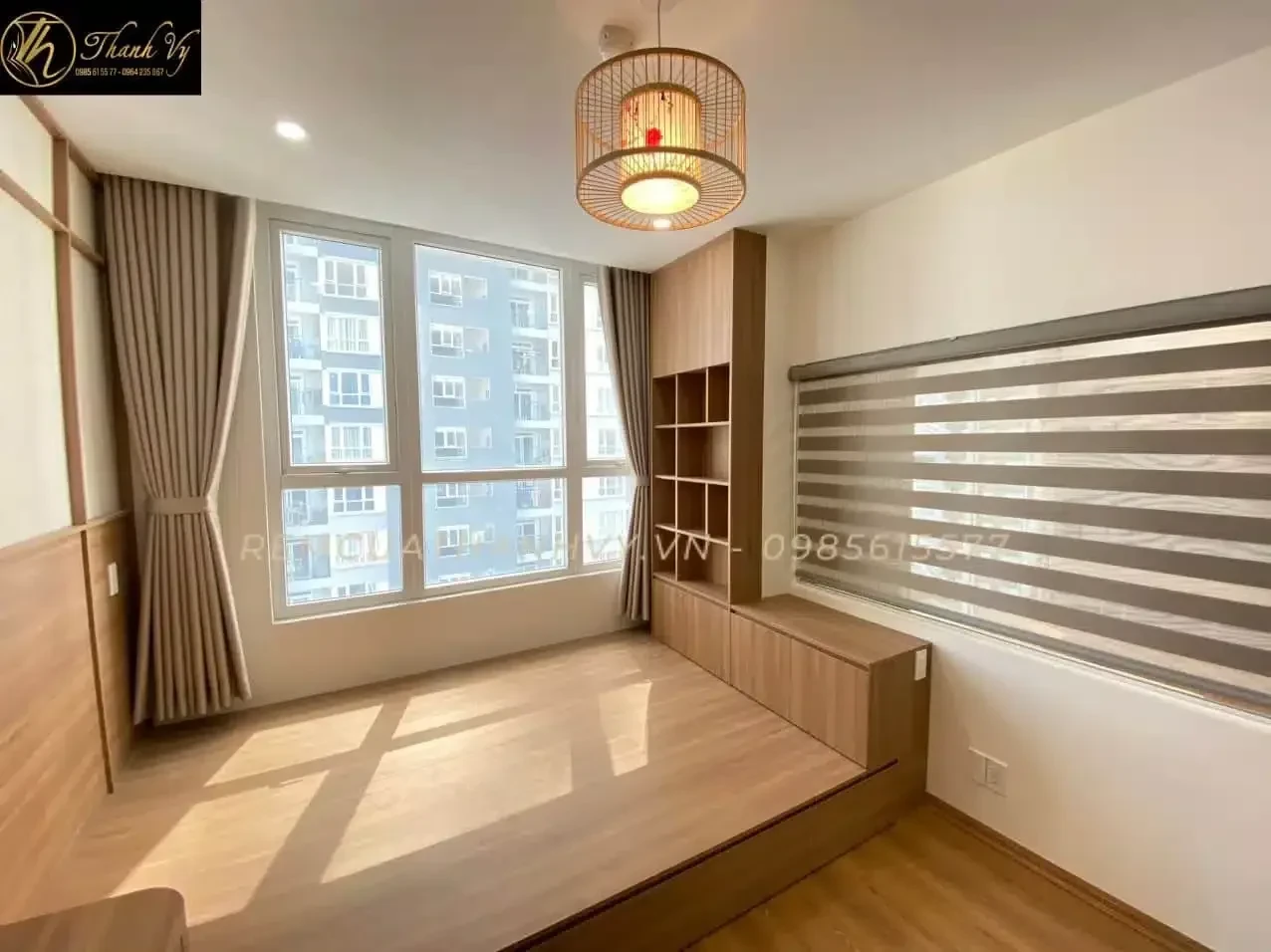
Light-blocking zebra blinds have thicker fabric than standard versions, making them suitable for bedrooms or west-facing openings. Heat-reducing mesh versions provide soft light but do not create complete darkness. During a consultation, place the fabric sample against the glass in actual sunlight to check its color with light passing through it. Cream, light gray, and beige generally give the space a lighter feel; dark gray reduces glare more effectively but can make the opening look heavy if the walls and floor are already dark.
4. Roman Shades: A Neat Option for Small Openings and Bedrooms
A Roman shade is a fabric panel that folds into horizontal sections when raised using lift cords, rods threaded through the fabric, and a bottom bar. When lowered, its flat surface covers the frame completely; when raised, the folds stack neatly. The shade can be made of linen, cotton blends, polyester, or blackout fabric. A backing layer is often added to provide more structure and limit light transmission.
Roman shades suit moderately wide windows, deep window recesses, or areas where walkways need to stay clear. Compared with curtains that draw horizontally, this style takes up no floor space and does not interfere with a desk placed close to the window. The drawback is that the stacked folds occupy some space at the top when raised, so clearance must be left to avoid covering the portion of glass needed for daylight. For frequently used balcony doors, Roman shades are less convenient than roller shades or zebra blinds because the fabric panel must be raised completely before anyone can pass through.
5. Solar Roller Shades and Light-Blocking Roller Shades
Roller shades have a fabric panel that wraps around a roller tube, with brackets at both ends, and are operated by a beaded chain, spring, or motor. Solar roller shades use plastic-coated polyester fibers with varying levels of light transmission to reduce glare while preserving daytime views outside. Light-blocking roller shades use fabric with a coated backing, making them suitable for bedrooms, home theaters, or glass doors and windows exposed to direct sunlight.
One team from drawings to installation
Thanh Vy Curtains surveys, designs and installs based on your actual site. Send us the dimensions and current condition, and we will advise the right solution.
Request a quote Call 0985 615 577 Message on ZaloThis is a practical choice for apartments with many small openings, matching aluminum frames, or a need for quick cleaning. Shades can be inside-mounted close to the glass, outside-mounted to cover the entire frame, or ceiling-mounted when the opening is shallow. When measuring, clearly record the outside-mount dimensions, inside-mount dimensions, handle positions, and roll direction. For hinged doors or windows, a shade installed too close to the handle will interfere with it; for sliding doors or windows, the shade edges must stay clear of the tracks and drainage slots.
For high-rise balconies, inside-mounted roller shades often reduce the fabric banging against the wall when wind is drawn through the doorway. However, light gaps on both sides will be more noticeable than with wide-covering fabric curtains. Side guide channels can be used, or a wider outside-mount size can be selected if the frame construction allows. Motorized versions suit tall openings, hard-to-reach doors and windows, or sets of shades that need synchronized opening and closing.
6. Natural Wood and Faux Wood Blinds
Wood blinds consist of horizontal slats, ladder cords, lift cords, a headrail, and a tilt wand for adjusting the slat angle. Natural wood slats offer grain patterns and warmth, while faux wood blinds use composite materials that resist moisture, provide consistent color, and are easier to maintain. Common slat widths vary by design; wide slats create a bold look, while narrow slats suit narrow openings and streamlined interiors.
By tilting the slats, users can direct light toward the ceiling or floor without fully opening the blinds. Wood blinds therefore suit living rooms, home offices, and windows where privacy needs to be adjusted at different times. The blind assembly weighs more than a roller shade, so the mounting rail and wall must be sufficiently sturdy. Avoid placing natural wood in areas frequently exposed to moisture from balconies, kitchens, or leaking air conditioners; faux wood blinds are a safer choice in these locations.
Quick comparison table for each area of the apartment
| Window treatment type | Suitable location | Light-blocking capability | Space occupied | Selection considerations |
|---|---|---|---|---|
| Single-layer fabric curtains | Living room windows, glass panels with little sun exposure | Low to moderate | Moderate | Prioritize fabrics with good drape and colors that do not let too much light through |
| Double-layer fabric curtains | Balcony doors, large living room glass panels | Moderate to high | Fairly large | Require double tracks, adequate clearance, and suitable stack-back space |
| Zebra shades | Bedroom and home office windows | Moderate to high | Small | Measure the inside opening, check light gaps and size limits |
| Roman shades | Small windows, desks close to windows | Moderate to high | Small | Leave space at the top for stacked folds |
| Solar roller shades | Glass doors and windows requiring glare reduction | Low to moderate | Very small | Choose light transmission based on sun exposure and desired view |
| Blackout roller shades | Bedrooms, west-facing doors and windows | High to total | Very small | Consider light gaps on both sides and side channels |
| Wood blinds | Living rooms, home offices | Moderate to high | Small to moderate | Check load capacity and humidity in the installation area |
Quick selection guide by usage scenario
If the living room balcony door is wide, close to the ceiling, and calls for a soft look, double-layer fabric curtains offer a balance between aesthetics and light control. If the bedroom window is narrow, with a desk or bed close to the frame, zebra shades or blackout roller shades will be less obstructive. If a small window sits within a wall recess, Roman shades create a neat, flat surface. If the homeowner wants to preserve the view while reducing glare, solar roller shades allow a choice of light transmission levels based on fiber thickness.
Before finalizing apartment window treatments, photograph the entire wall area, window or door frame, floor, and furniture placement. Record the glass width, overall width, floor-to-ceiling height, distance from the handle to the wall, and opening direction. For balcony doors, also check wind suction, door tracks, locks, and walkways. Physical samples placed next to the paint color and flooring will give more accurate results than images on a screen.
Budgets should be compared using the correct pricing unit for each type: fabric curtains are usually priced per linear meter of finished width or by the amount of fabric used; roller shades, zebra shades, Roman shades, and slatted blinds are usually priced per square meter or finished set. Accessories, tracks, motors, side channels, installation labor, and curtain pocket work may be separate items. When receiving a quote, ask for the billable dimensions, materials, operating mechanism, and included components to be clearly specified to avoid mismatched comparisons between two options.
For an apartment undergoing finishing work, the window treatment type should be finalized after determining the ceiling elevation, outlet locations, and door opening directions. A technician can bring zebra shade, blackout fabric, sheer, canvas fabric, wood blind, and solar roller shade samples to the site to test the light. On-site checks help identify issues early, such as a curtain pocket that is too shallow, a door leaf hitting the track, a curtain obstructing the air conditioner, or a curtain edge being blown against the glass.
Scheduling an on-site measurement is a sensible step when doors or windows are large, ceilings are low, multiple openings adjoin one another, or several types of window treatments need to be coordinated. After measurement, request a confirmation sheet for each set, including its location, dimensions, fabric type, sewing style, accessory color, and installation method. This information helps ensure that the chosen apartment window treatments are made to fit each opening rather than using one standard specification throughout the apartment.
Technical requirements for installing recessed drywall curtain pockets in apartments
For ceiling-recessed apartment window treatments, the drywall pocket dimensions must be finalized before the framing is installed. A single pocket should be at least 15–18 cm wide; a double pocket for sheers and light-blocking curtains requires 22–25 cm. The usable depth is typically 10–15 cm, enough to conceal the track, rollers, and curtain heading. If the pocket is too narrow, curtains can rub against the edges, fail to open fully, or form folds pressed tightly against the wall.
1. Determine the pocket type and track clearance
A single pocket is used for one layer of fabric curtains, roller shades, or slatted blinds. A double pocket requires two independent tracks: the inner track for sheers and the outer track for the light-blocking layer. When laying them out, the track near the glass must have enough clearance to keep the fabric from touching handles, locks, or balcony door leaves. For inward-swinging doors, the technician needs to check the door’s swing arc before fixing the track location.
Dimensions should not be based on the glass width alone. Both side walls, concrete beams, ceiling edges, air-conditioning service enclosures, and smoke detector locations must also be measured. A continuous bank of balcony doors often requires a pocket extending across multiple door leaves; pocket joints must be straight, without steps that cause curtains to catch when drawn. In apartments with right-angle window corners, curved tracks or corner-connected tracks need to be planned from the floor plan rather than bent on-site.
2. Construction specifications to finalize in the drawings
The pocket assembly includes perimeter channels, concealed framing members, drywall panels, specialized screws, joint tape, and a finishing skim coat. The pocket opening must be straight along its entire length, with a flat lower edge and no sagging. For a double pocket 22–25 cm wide, check the spacing between the two tracks so the fabric edges do not overlap when drawn. The 10–15 cm depth refers only to the clear interior space; the framing and finish layers must be accounted for so they do not reduce the actual opening.
Aluminum tracks, rollers, hanging brackets, and end caps must be selected as a compatible system for the window treatment type. Heavyweight fabric curtains need more screw fixing points than lightweight fabrics; adhesive alone or screws driven directly into drywall should not be used. At high-load locations, installers need to reinforce the assembly with steel box sections, plywood panels, or additional framing connected to the concrete ceiling. Expansion anchors, self-drilling screws, and threaded rods must be appropriate for the structural substrate, and drilling into concealed electrical conduits must be avoided.
3. Installation sequence in an apartment undergoing finishing work
First, the installation team cross-checks the door and window drawings, ceiling elevation, and approved curtain dimensions. They then mark the pocket centerline with a laser, identifying the inner edge, outer edge, and any intersections with recessed lights. The framing is secured before the drywall panels are fastened. If the apartment has already been painted, the floor, walls, and furniture must be covered, and a dust extractor should be used when cutting panels to limit fine dust.
After installing the panels, the installer treats the joints with mesh or paper tape, applies a smooth skim coat, sands it, and paints it to match the ceiling. The pocket opening must not have exposed screw heads, seams, or chipped panel edges. Before the final coat of paint, a sample track section should be test-fitted. This step identifies insufficient depth, obstructed connectors, or incorrect elevation early, without having to remove the finish.
4. Check apartment-specific conditions
High-floor apartments often experience drafts when balcony doors are open. Curtain pockets must not be placed so close to the door leaves that fabric gets pulled into the gap. For apartment window treatments on an exposed west-facing side, heavier light-blocking fabric may be needed; track loads and reinforcement must therefore be planned from the outset. If the door is opened frequently, inside-mounted curtains or roller shades close to the frame can reduce impacts, but operating clearance must still be checked on-site.
Low ceilings call for pockets close to the ceiling, compact openings, and straight tracks to create a greater sense of height. However, pockets must not be lowered to cover air-conditioning vents, fire sprinkler heads, smoke sensors, or ceiling access panels. For an exposed beam running across a door or window, options include a pocket following the beam, a localized ceiling drop, or a track mounted to the underside of the beam. The final solution must be clearly shown in the construction drawings to avoid unforeseen work when the window treatments are installed.
5. Acceptance inspection before curtain installation
Before handing over the curtain recess, use a laser level to check straightness along its length; use a spirit level to check the elevation at both ends; and remeasure the width and depth at multiple points. Minor deviations at the recess opening can tilt the track, while major deviations will cause the curtain edges to hang unevenly. Also check corner radii, outlet locations, clearance from the side wall, and the balcony door’s opening range.
When test-fitting the track, the rollers must move continuously without catching at the joints. Open and close the curtains several times to check noise, vibration, and the distance between the two layers. Finally, photograph the recess dimensions, anchor locations, and paint color for the apartment records. These records help ensure accurate work if the track needs to be removed, the fabric replaced, or the ceiling repaired later.
To avoid modifying the recess after finishing, send the window and door drawings, ceiling photos, and proposed dimensions to the measurement team before the drywall installation date. A technician can confirm whether a single or double recess is needed, the track elevation, reinforcement points, and door clearance based on your apartment’s actual layout.
If the recess has been built but the track has not yet been installed, do not drill multiple additional holes in the drywall yourself. First, check the framing and wiring locations with a specialized detector. A single on-site remeasurement can often prevent cracks along the recess edges, screws pulling out, or the need to touch up paint across the entire ceiling. This step is especially necessary for apartment curtains with large glass doors and long, continuous tracks.
High-temperature steam-setting technology for fabric curtains: The secret to resort-quality curtain folds
For apartment curtains covering tall glass doors that reach close to the ceiling, the drape and spacing between folds directly determine how luxurious they look after installation. High-temperature steam-setting technology places the fabric in a specialized steaming chamber to soften the fibers, shape each fold, and then cool it under controlled conditions. As a result, the curtains hang straight, the folds are even, and the fabric is less likely to billow or wrinkle than when newly sewn curtains are simply hung and ironed on-site.
How does steam-setting differ from ironing on-site?
Ironing only treats the surface at a given moment, whereas steam-setting shapes the curtain along its entire length. When the curtain is hung on a track beneath a low ceiling, the preset folds naturally fall vertically instead of flaring out at the bottom. This difference is easy to see in living rooms with wide balcony doors, where angled light reveals every misaligned fold or bulging area of fabric.
This process is particularly useful for apartment curtains with large fabric widths, heights of 2,6 to 3 meters, and multiple panels that must be sewn together. Without presetting, seams, side edges, and areas near the hanging rings can create uneven tension. After a few days of use, the curtains can easily develop creases, curved hems, or inconsistent fold spacing between panels.
Components and equipment used in a steam-setting batch
At the workshop, technicians typically check the fabric code, fiber composition, fabric width, and weave direction before putting the curtains into the machine. The fabric is rolled or hung on a shaping rack, then placed in a vertical steaming chamber or horizontal steaming system depending on the finished length. Important components include the steam chamber, fold-holding bars, temperature controller, pressure gauge, cooling fan, and stretch-prevention hanging rack.
Densely woven polyester, light-blocking coated canvas, synthetic-blend slub fabric, and cotton blends respond differently to heat. Therefore, a single fixed temperature should not be used for every material. Technicians need to test a sample, observe shrinkage, sheen, and fold recovery, and then select an appropriate steaming cycle. Fabric with a backing coating must also be positioned correctly so that the hot steam does not deform the light-blocking layer.
The high-temperature curtain fold-setting process
Step 1 – Inspect and measure the finished curtains: The curtains are checked against the sewing order for height, width, right-side orientation, heading type, and number of panels. Technicians remeasure the distance from top to bottom and inspect the hems, lead weights, heading tape, and hook positions. Small discrepancies at this stage can cause the folds on two panels to become misaligned when installed on a long track.
Step 2 – Mechanical shaping: The curtain panel is passed through fold-forming bars or arranged in a mold at the specified spacing. For uniform waves, the distance between two peaks is usually kept consistent with the type of heading tape and track system. Wave headings require hooks spaced at the correct intervals; pleated or traditionally shaped headings require separate alignment at the base of each pleat, otherwise the steam-set folds will be pulled out of alignment when hung.
Step 3 – Steam in the heated chamber: Hot steam penetrates the fabric fibers, temporarily softening the material and allowing it to take the shape of the mold. Processing time depends on the thickness, coating, moisture content, and panel width. Throughout the cycle, the operator monitors the thermometer, steam pressure, and signs of shrinkage. The chamber door should not be opened abruptly, as rapid temperature changes can shift folds that have not yet stabilized.
Step 4 – Cool and stabilize the shape: After steaming, the curtains remain on the rack while the temperature gradually drops. Some workshops use circulation fans to shorten the time, but strong airflow directed at one side of the fabric must still be avoided. Only when the surface feels dry, no moisture remains, and the folds retain their shape when gently lifted are the curtains moved to the packaging area.
Step 5 – Inspect before delivery: The finished curtains are test-hung on a sample track to check their drape, coverage at the bottom, and consistency between folds. Technicians inspect them both head-on and at an angle, since light from glass doors can reveal overlapping folds, twisted seams, or rolled hems. Panels that do not meet requirements receive localized corrective steaming rather than being delivered directly to the apartment.
After handover, Thanh Vy Curtains stays with you
Talk directly with the Thanh Vy Curtains team to settle the right plan, from design to handover.
Request a quote Call 0985 615 577 Message on ZaloSpecifications to agree on before steaming
To keep results from depending on subjective judgment, the technical sheet should clearly specify the heading tape type, fabric fullness ratio, finished height, number of panels, coverage width on each side, and desired fold spacing. For apartment curtains installed in a ceiling recess, the clearance from the bottom of the curtain recess to the floor must also be considered to avoid having attractive folds at the top while the curtain hem touches the floor or rubs against the door trim.
Wave headings generally require coordinated track, hook, and wave tape positions. If the tape is incompatible with the rollers, the folds may stretch out when the curtains are opened and closed. For double-layer curtains, the sheer and heavier fabric layers should be steam-set separately because their weights differ. Then, once they are hung on two tracks, the technician adjusts the edge overlap and clearance between the two layers.
Handling common situations in high-rise apartments
In apartments exposed to strong drafts, lightweight curtains often have folds that separate when the balcony door is opened. Steam-setting helps stabilize the shape but does not replace measures to hold the curtain bottoms in place. Lead weights, curtain magnets, or retaining bars can be added depending on the door location. For floor-to-ceiling glass, leave adequate clearance between the curtain edge and the floor to minimize dust pickup, friction, and moisture at the bottom of the fabric during the rainy season.
If a curtain panel shrinks slightly after its first cleaning, do not pull it forcefully while it is still damp. The fabric should be air-dried vertically, then returned to the workshop to assess the shrinkage and carry out corrective steam-setting. Household washing machines, hot water, or high-heat drying can strip the coating and prevent the folds from retaining their original shape. Cleaning instructions must therefore accompany the handover records.
How to tell whether curtains have been properly steam-set
When inspecting, spread the entire curtain across the track and view it from a distance of 2 to 3 meters. The folds should follow one another evenly, with no unusually wide bulges, horizontal creases, or twisting at the hem. When drawn to one side, the curtain should glide smoothly, the waves should gather uniformly, and nothing should catch at the track joints. The outer edges should also hang straight, without curling inward due to heat or uneven sewing.
Also check the curtains when fully closed and fully drawn to both sides. For wide balcony doors, the two meeting edges should overlap just enough to minimize light gaps and ensure privacy. If using a sheer layer, the gap between the sheer and the light-blocking layer should be sufficient to keep the two surfaces from rubbing against each other in a breeze. These points should be documented with photos in the handover report.
Why is steam wave-setting technology suitable for apartment curtains?
Apartment curtains are often tall, have little room for adjustments, and sit directly in the living room’s main line of sight. Fabric that drapes evenly covers the glass more neatly, reduces visual clutter, and preserves the finished look of a recessed ceiling. When choosing curtains for an apartment, customers should ask exactly when the fabric is steam-set, whether it is test-hung for inspection, and what the reworking process is if the folds become uneven after installation.
This technology does not make curtain folds “permanent” under all conditions; their shape is still affected by washing, moisture, pulling, and care. However, high-temperature setting provides a more stable foundation for the fabric, especially when combined with the right curtain heading tape, track, lead weights, and finished length. Before ordering custom curtains, send photos of the opening, approximate measurements, and interior design references so a technician can recommend a wave style suited to the actual layout.
Check the fabric and sewing specificationsIdentify the fiber composition, coating, height, number of panels, and type of curtain heading tape.
Arrange the folds on a formAlign the wave spacing, hooks, and direction of the drape before placing the curtains in the steaming chamber.
Steam and coolSet the folds using an appropriate cycle, then cool gradually to prevent the shape from shifting.
Test-hang and adjustCheck the drape, meeting edges, track movement, and light gaps before delivery.
Want to see the wave folds in person before choosing a fabric? You can arrange for a consultant to bring fabric samples, curtain heading tape, and wave styles to your apartment to compare them with the glass doors, wall colors, and actual lighting.
When requesting a quote, ask for separate costs for fabric, sewing, steam wave-setting, track accessories, and installation. This helps you compare options accurately rather than looking only at the price per meter.
A follow-up measurement on site will confirm the finished height, track setback, curtain pocket position, and door-opening direction. This information is necessary for the workshop to steam-set the curtains to the correct finished dimensions.
Send approximate measurements along with photos of your balcony doors or windows for advice on fabric, curtain heading styles, and a steaming process suited to the conditions in your apartment.
For further information, please contact Thanh Vy Curtains
We provide free consultation and on-site measuring at your home.
Tips for choosing curtain colors and materials for each room’s function
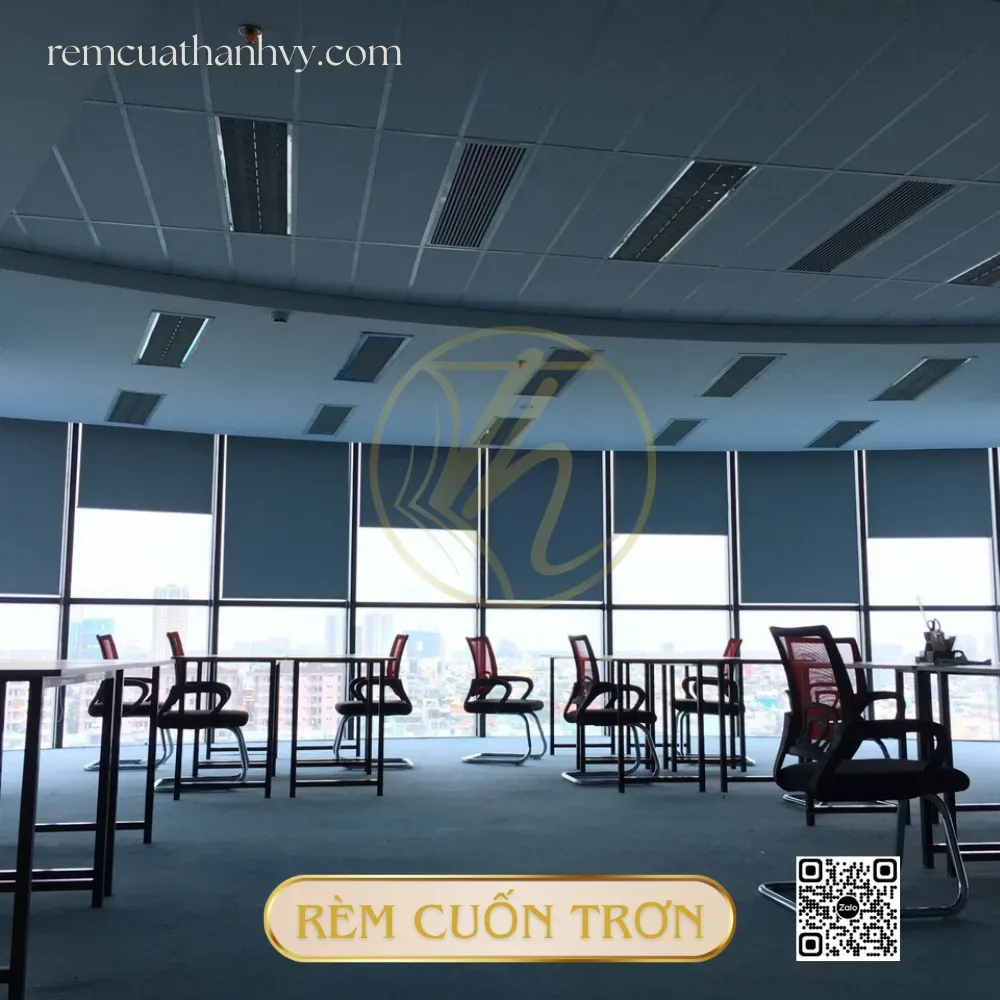
For apartment curtains, choose according to the room’s function first, then coordinate the colors with the walls, flooring, and furniture. Living rooms need flexible light control; bedrooms prioritize light blocking, glare reduction, and a sense of calm; children’s rooms need safe, easy-to-clean materials. A practical approach is to place fabric samples next to the paint color in daylight and measure the distance from the edge of the opening to the furniture before finalizing the color, thickness, and sewing style.
Living room: bright and airy, yet with depth
Apartment living rooms often connect to the kitchen or balcony, so curtains should not weigh down the space. A balanced option is a double-layer curtain consisting of a thin polyester sheer and a moderately light-blocking fabric layer. During the day, draw the sheer to filter sunlight and maintain privacy; in the evening, draw the thick fabric layer when the lights are on. For glass openings 2,4–3,6 m wide, cream, sandy beige, light gray, or ivory helps create a more seamless look.
If the sofa is gray, wood brown, or olive green, you can choose curtains in the same color family but about one to two shades apart. White walls pair well with a linen-polyester blend in light beige or warm gray; avoid pure white, which shows dust easily. Walnut furniture works well with canvas, coarse-woven slub fabric, or linen-look polyester with a slightly textured surface. Patterns should be limited to thin vertical stripes or subtle woven designs so they do not compete with wall art for attention.
Homes with west-facing balconies should use an acrylic-coated fabric layer or a blackout layer on the side facing the glass. This material reduces direct light and limits the sensation of scorching heat next to the sofa. If the balcony door is opened frequently, inside-mount zebra blinds can be more compact than long fabric curtains; their edges are less likely to blow into the door. For apartments with low ceilings, making curtains floor-length and placing the track close to the ceiling helps draw the eye upward.
Adult bedroom: prioritize light blocking and a relaxing feel
In the bedroom, colors should be soft, and the level of light blocking should suit daily routines. People who sleep during the day or have rooms exposed to illuminated signs on the building opposite should choose three-layer blackout fabric, rubber-backed canvas, or densely woven polyester. Actual light blocking also depends on gaps at the sides, top, and bottom of the curtains, so allow coverage of about 10–15 cm beyond each side of the opening if the layout permits.
Blue-gray, taupe beige, milky brown, warm gray, and sage green create a calm backdrop without making the room feel dark and heavy. If the bed has dark fabric upholstery, choose curtains one shade lighter for balance. Rooms with light wood wardrobes suit slub fabric, linen blends, or cotton-look polyester; rooms with metal and glass surfaces suit plain fabrics with little sheen. Avoid overly shiny fabrics when bedside lighting shines directly on them, as they can easily create reflective patches.
For apartment curtains on high floors, drafts through door or window gaps can cause curtains to hit the wall or headboard. In this case, medium- to heavyweight fabric curtains with lead weights sewn into the hem, or inside-mount roller blinds, will be more stable. For casement windows, check the sash’s swing radius before choosing Roman shades; if the folded fabric touches the handle, daily operation will be inconvenient.
Children’s rooms: cheerful colors, easy-to-clean materials, and safe operation
Children’s rooms need energetic colors that do not overwhelm the eye. You can choose creamy yellow, light sky blue, mint green, blush pink, or sand, paired with a small band of patterns such as clouds, stars, animals, or geometric shapes. If the walls already have decals, wallpaper, or colorful shelves, solid-colored curtains will help balance the room. Cartoon patterns should be used on only one layer or one curtain panel, rather than covering the entire window area.
For materials, finely woven polyester, cotton blends, and lightweight canvas tend to collect less dust than fuzzy weaves. Prioritize light neutral colors that can be washed regularly, strong stitching, fabric edges that do not fray, and surfaces that do not shed fibers. Roller blinds or zebra blinds with compact headboxes help save space beside a study desk. Pull cords must be secured with cord clips; do not leave cords hanging near bunk beds, cabinet handles, or areas where children often play.
If the children’s room window faces east, a sheer curtain layer or glare-reducing mesh blind helps soften the morning light. If it faces west, add a light-blocking layer behind it to protect desktops, books, and wood flooring from harsh sunlight. When measuring, record the glass frame width, overall coverage width, ceiling-to-floor height, and electrical outlet locations separately to prevent pull handles or roller housings from covering switches.
Kitchens and dining areas: compact, resistant to odors, and easy to clean
Kitchens often have oil vapor, steam, and heat, so thick fabric curtains hanging close to the cooktop are unsuitable. For windows beside a dining table, choose polyester roller blinds with a dust-resistant coating, powder-coated aluminum blinds, or short Roman shades that end above the tabletop. Light gray, grayish cream, light moss green, and beige brown show splashes less than pure white. The distance between the curtain edge and the cooktop must be sufficient to keep the fabric from touching a heat source.
In apartments with a balcony door connected to the kitchen, zebra blinds or mesh roller blinds can be used on the section that is frequently opened and closed. The mesh surface filters light, maintains daytime views, and takes up little space. When strong sun blocking is needed, choose a model with a blackout layer instead of relying solely on dark fabric colors; a dark color does not necessarily mean high heat resistance.
Coordinate colors with the interior palette and actual space
An easy rule to follow is to keep curtains in the same color palette as the walls or a large furnishing, such as a sofa, headboard, rug, or cabinet. Small apartments should use light colors, smooth-surfaced fabrics, and small vertical patterns to reduce a cramped feeling. Apartments with high ceilings or very wide glass doors can use gently contrasting colors such as moss green, earthy brown, or charcoal gray, but samples should be checked under actual lighting before ordering custom curtains.
Do not just look at a fabric swatch in a catalog. Request a sufficiently large sample, hang it beside the window for a few hours, and observe it at three times: in morning sunlight, afternoon sunlight, and with the lights on in the evening. Beige can turn yellowish under warm lighting; gray can take on a blue cast under natural light. For apartment curtains, viewing samples in the actual room helps avoid color mismatches caused by phone screens or showroom lighting.
Finalize the material and sewing style before ordering
After choosing the color, determine the curtain heading style: grommet, structured pleat, pinch pleat, plissé, or a recessed ceiling track. The same fabric will drape differently and require different quantities depending on the curtain heading. Living room doors that require frequent opening and closing should prioritize smooth-gliding ball-bearing tracks; small windows can use rods or Roman shades. Clearly specify the fabric face, lining side, left or right opening direction, seam locations, and edge overlap requirements on the confirmation form.
Before sewing, the technician should recheck the overall coverage width, finished height, pelmet depth or track setback, and the locations of handles, electrical outlets, and fixed furniture. Customers should also agree on the color sample, fabric weight, fullness ratio, and cleaning method. A suitable choice must not only look good in photos but also operate comfortably, withstand the apartment’s sun and wind conditions, and maintain a coordinated appearance after repeated use.
Know the cost before you decide
Send estimated dimensions and a few photos of the space, and Thanh Vy Curtains will prepare a quote for exactly the items you need.
Request a quote Call 0985 615 577 Message on ZaloTo choose more quickly, send photos of each room, window opening dimensions, balcony orientation, and the main interior colors to receive suggestions for a suitable sample palette. With actual fabric samples, comparisons of light transmission, drape, and shades between rooms will be clearer before finalizing custom apartment curtains.
Full-service apartment curtain measuring, sewing, and installation in Ho Chi Minh City
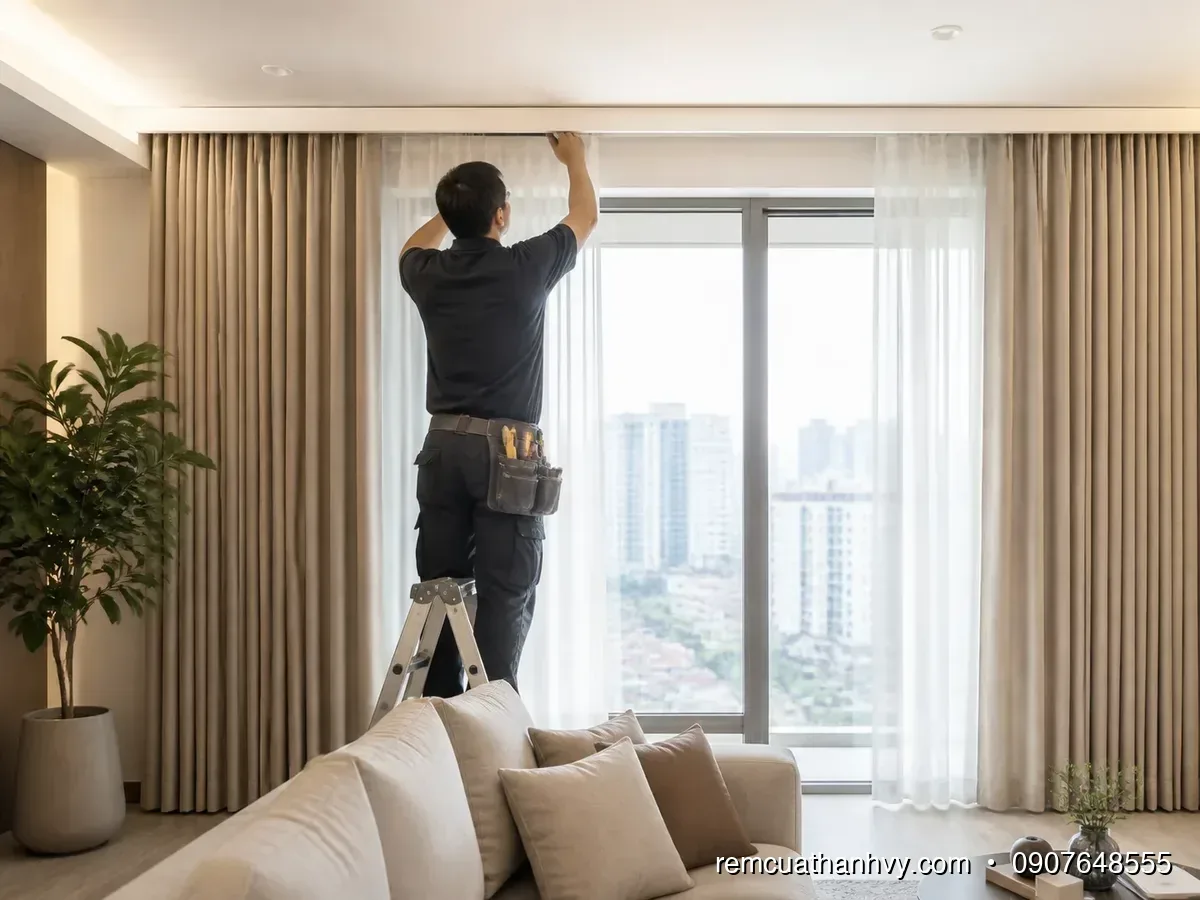
For apartment curtains, a beautiful set is only truly suitable when measured to fit the exact opening, ceiling type, panel opening direction, and usage habits of each room. Full service in Ho Chi Minh City starts with bringing samples to the apartment, surveying existing conditions, finalizing the plan, taking measurements, sewing at the workshop, and then installing and conducting an on-site acceptance inspection. Homeowners do not have to estimate fabric widths themselves or purchase rods, accessories, and labor separately. All specifications are cross-checked before cutting and sewing to minimize discrepancies and unexpected costs.
1. Gather requirements and schedule an apartment survey
Before the survey, the technician needs to know which development the apartment belongs to, whether it has been handed over or is still undergoing interior finishing, the number of openings, the rooms requiring installation, and the desired date for use. Details such as casement windows, sliding balcony doors, fixed glass panels, concrete ceilings, or drywall curtain recesses help ensure the right material samples and tools are prepared. For high-rise apartments, customers should also report drafts, existing curtains hitting the glass, or light-blocking needs for sleeping so the plan delivers not only good looks but also reliable operation.
During the consultation, staff can bring catalogs, samples of light-blocking fabric, sheer fabric, rubber-coated canvas, zebra blinds, roller blinds, and tracks. Placing samples directly beside wood flooring, painted walls, sofas, or kitchen cabinets helps identify the exact shades under actual lighting. Customers can also easily check the thickness, coated surface, softness of the fabric, and how to coordinate double-layer curtains before deciding. This is an important step in ensuring that apartment curtains coordinate with the existing interior rather than relying only on images on a screen.
2. Measure existing conditions and prepare a measurement sheet
The technician does more than measure the glass width. The survey sheet usually records the overall door or window frame dimensions, wall space on both sides, floor-to-ceiling height, locations of electrical outlets, handles, and utility enclosures, and ceiling depth separately. For inside-mounted coverings, measurements need to allow operating clearance so the fabric or blind body does not rub against the frame. For outside-mounted coverings, the technician determines the overlap on each side and the distance between the curtain edge and the wall. If curtains are installed close to the floor, the finished floor elevation, baseboards, and floor levelness must be checked.
For balcony doors, the measuring process also considers the panels’ sliding direction, lock handle locations, opening clearance, and areas that may be pushed by wind. Fabric curtains need enough setback to avoid catching on the panels; roller blinds or zebra blinds can be mounted inside each opening to reduce impact. When a door has multiple panels, the technician marks track division points, stops, and pull directions. These small details determine whether the curtains draw smoothly, whether the two fabric edges meet without gaps, and whether the curtains block light in the right places.
Measuring tools typically include a laser measure, steel tape measure, level, marking pencil, and a detector for suitable drilling locations when wall drilling is needed. After measuring, customers should be able to review the diagram for each opening, fabric code, curtain heading style, pull direction, track type, and installation location. If there are multiple rooms, each location should have its own code, such as living room A, bedroom 1, or balcony B, to avoid confusion during sewing. The measurement sheet serves as a reference for cross-checking between the consultants, sewing workshop, and installation team.
3. Finalize materials, sewing style, and the estimate
The cost of apartment curtains typically depends on the product type, actual dimensions, fullness ratio, accessories, and installation complexity. Fabric curtains may be priced by finished linear meter of width or by area, depending on the provider; roller blinds, zebra blinds, and Roman shades are usually priced by square meter; tracks, rods, rings, end caps, brackets, and installation labor may be listed separately. Because reference prices on the market are not consistent across all fabric codes and layouts, customers should request an estimate clearly stating the units of measurement, quantities, included items, and any costs that may change.
For living rooms with wide glass openings, options commonly considered include double-layer fabric curtains, single-layer fabric curtains, or recessed ceiling tracks. Bedrooms may prioritize a light-blocking layer, a backing coating, and a suitable pull mechanism for the space on either side of the bed. Small windows, projecting window sills, or areas where doors are frequently opened may suit zebra blinds, roller blinds, or Roman shades. If the apartment has pets, young children, or furniture close to the window, discuss pull cords, control placement, and ways to secure the curtains in advance.
Before production begins, the final specification sheet should list the fabric code, color, fabric width, pleat style, specified fullness ratio, finished height, draw direction, track type, accessory color, and any steam-setting requirements. For fabric curtains, the fullness ratio should not be understood as a fixed number for every heading style; pleats with ratios of 1.5, 2, or 2.5 will use different amounts of fabric and produce different fold densities. Written confirmation helps minimize disputes when the actual fabric color or drape differs from expectations.
4. Workshop sewing and pre-delivery inspection
Once the specifications are finalized, the fabric is cut for each labeled window, serged, hemmed, given its heading, and fitted with accessories according to the approved configuration. For fabric curtains, vertical seams must be straight, bottom hems even, and headings level when hung. If rings, hooks, or track-threading cords are used, spacing must be consistent so the folds hang evenly. For double-layer curtains, the sheer and light-blocking layers are clearly separated, and the draw direction is checked to ensure that the faces are not reversed or the sides overlapped incorrectly when closed.
Fabric curtain panels that require a structured shape may be steam-set at the workshop before packaging. The fabric is shaped into folds, cooled, and checked for uniformity before being transported to the site. This step does not replace accurate measurement; it helps the finished product display the agreed fold style and reduces bulging and wrinkling after hanging. Finished curtains should be rolled or folded without creasing the folds, then labeled by room so the installation team can identify them quickly.
Before installation day, the workshop or coordinator needs to check that all curtain panels, tracks, hanging brackets, screws, wall anchors, joining brackets, end caps, controls, and safety accessories are present. If the apartment has recessed ceiling curtain pockets, the track lengths, motor power supply points, and working clearance must be checked again. If even a small part is missing, the installation team may have to drill again or schedule a second visit, affecting the interior completion timeline.
5. On-site installation and operational adjustments
The installation team protects floors, walls, and furniture before drilling. Bracket or track positions are marked at the approved height, then checked with a level before being secured. For concrete ceilings, the anchor type and screw length must suit the drilling substrate. For drywall curtain pockets, the existing framing or reinforcement must be located; heavy loads should not be attached arbitrarily to a single thin sheet. Tracks must be straight, joints tight, and the clearance from the pocket edge sufficient for the curtains to move without catching.
After hanging the fabric, technicians fit the hooks, adjust the headings, align the hems at floor level, and distribute the folds from left to right. For zebra blinds or roller blinds, the blind is leveled, and the pull cord or controls are tested at various heights. For motorized systems, the installation team checks the power supply, rotation direction, stop positions, and control operation. Balcony doors need to be opened fully to ensure that the curtains do not interfere with handles, door panels, air conditioners, or nearby furniture.
For apartment projects in Ho Chi Minh City, installation capabilities should be assessed through handover photos, project references, and actual work completed rather than solely through promotional claims. Some projects recognized in the market include Vinhomes Grand Park, Tropic Garden Thảo Điền, the Thạnh Mỹ Lợi apartment area, and projects in Tân Bình; additional work includes installations at Safira Khang Điền in District 9 and The Elysium in District 7. When reviewing references, customers should clarify whether the provider handled measuring, sewing, or tracks, or only supplied the products.
One team from drawings to installation
Thanh Vy Curtains surveys, designs and installs based on your actual site. Send us the dimensions and current condition, and we will advise the right solution.
Request a quote Call 0985 615 577 Message on Zalo6. Handover, verification, and post-installation support
Once installation is complete, homeowners should open each set of curtains and check the smoothness of the tracks, the level of the rods, fabric edges, seams, lining, and full coverage of the window opening. For recessed ceiling curtains, inspect the pocket opening, bracket positions, and spacing between the two layers. For inside-mount blinds, check whether the blind rubs against the frame. If there are any discrepancies, record them immediately in the handover report with photos of the location so the technical team can address them clearly.
A good full-service package should clearly state what is included in the quote: site survey, transportation, sewing, accessories, drilling and installation, post-installation cleanup, and adjustments if technical defects arise. Before paying a deposit, customers should agree on the sewing lead time, installation date, conditions for changing fabric codes, and the policy for handling actual dimensions that do not match the specification sheet. Send photos of your windows, a floor plan, or your handover schedule to arrange a site survey and receive personalized advice for your family’s apartment curtains.
[contact]Send photos of your windows, approximate dimensions, and your apartment’s location in Ho Chi Minh City to receive an on-site measurement appointment, suitable material samples, and an itemized estimate.[/contact]Tips for inspecting and maintaining apartment curtains for lasting beauty
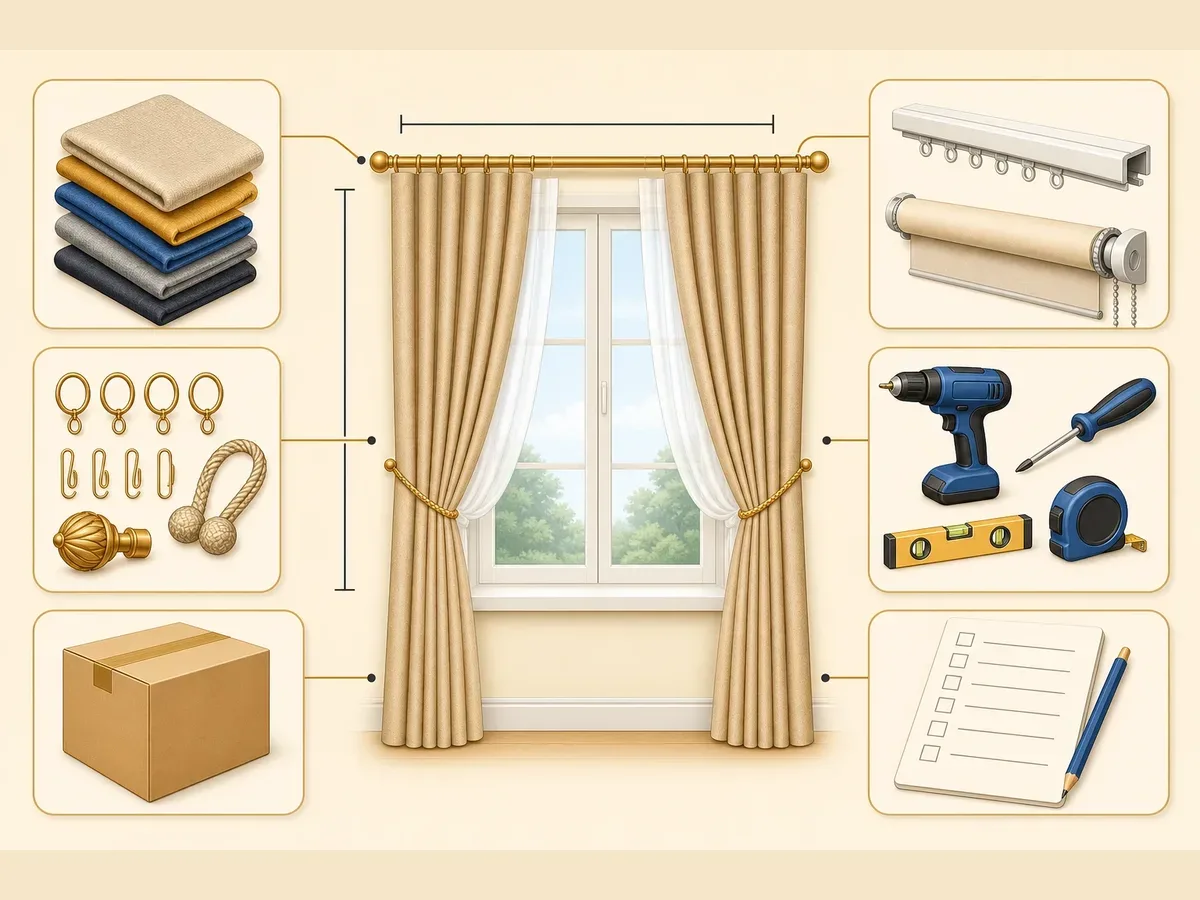
Before making payment, inspect your apartment curtains in three categories: dimensions, operation, and finish quality. Remeasure the width covering the window opening, check that the track or roller tube is securely attached, operate the curtains several times, then examine the drape, light blocking, and gaps on both sides. Taking photos of their condition after handover provides a reference if warranty service is needed.
Apartment inspection checklist
- Correct dimensions: For outside-mount curtains, the fabric edges should extend approximately 10–15 cm beyond each side of the frame; inside-mount blinds must fit neatly without rubbing against window handles or balcony doors.
- Rods and brackets: Check expansion anchors, mounting plates, end caps, and track joints; gently shake the rod to detect vibration, sagging, or unusual noises.
- Seams: Inspect curtain hems, edge stitching, rings, heading tape, and threading cords. Seams must be straight, with no loose stitching or distorted fabric.
- Drape: Fabric curtains should hang straight from the rod to the floor, with evenly spaced folds; keep hems from touching the floor, where they can collect dust or get caught in a robot vacuum.
- Operation: Operate by hand, control cord, or motor according to the configuration. Curtains must open and close smoothly without catching at joints; roller blinds must stop at the correct positions.
- Accessories: Check curtain-holding magnets, stop bars, control boxes, remotes, and wind-restraint kits if the balcony door is frequently open.
Cleaning and care
Vacuum fabric curtains with a soft brush attachment every 2–4 weeks, working from top to bottom to avoid disturbing the pleats. Do not soak curtains with a blackout coating, rubber backing or lead weight tape yourself; check the care label and ask the curtain maker before taking them down. When taking them down, mark each panel as left or right, roll them up or fold them flat, and avoid bunching them up.
Zebra blinds, roller shades and wooden blinds should be wiped with a dry or slightly damp microfiber cloth, then allowed to dry completely. Do not use harsh cleaners on coated fabrics, pull cords or plastic accessories. In drafty high-rise apartments, close the curtains when opening the balcony door and use retaining clips in the correct positions to limit impacts against the glass.
If you notice resistance along the track, uneven fabric folds, curtain hems touching the floor or noise from the motor, stop pulling forcefully and record a short video. Send photos of the window opening and the problem area, along with the order number, so the relevant components can be inspected, rather than redrilling the wall or removing the curtain box yourself.
Handover tip: Keep the acceptance record, cleaning instructions, accessory information and inspection schedule. A periodic check helps your apartment curtains retain their shape, operate reliably and avoid problems caused by improper use.
Related projects
Blue Roman Shade Blinds for The Western Capital Apartment, District 6
This project at The Western Capital apartment complex (District 6) is a typical example of [...]
Black-and-White Double-Layer Curtains for a Masteri Centre Point Apartment in District 9
This project involved installing a double-layer curtain system for a high-rise apartment at Masteri Centre [...]
Double-Layer Floor-to-Ceiling Curtains for a La Astoria Apartment, Thu Duc City
The double-layer curtain project at a La Astoria apartment in Thu Duc District is one [...]
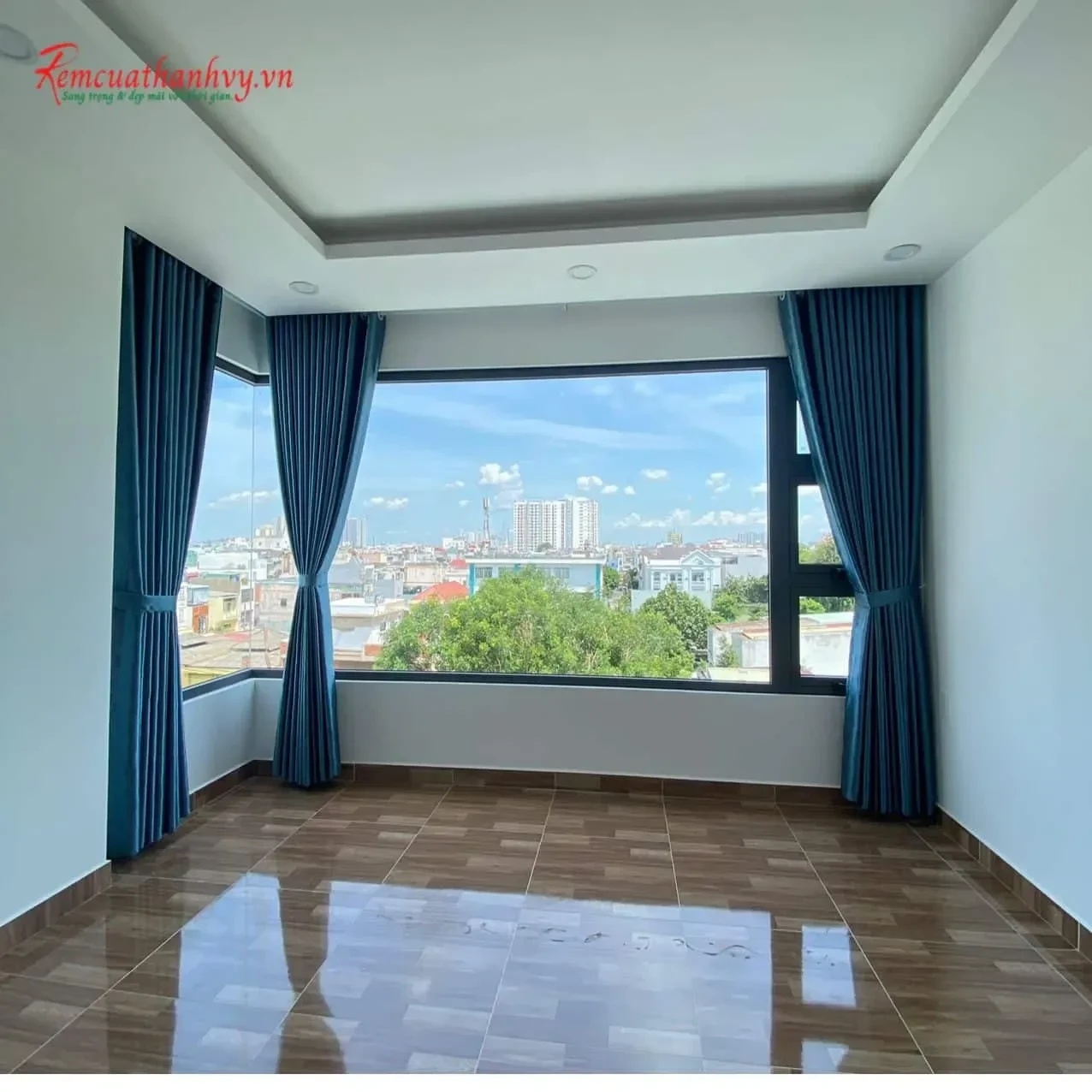
Blue Fabric Curtains for a High-End Apartment Living Room in Tân Phú District
This project involved the living room of a high-rise apartment in Tân Phú District, Ho [...]
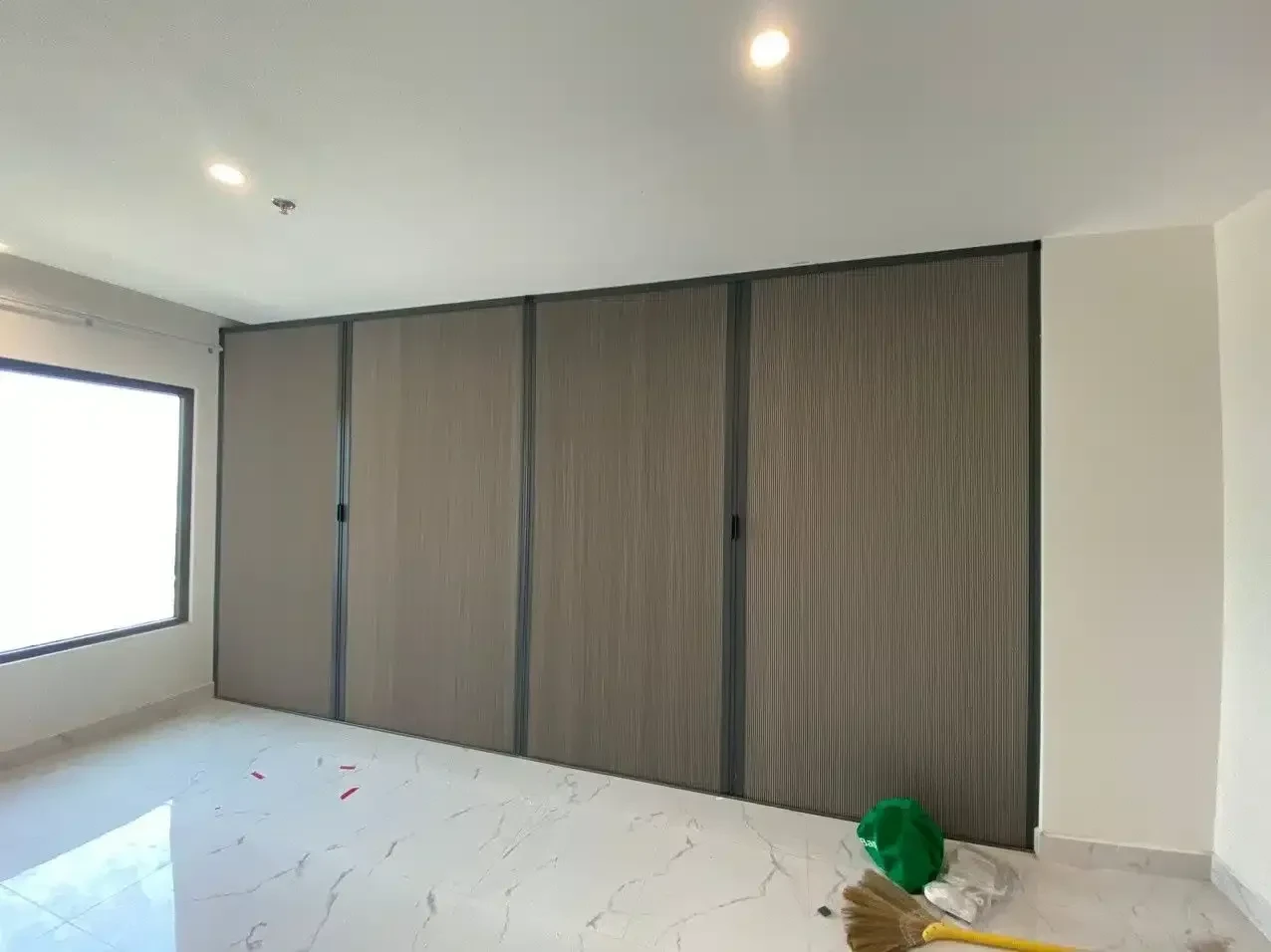
Glass Partition with Roller Blinds at Vinhomes Grand Park – BS-16 Apartment
This project at Vinhomes Grand Park, in the BS-16 tower, was a luxury apartment interior [...]
Related services
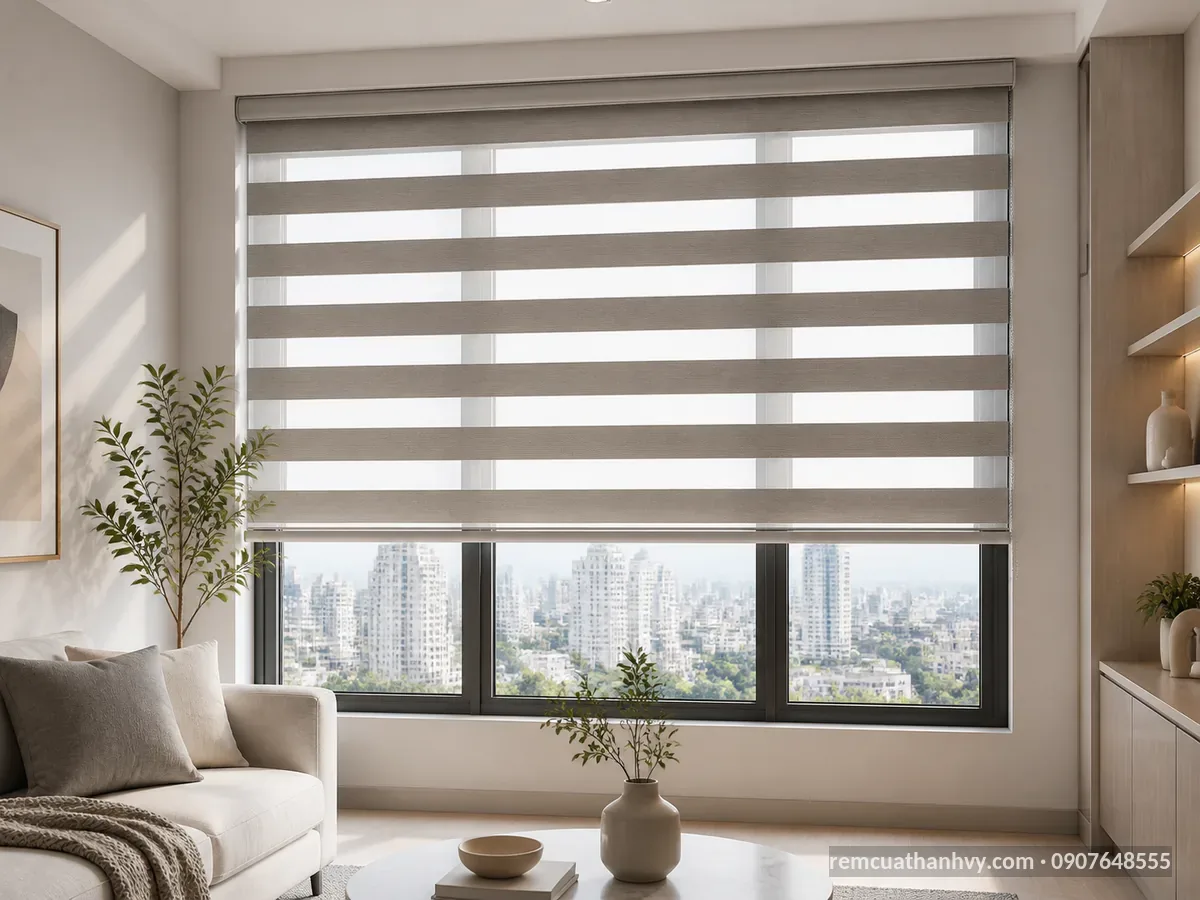
In-Home Curtain Measuring: Checking Windows, Ceilings, Recesses and Obstructions
In-home curtain measuring service in Ho Chi Minh City, checking window openings, ceilings, curtain recesses [...]
Motorized Curtain Installation in Ho Chi Minh City: Site Surveys and Technical Advice
Motorized curtain installation in Ho Chi Minh City, including curtain recess surveys, power supply checks, [...]
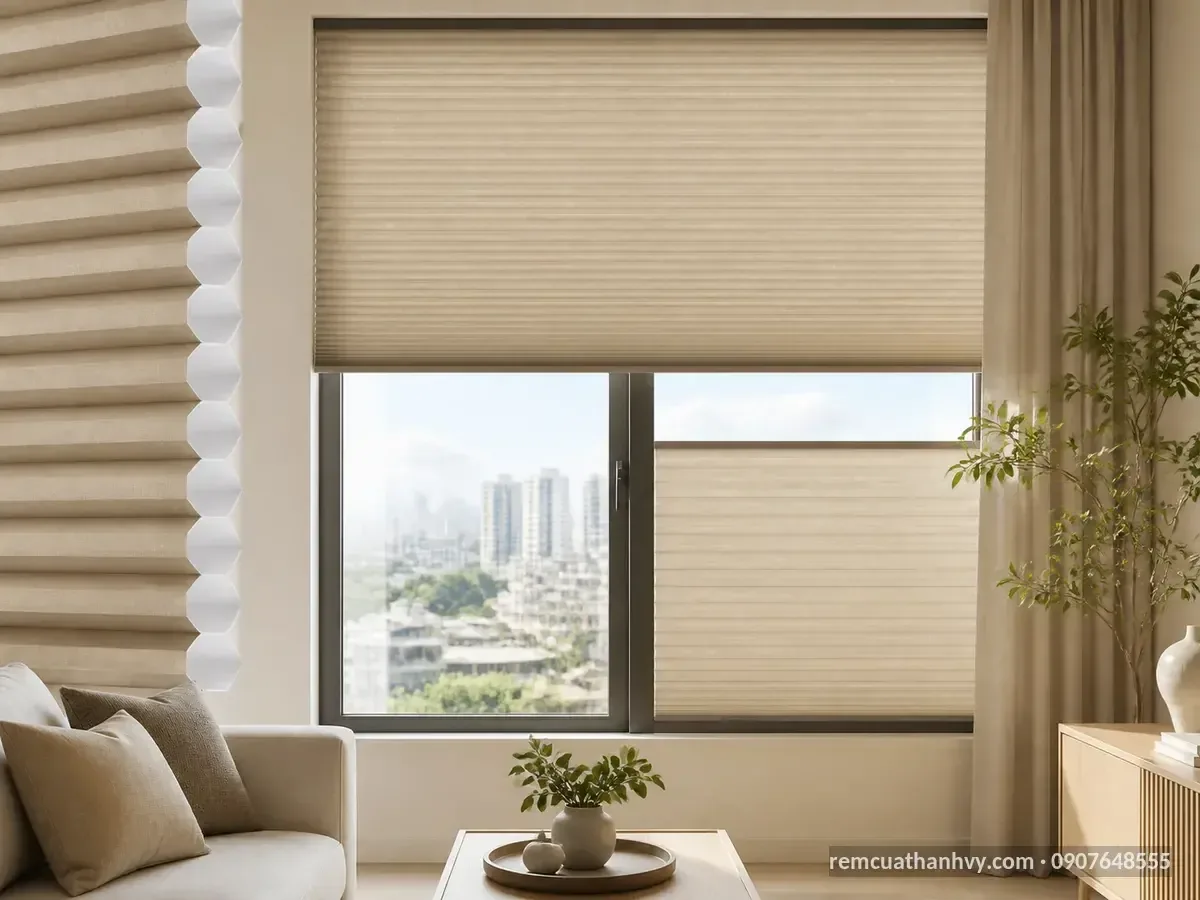
Villa Curtains: Solutions for Large Windows and Double-Height Spaces
A guide to choosing materials, light transmission, double-height curtains, automation, site surveys, installation, and maintenance [...]
Townhouse Window Treatments: Choose by Facade, Light and Budget
Advice on choosing townhouse window treatments based on facade orientation, light intensity, materials, installation techniques [...]
Related areas

Window Treatments in Binh Tan: What to Prioritize for Each Space
Thanh Vy Window Treatments offers tailored window treatment solutions in Binh Tan, backed by extensive [...]
Curtains in Binh Thanh: Priorities when choosing for each space
With over 15 years of practical experience in the curtain industry in Ho Chi Minh [...]
Curtains in District 10: What to prioritize for each space
With years of professional experience, Rèm Cửa Thanh Vy provides expert consultation and installation of [...]
District 11 Curtains: What to Prioritize for Each Space
Choosing District 11 curtains at Thanh Vy delivers optimal sun-blocking solutions and elevates the aesthetics [...]
Curtains in District 4: What to prioritize when choosing for each space
Thanh Vy Curtains provides professional curtain solutions in District 4 with experience accumulated from many [...]
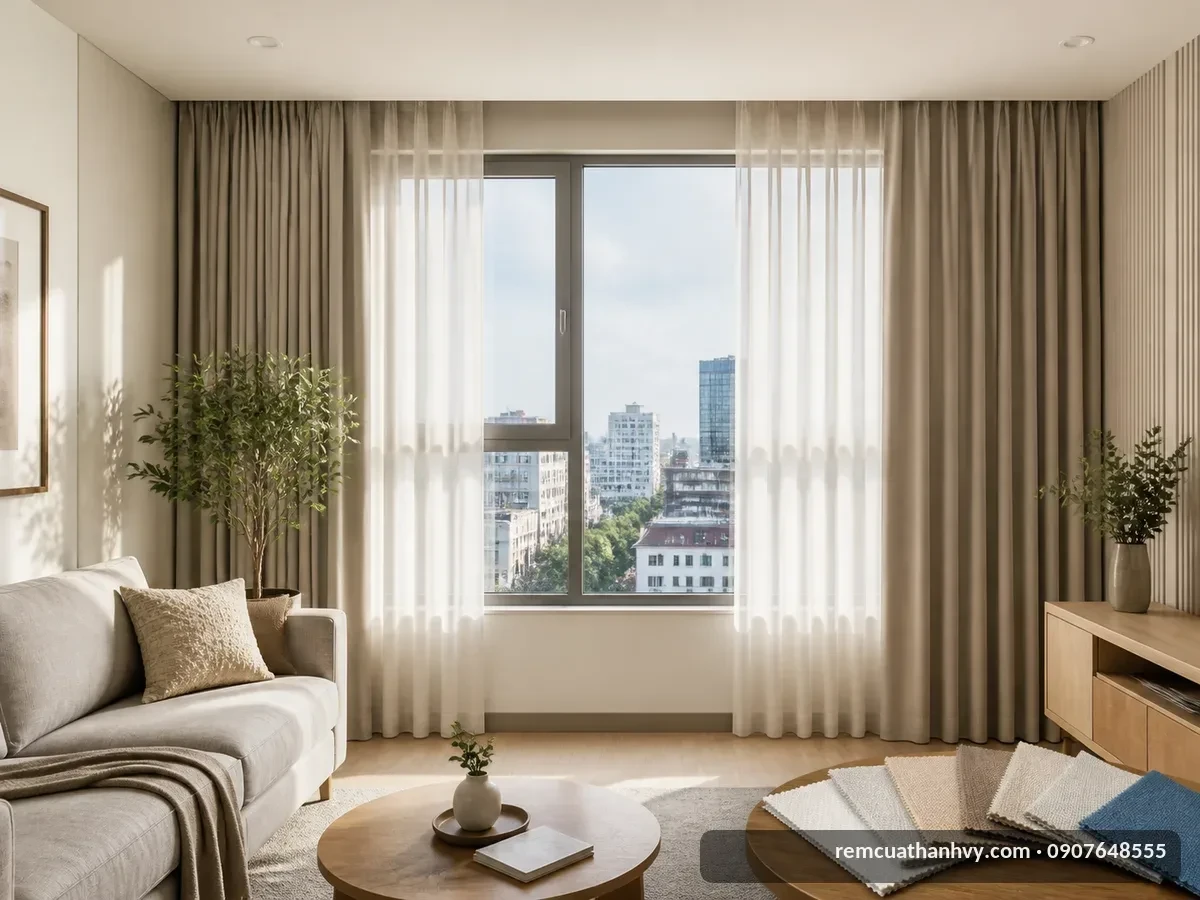
Curtains in District 7: Priorities when choosing for each space
Thanh Vy Curtains provides optimal curtain solutions for living spaces in District 7, using durable [...]
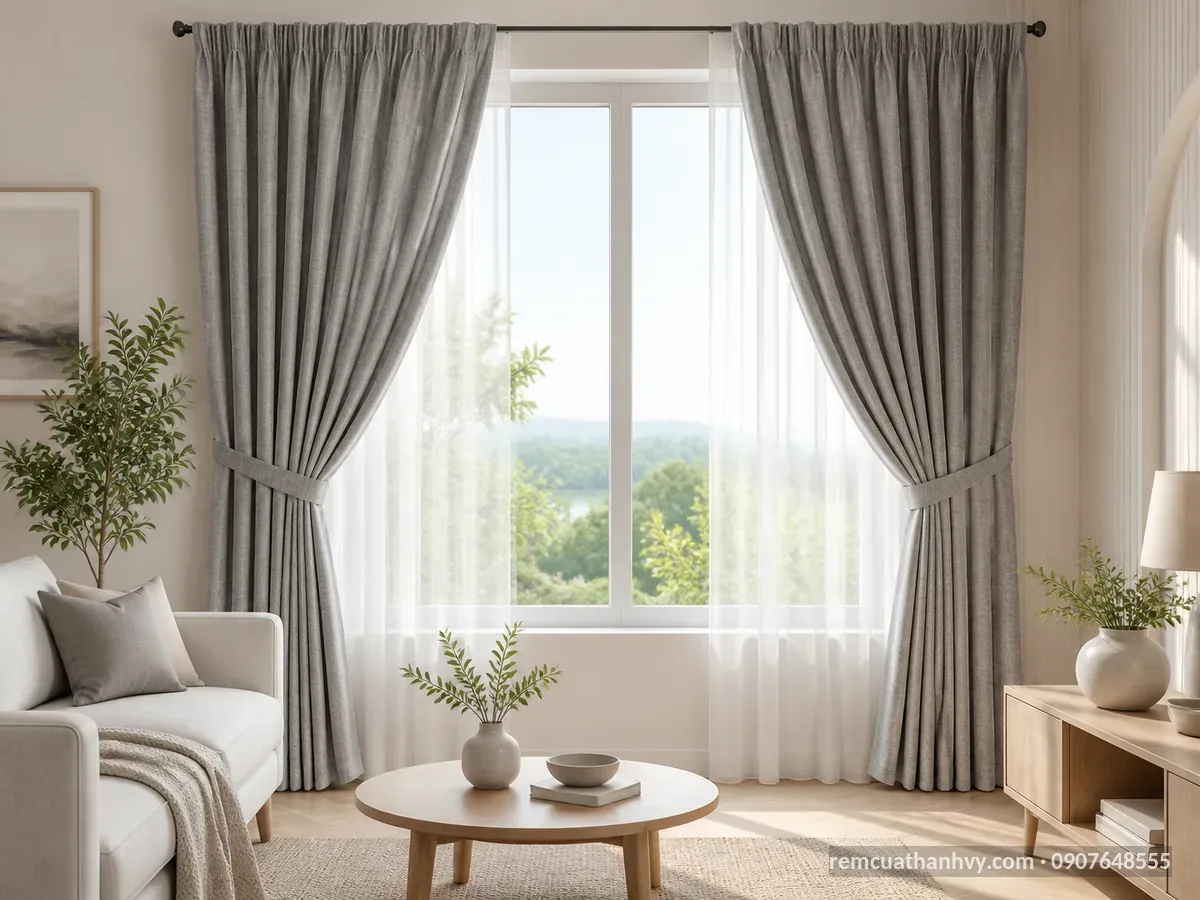
Curtains in District 8: Priorities when choosing for each space
Rèm Cửa Thanh Vy provides professional curtain solutions in District 8 with a wide range [...]
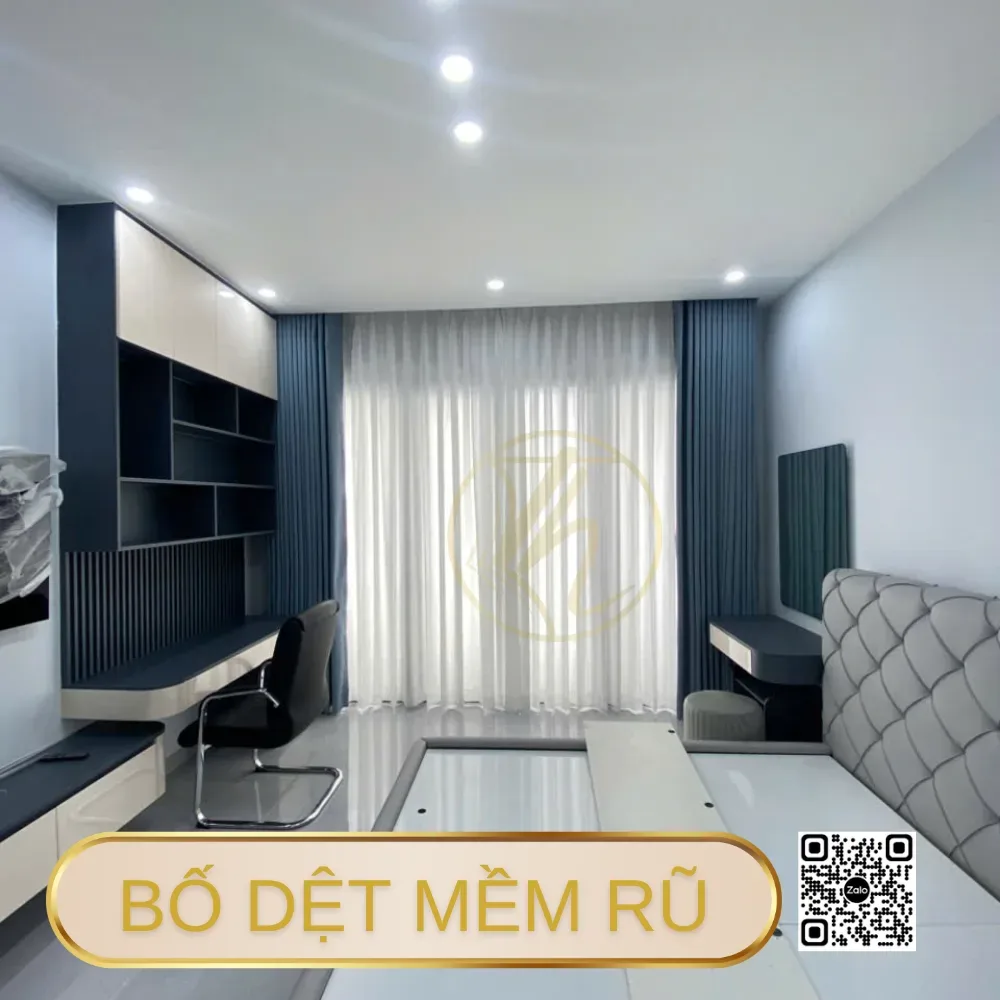
Curtains in Tan Binh: What to Prioritize for Each Space
Customers in Tan Binh should note the importance of choosing curtains that suit the sun's [...]
Related reviews
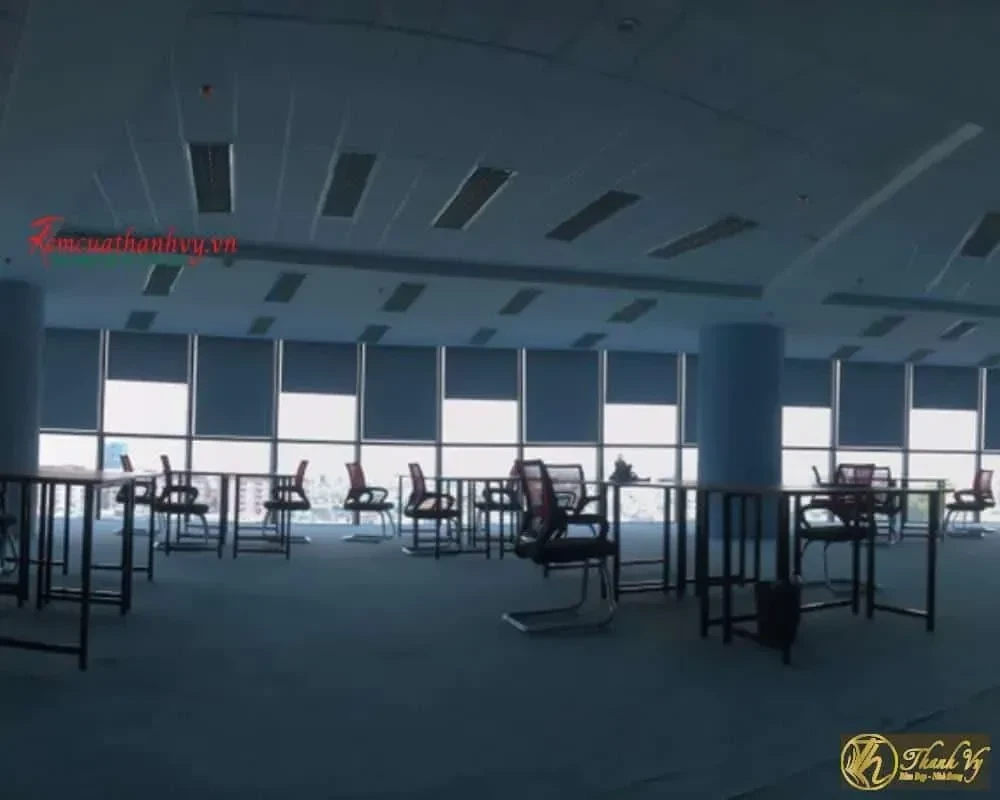
District 11 Curtain Review: Two Office Projects and Their Limitations
Two projects, and both are offices The biggest drawback of this article must be stated [...]
Curtains in Thu Duc: 8 Completed Projects and Lessons from Tall Glass Windows
Eight curtain projects we have completed in Thu Duc City share one factor that determines [...]
Related posts
Tips for Choosing Beautiful & Durable Apartment Curtains
A guide on how to choose apartment curtains based on the building, lighting, privacy needs, [...]
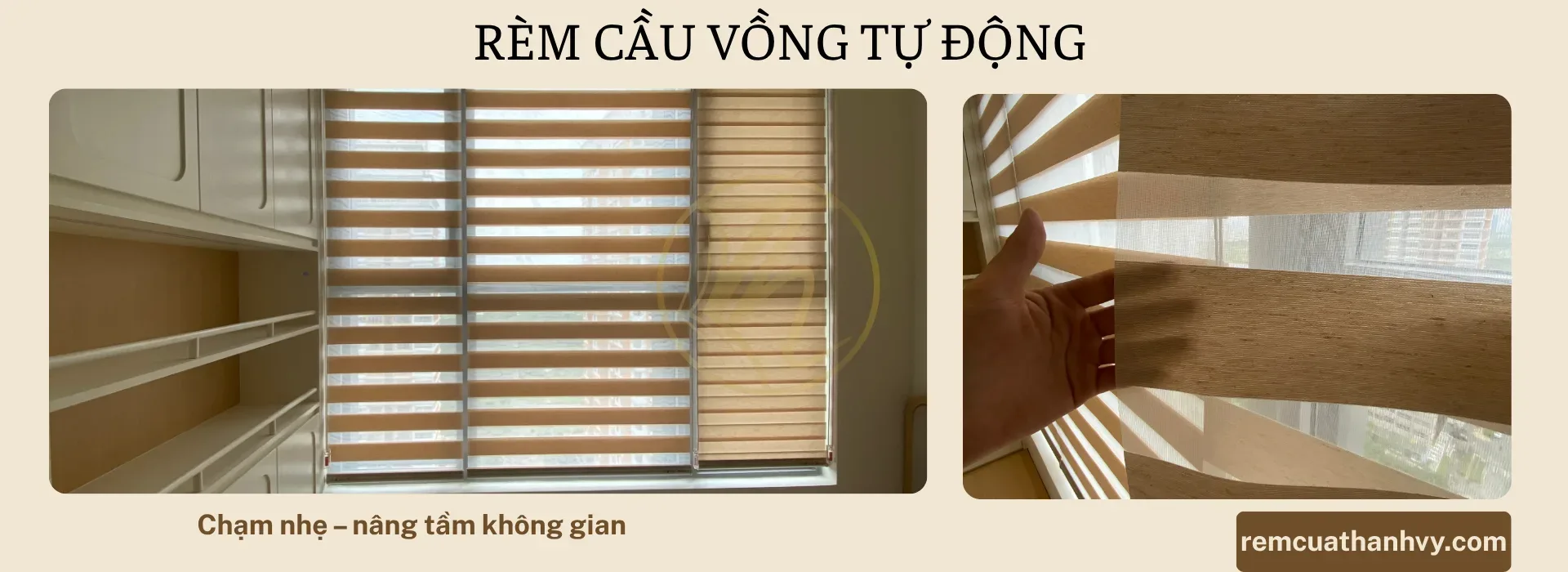
Rainbow Blinds for Windows: Tips for Choosing & Styling Well
A guide on choosing window rainbow blinds based on windows, lighting, privacy, materials, finish styles, [...]
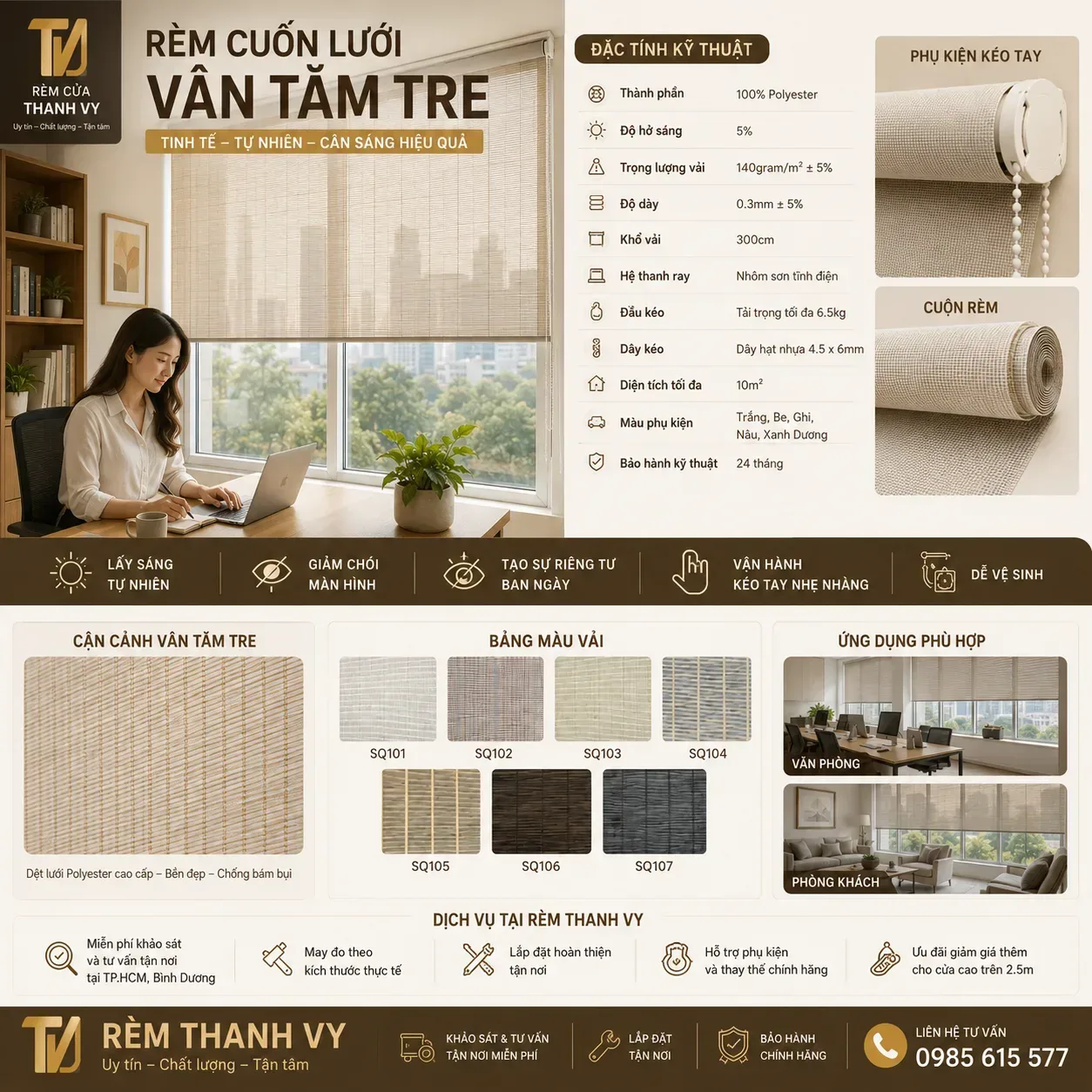
Roller Blinds for Windows: Selection & Styling Tips
A guide to choosing window roller blinds based on window type, lighting, privacy, materials, finishing [...]
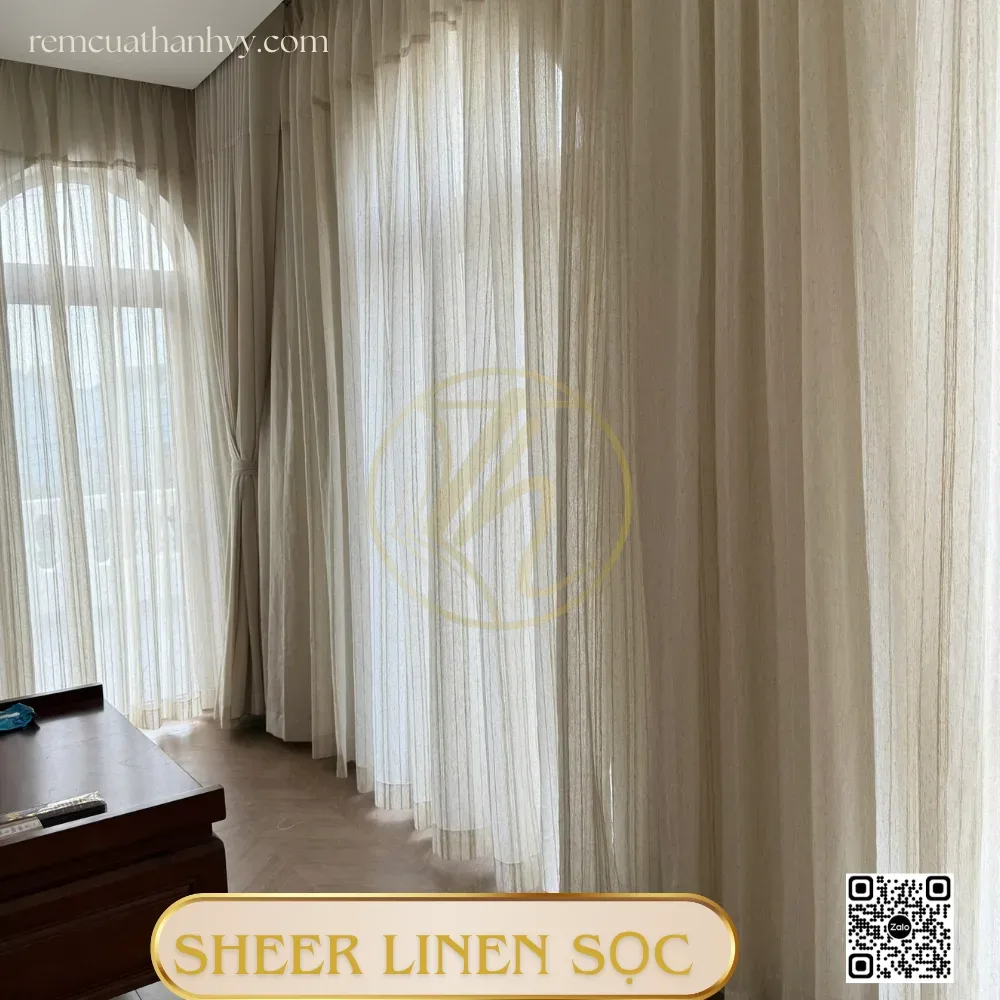
Linen Curtains for Windows: Selection & Styling Tips
A guide to choosing linen window curtains based on window type, lighting, privacy, materials, finishing [...]
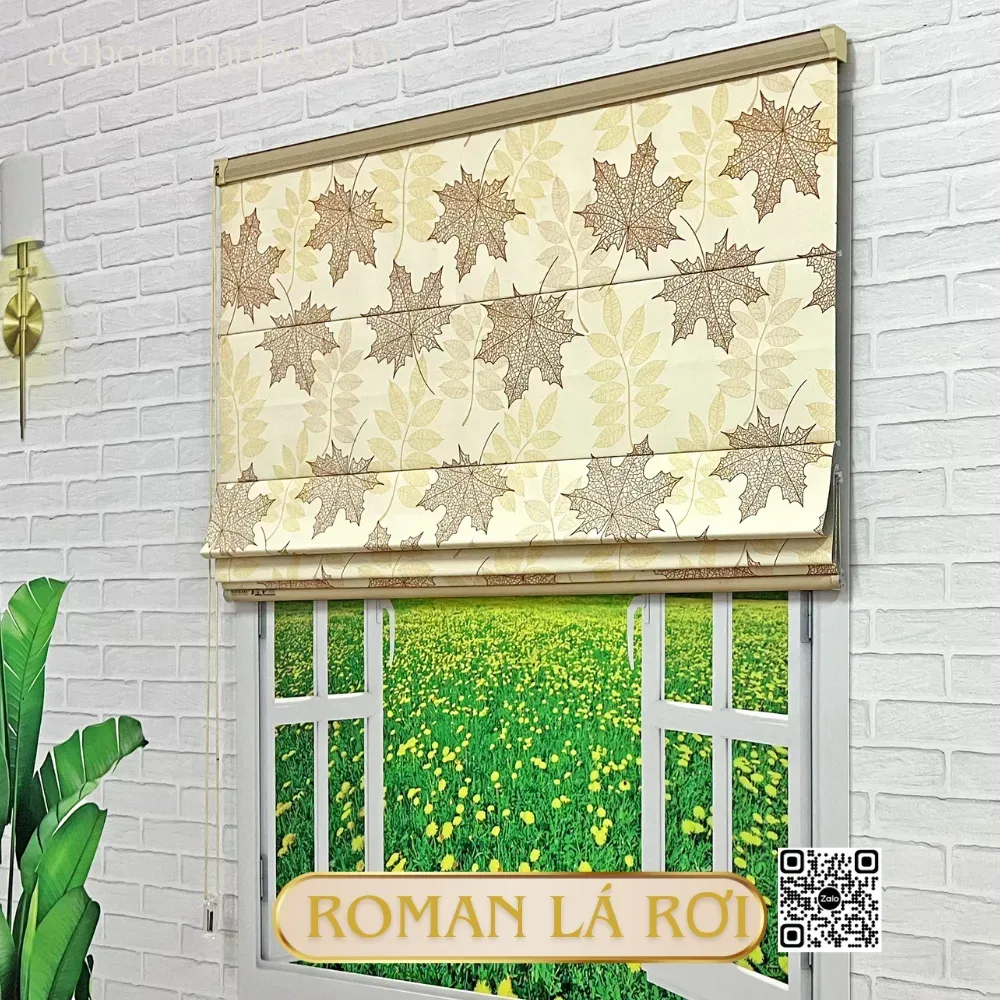
Roman Shades for Windows: Tips for Choosing & Styling
A guide to choosing window Roman shades based on window type, light, privacy, material, finish [...]
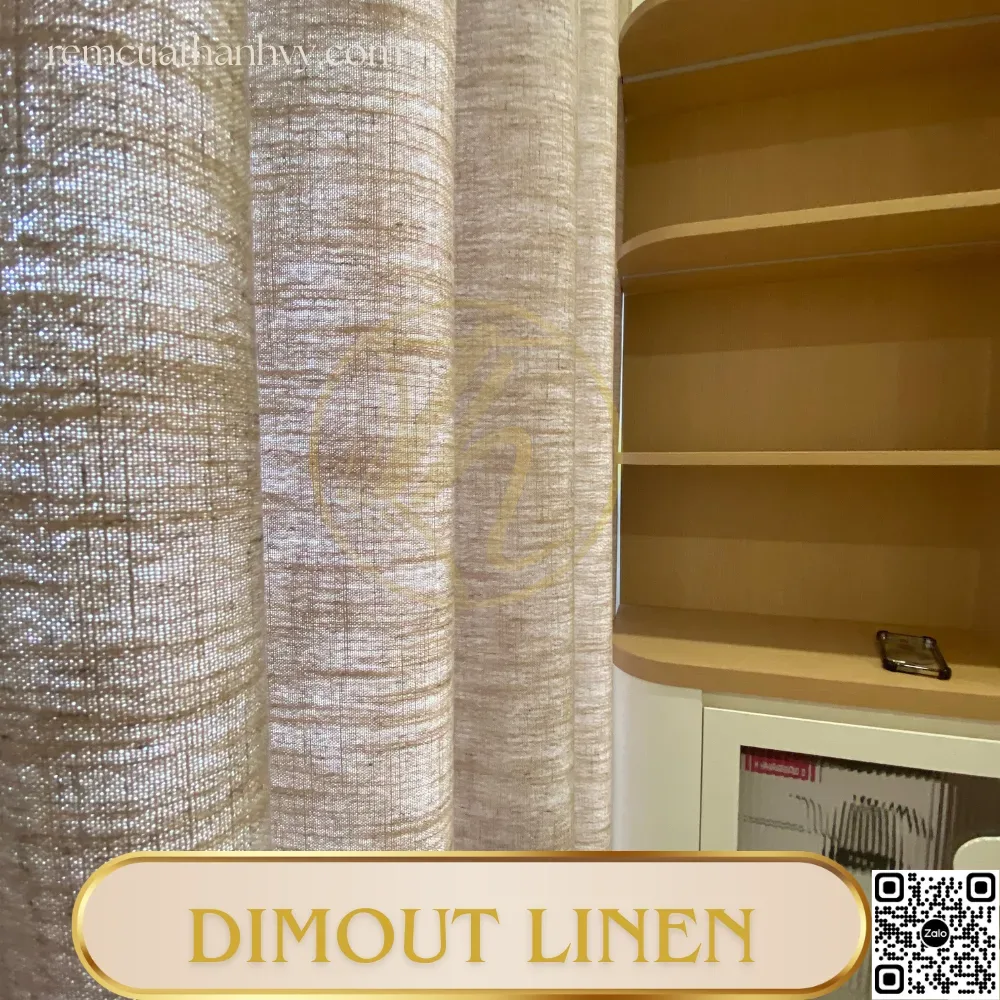
Fabric Curtains for Windows: Tips for Choosing & Styling
A guide to choosing window curtains based on window type, lighting, privacy, materials, finishing styles, [...]

Curtain Trends for Apartments in 2026
A guide to choosing apartment curtain trends based on the apartment layout, lighting, privacy, materials, [...]
On-Site Curtain Installation Services in Binh Tan
A guide to choosing and installing curtains in Binh Tan based on living space, lighting, [...]
No comments yet!