





Wall-Mounted Clothes Drying Rack Review: What It Solves, Where It Falls Short, and Who Shouldn’t Buy One
Wall-Mounted Drying Racks Solve Just One Problem, but They Solve It Neatly
That problem is this: the home has a place to dry clothes, but the drying area is too narrow to put anything standing on the floor. Apartment balconies just over a meter wide, skylights in tube houses, hallways behind the kitchen — places where an A-frame drying rack would block the entire walkway. The entire value of a wall-mounted drying rack lies in the fact that it transfers the load and occupied space to the wall, giving the floor back to people walking through. Information about the company also appears in the introduction to Thanh Vy Curtain’s conference-hall curtain solution on Báo Cần Thơ.
Only by understanding it this way can this category be judged fairly. It is not a scaled-down version of a ceiling-mounted smart drying rack, nor is it a solution for large families. It is a fixed horizontal bar attached to the wall that folds away when not in use. If your actual needs exceed that scope, none of the advantages below can save a wrong decision from the outset.


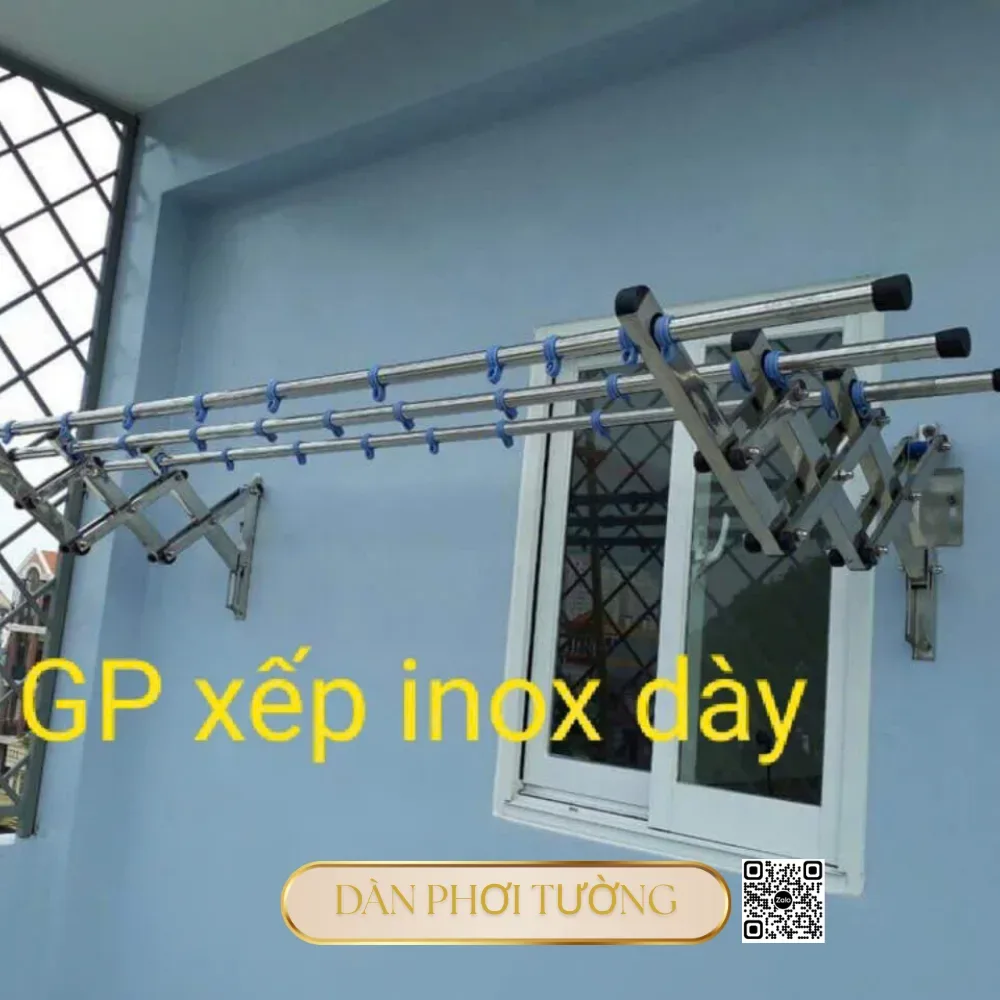
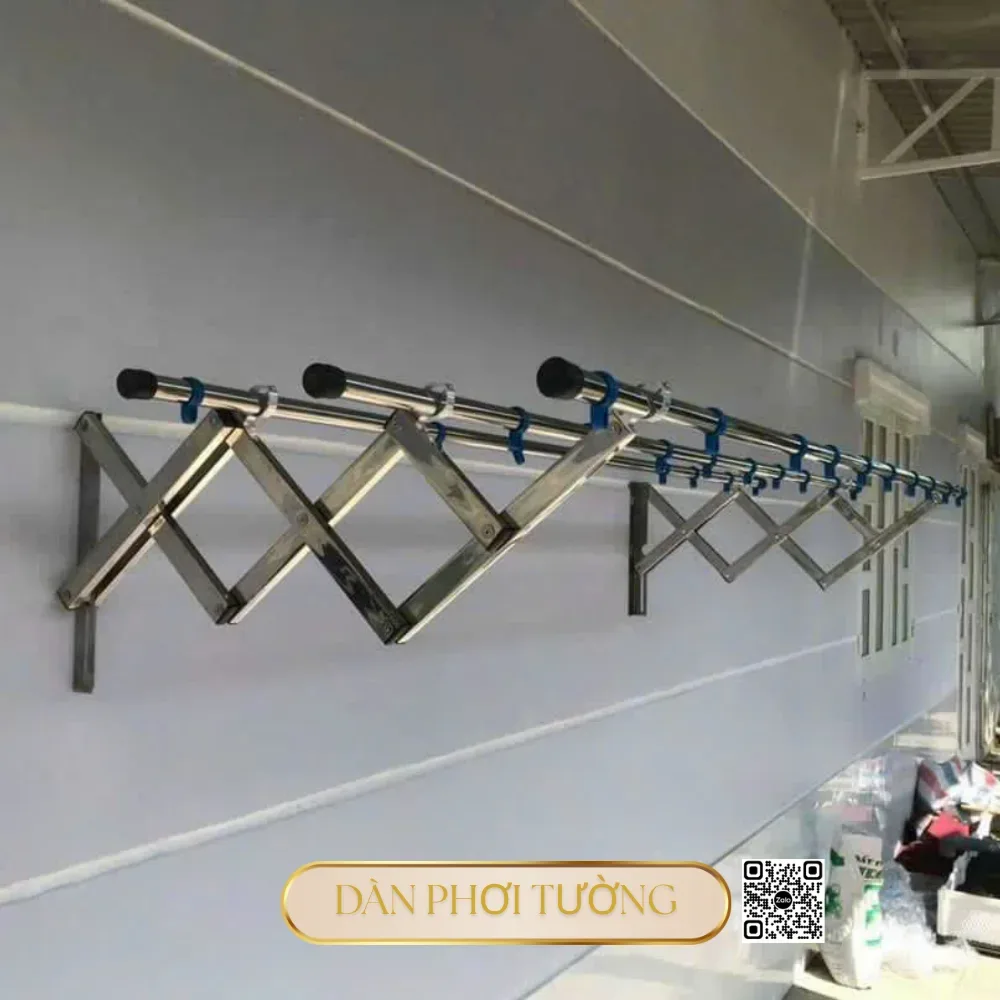

What This Category Is Selling, and What That Tells Us
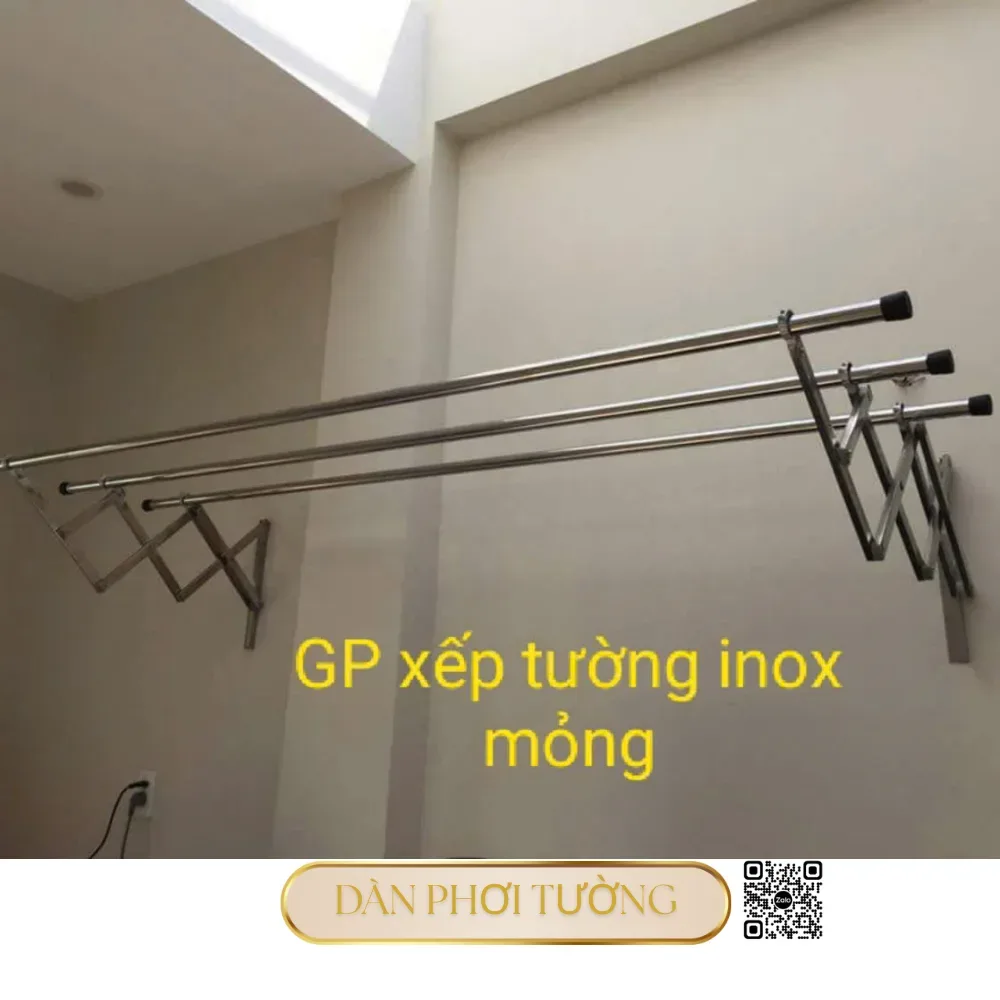
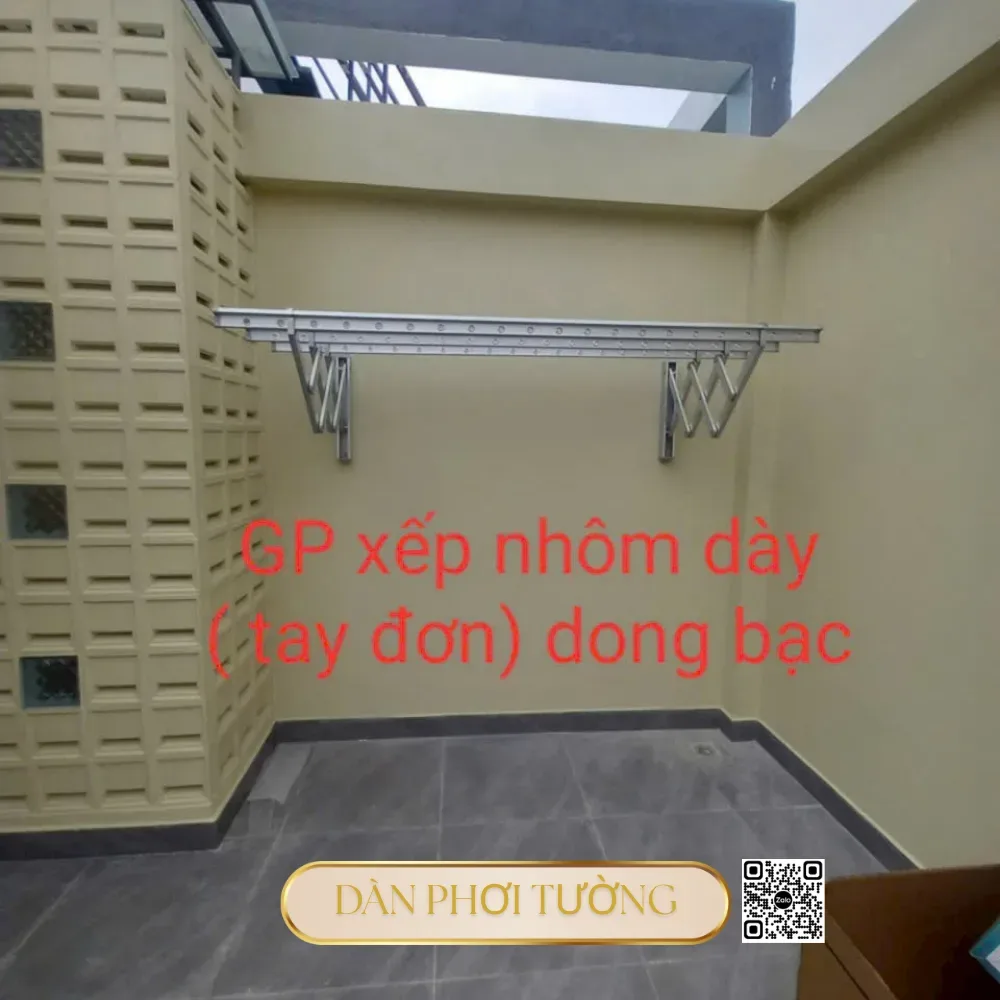
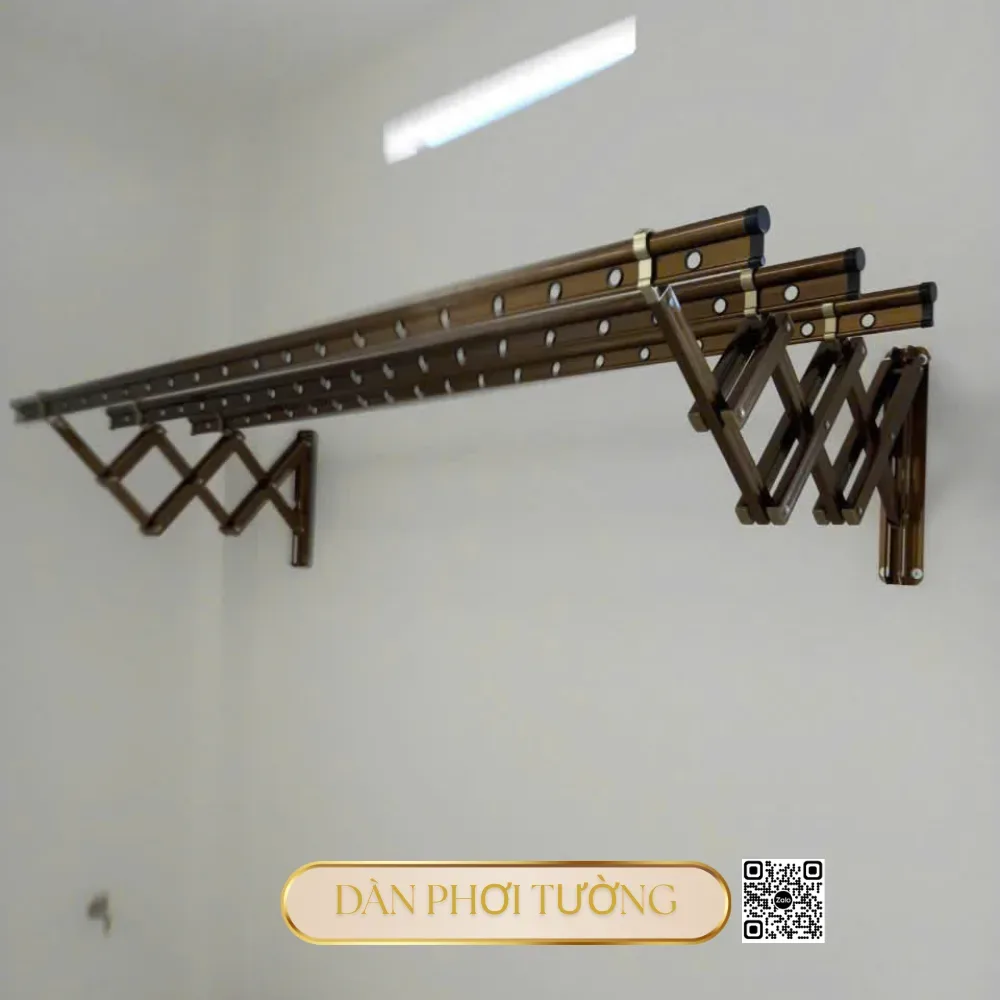
The Drying Rack category currently has exactly five products, and the most notable point is not any individual product but the overall picture: all five are wall-mounted models.
Practical Wall-Folding Aluminum Drying Rack at 1,350,000đ and Slim-Bar Premium Wall-Mounted Stainless Steel Drying Rack at the same price of 1,350,000đ are the two cheapest entry points. Premium Wall-Mounted Stainless Steel Drying Rack and Durable, Beautiful Wall-Mounted Drying Rack are both priced at 1,550,000đ. At the top is the Quality Drying Rack, Model 3 at 2,000,000đ. The company’s products were previously mentioned in the Thanh Vy premium curtains section on Báo Hà Tĩnh.

The price range runs from 1.35 to 2 million — a narrow spread. The upside is that you do not have to agonize over two budget extremes; the difference between the cheapest and most expensive is only about 650,000đ, so choosing wrong is not excessively costly. The downside is that the category does not serve two groups: people looking for a solution costing a few hundred thousand đồng, and people who want a drying system with a raising-and-lowering mechanism.
There Is No Ceiling-Mounted Pull-Down Drying Rack — This Is the Gap You Need to Know About in Advance
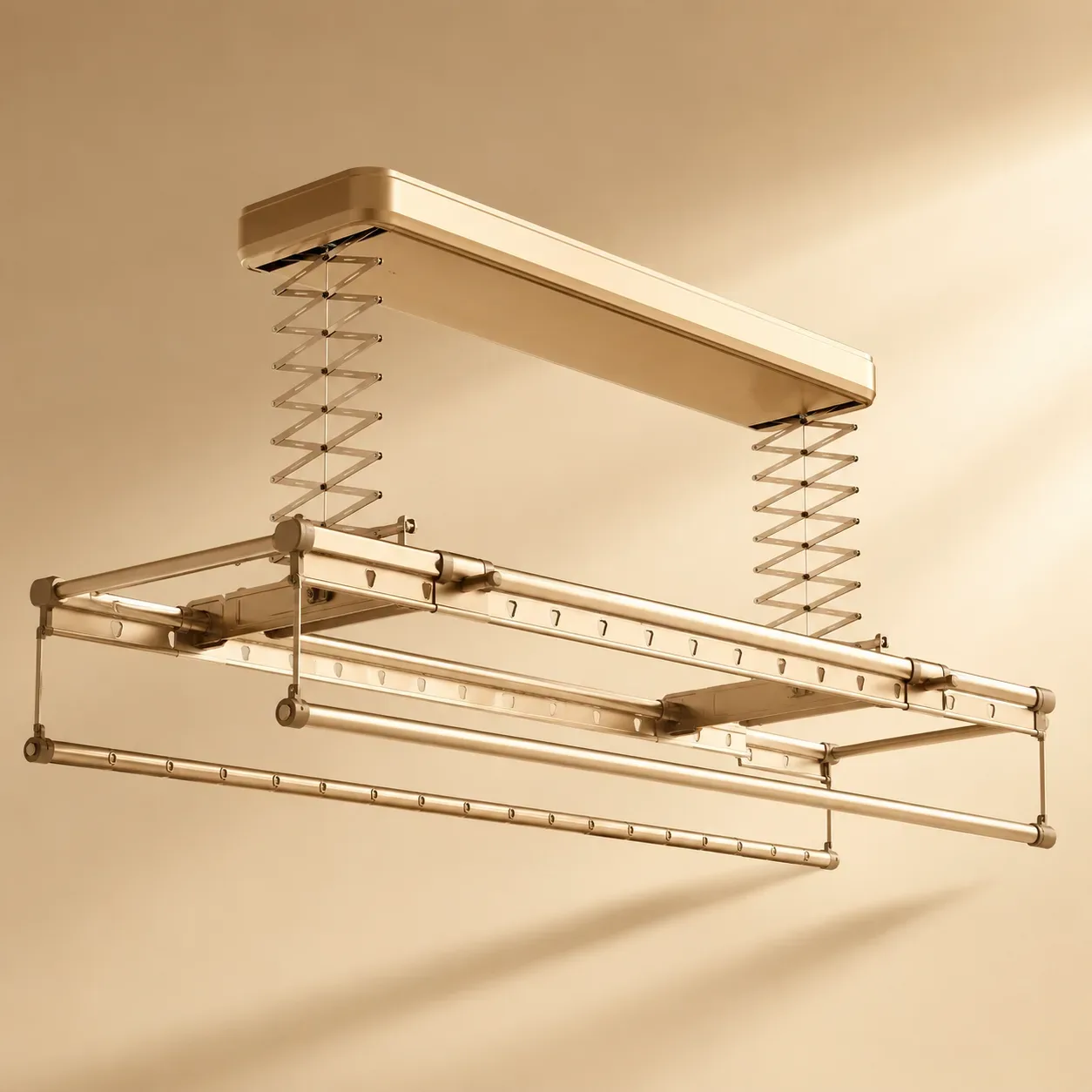
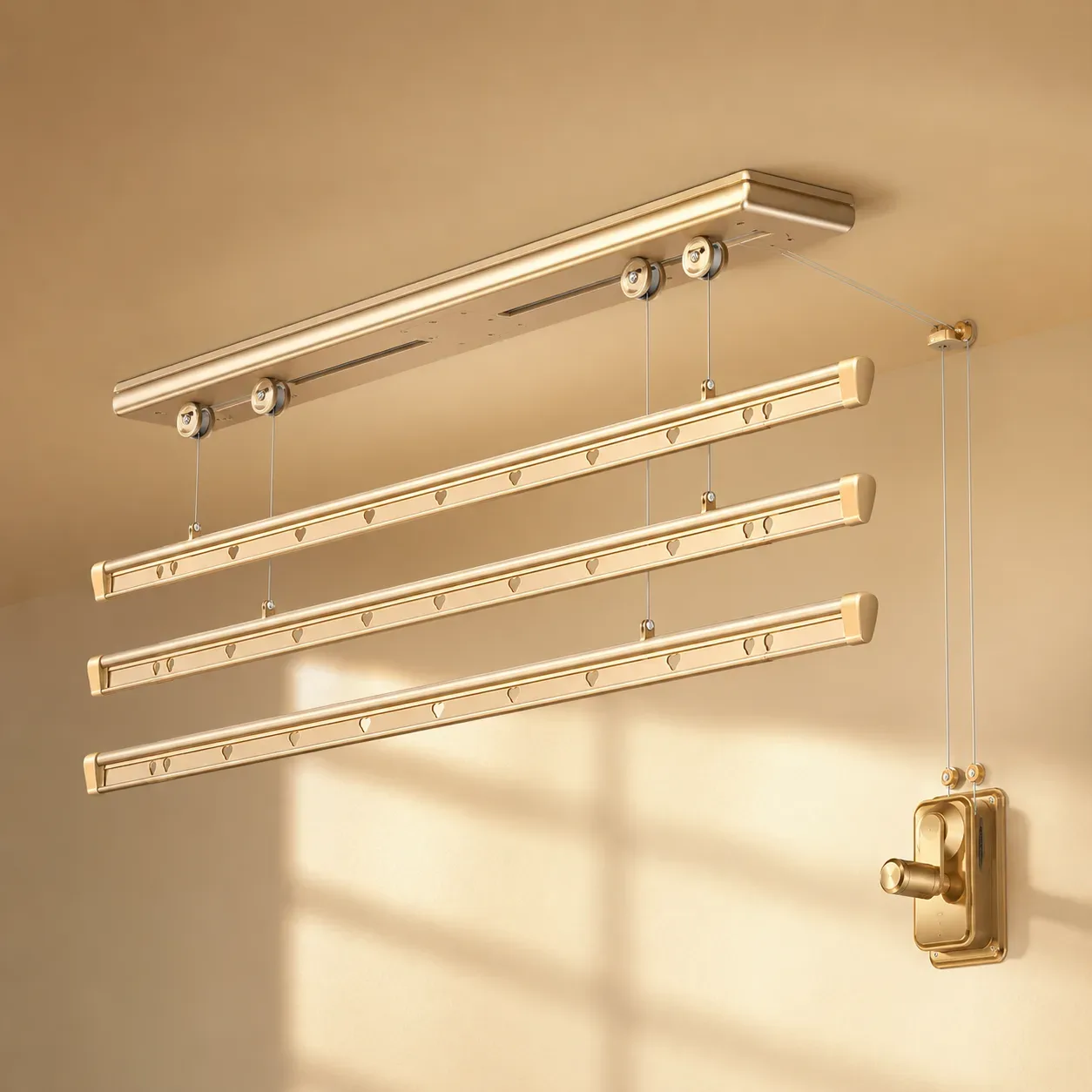
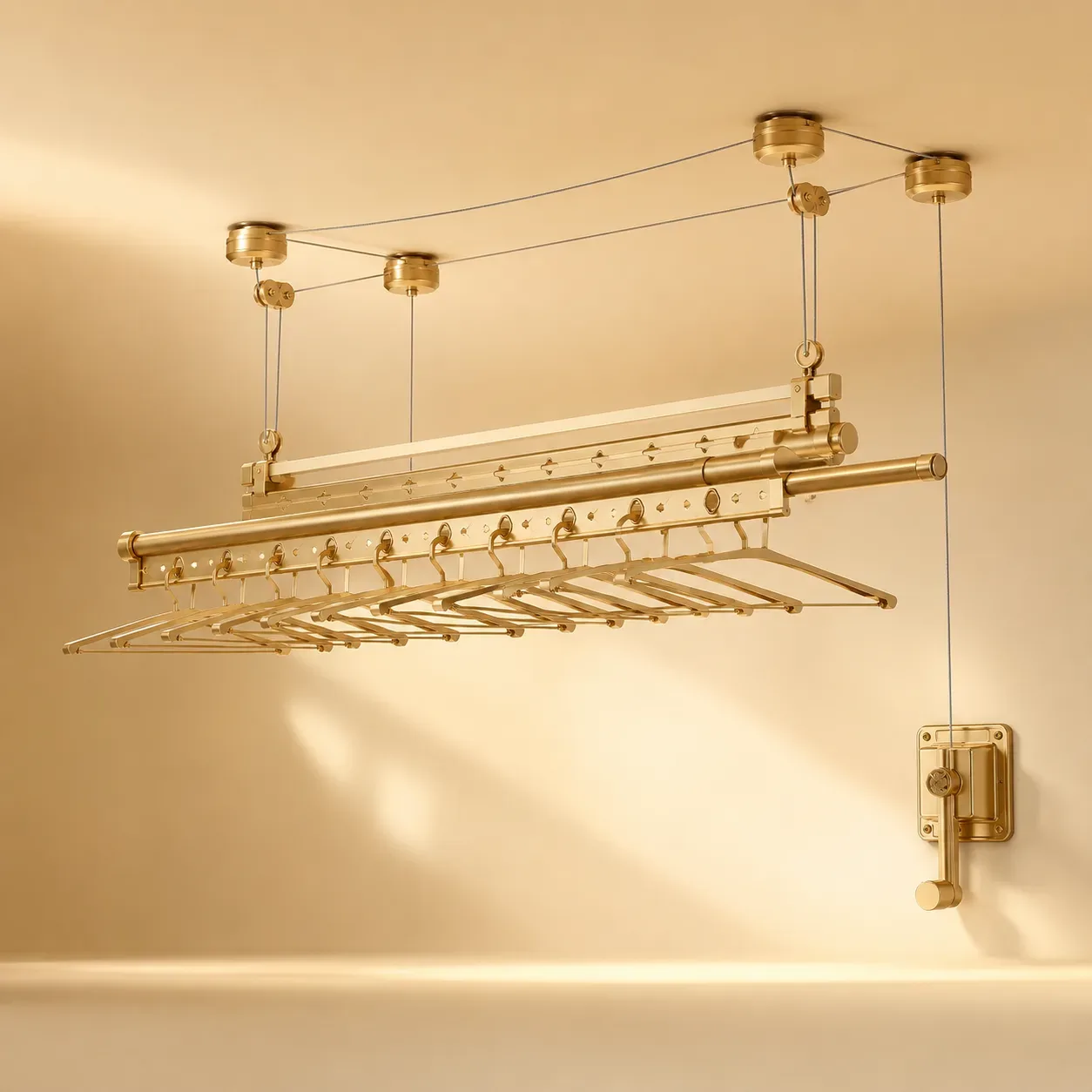
This is the most important observation in the entire article, so I am raising it early. All five products attach to the wall at a fixed height once installed. None is a ceiling-mounted model with a crank or pull cord that lowers the drying bar to hand height and raises it after the laundry is done.
This difference determines the daily experience more than the material or price. Install it high so long items do not touch the floor, and every time you hang up or collect clothes you have to reach up or use a stool; install it low for easier access, and long items drag on the floor while the lower level is practically unusable. No configuration escapes that trade-off, because this type is inherently fixed. Ceiling-mounted pull-down racks were created to solve exactly this problem, which is why they are considerably more expensive — but the current category does not offer one.

Aluminum or Stainless Steel: Where the Difference Lies and When It Is Worth Paying For
Among the five products, one clearly lists aluminum as its material and two list stainless steel. This is a genuinely meaningful choice, not merely marketing wording.
Aluminum is lightweight, does not develop red rust, and because it is light, opening and folding it requires less effort while placing less load on the wall-mounting brackets. Its drawback is that aluminum is softer: a thin-section bar can sag more easily when heavily loaded and can dent more easily when hit.
Stainless steel is harder, feels sturdier, and withstands outdoor conditions well if it is the correct grade of stainless steel. But the word “stainless steel” in the description does not specify the grade, and the differences between stainless-steel grades in humid, salty environments are real. Homes near the sea, balconies exposed to wind-driven rain, and areas with a lot of moisture from the washing machine — these are places where you should ask for specific details before paying an extra 200,000đ.
Conversely, if the rack is installed in a covered loggia with little exposure to wind-driven rain, the difference between aluminum and stainless steel is mainly how they feel in your hand. In that case, the cheaper aluminum model is reasonable, and there is no reason to upgrade.
How Should the “55kg Load Capacity” Figure in the Description Be Read?
The description of the Practical Wall-Folding Aluminum Drying Rack states “Aluminum load 55kg.” I have left that figure as is because it is what the product page publishes, but readers should understand its limitations correctly.
First, the description does not say which standard that figure was measured under, whether it refers to static or dynamic load, or whether the load was concentrated or evenly distributed — three measurement methods that produce very different results. Without an accompanying standard, this is a specification published by the supplier, not a test result.
Second, and more importantly: the weakest point in a wall-mounted drying-rack system is almost never the drying bar, but the point where it is fastened to the wall. A good frame installed on hollow brick with ordinary plastic wall plugs will usually fail at the plugs before the drying bar has a chance to bend. So do not choose a drying rack based on the kilogram figure; ask the installer to assess whether your wall is concrete, solid brick, or hollow brick, and what type of expansion screws they will use. That is what determines whether the rack will hold up or not.
The real drawbacks of wall-mounted drying racks
Besides the fixed height mentioned above, this group has a few other weaknesses that sellers rarely mention.
It depends entirely on the wall. If there is no load-bearing wall in a convenient location, it simply cannot be installed, and unlike a freestanding rack, you cannot move it when you rearrange the balcony; removing it leaves drill holes and differently colored paint marks.
When folded away, it does not disappear either: the frame still sits against the wall, still takes up visual space, and still gets in the way if you plan to hang something else there. “Folded away” means it does not block the walkway; it does not mean restoring the wall to its original, unobstructed state. Interested readers can learn more about the role of windows.
Capacity is limited by the length of the bars and the number of tiers, and that figure does not expand. On laundry-heavy days, or during the rainy season when clothes dry slowly and multiple loads have to be hung one after another, a wall-mounted rack is the first thing to run out of space. Families of four or more, especially those with young children, will very easily have to dry additional clothes on hangers or an extra line — at which point the balcony becomes cluttered again, just as it was before installation. And if the drying area is exposed to wind-driven rain or harsh afternoon sun, the drying rack solves nothing: clothes still get wet again and still fade.
Send your dimensions and needs, and the Thanh Vy Curtains team will advise on options and quote for your actual space.
Weaknesses in the product information itself in the category
If we are going to review them, we might as well do it thoroughly. Of the five products, only the folding wall-mounted aluminum model has a description specifying its material, design, and applications. Two models — Quality Drying Rack sample 3 and Premium Stainless Steel Wall-Mounted Drying Rack with Slim Bars — use the same vague wording about “high quality, refined design,” with no dimensions, number of tiers, or bar length. Readers can also cross-check through the Báo An Giang article about Thanh Vy premium fabric curtains.
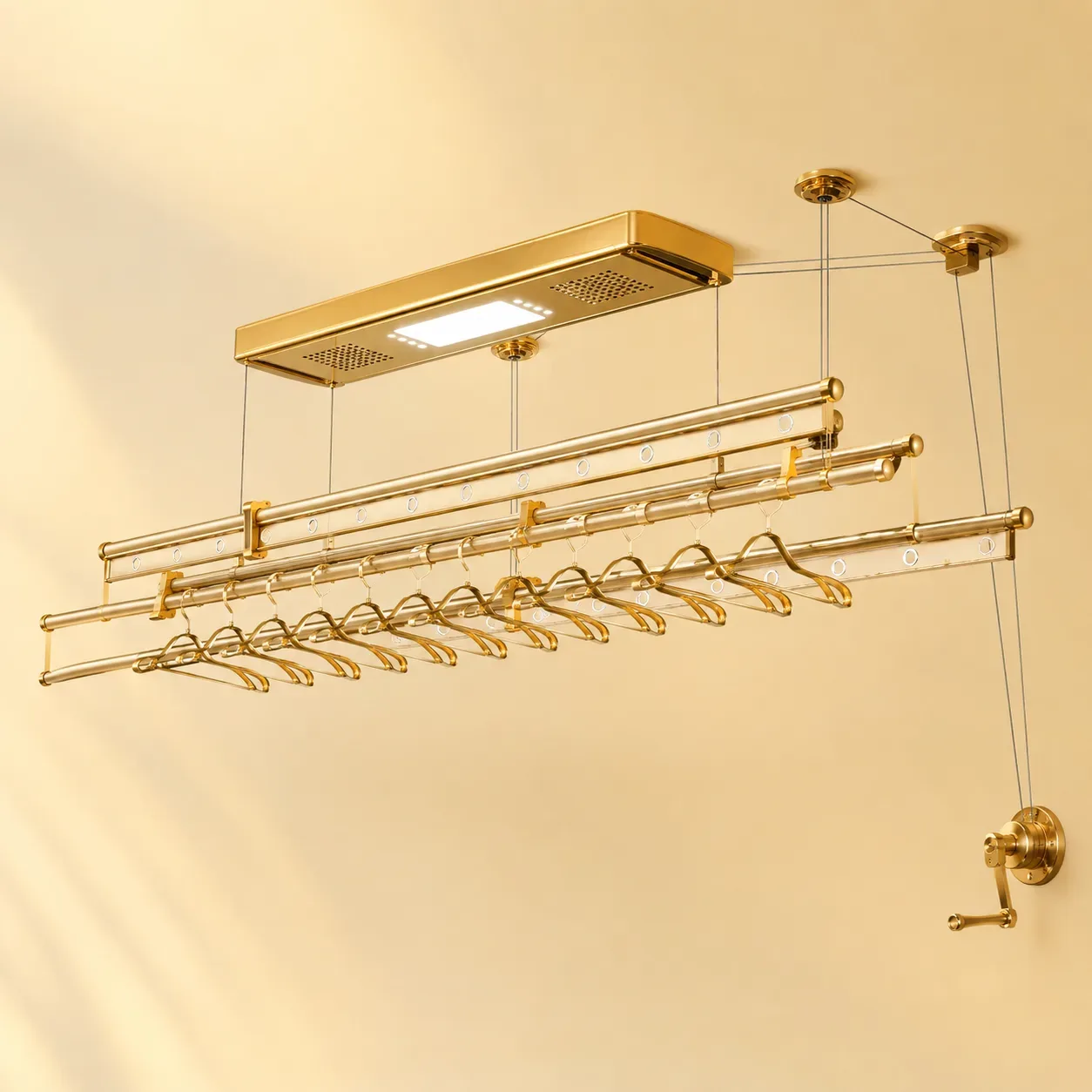
Most noteworthy is sample 3: it is the most expensive item in the category at 2,000,000đ, yet it is also among the models with the fewest details, meaning it has the lowest amount of information per đồng spent. I would not finalize a purchase of that model through the website; ask for the drying-bar length, number of bars, frame material, and wall-mounting brackets, then compare it with the two 1,550,000đ models. It may very well be worth it, but the product page has not demonstrated that yet, and buyers are under no obligation to take it on faith.
The names are confusing too: the two stainless-steel models differ by only two words, “Slim Bars,” yet are 200,000đ apart, while “Durable and Beautiful Wall-Mounted Drying Rack” does not specify the material. When comparing them, use the specifications rather than relying on the names.
Who should choose this group of drying racks
People living in apartments or townhouses with narrow balconies or loggias who need a fixed place to dry clothes without losing walking space. This is the group these products serve best: at 1.35–2 million đồng, you get a tidy long-term solution instead of a plastic drying rack that has to be moved out and put away every day.
One- to three-person households that do laundry regularly rather than in large batches — this group will almost never reach the capacity limit. Add two more conditions and the fit is even more certain: the drying area is covered, the wall is sturdy, and the person doing the hanging is tall enough to reach without standing on a chair.
Who should not choose one — and what to consider instead
Households where the primary person hanging laundry is elderly or short. Reaching overhead every day, several dozen times per session, is something no one considers at the time of purchase but will find tiring after a few months of use — this group should ask about racks with a lifting mechanism. The same applies to large families or those with newborns: the amount of laundry is substantial and unpredictable, so a wall-mounted rack will frequently run out of space.
Homes without a suitable wall: lightweight partitions, drywall, thin hollow-brick walls, or situations where the only feasible location is a glass surface. Do not force it. Mounting a wall rack to a weak partition is a real risk, and no model in this category can solve that problem. Short-term renters or anyone not allowed to drill into the wall should stop here.
People who need clothes to dry quickly during a long rainy season. A drying rack does not shorten drying time; that is the job of a dryer or dehumidifier.
How it compares with clotheslines, freestanding racks, and dryers
Compared with a horizontally stretched clothesline, a wall-mounted rack wins because clothes hang from rigid bars instead of bunching together in the middle of a sagging line, and it is clearly superior aesthetically. But a clothesline is many times cheaper; if budget is the deciding factor, that should be acknowledged plainly.
Compared with an A-frame freestanding rack, a wall-mounted rack wins decisively in terms of floor space and durability, but loses in flexibility: a freestanding rack can be taken outside when it is sunny, brought indoors when it rains, and moved from room to room as needed. For homes with multiple drying locations that change with the seasons, a freestanding rack is by no means outdated.
Compared with a ceiling-mounted retractable rack, a wall-mounted rack loses in operation and capacity, but wins in cost and mechanical simplicity: no cables, no hand crank, and fewer moving parts mean fewer things that can go wrong. A dryer, meanwhile, addresses a different need — it solves the problem of time, while a drying rack solves the problem of space.
Conclusion: excellent for the right job, but no model can save the wrong setup
The five products in the Drying Racks category are a narrow but consistent selection: wall-mounted, foldable, priced around 1.35–2 million đồng, and divided between aluminum and stainless-steel options. For a narrow balcony, a small household, and someone tall enough to reach the bars, this is a compact and durable solution.
But three things must be stated plainly. First, the category does not include lift-and-lower racks, so older people and households with large amounts of laundry will not find an answer here. Second, the load-capacity figures in the descriptions do not replace checking the wall in your home. Third, some models — especially the most expensive one — lack enough specifications for comparison, so ask for all the details before paying.
Quick answer: A wall-mounted drying rack is worth buying when you need a fixed drying space in a limited area and the person hanging laundry can comfortably reach the bars; it is not suitable if you have a large household, the person hanging laundry is elderly, the wall is not sturdy enough, or you are not allowed to drill into the wall.
Choosing a drying rack is not difficult, but it is easy to choose incorrectly because people look at the product instead of looking at the wall, the user’s height, and the amount of laundry each week. Get those three facts first, then open the category and take a look.
For further information, please contact Thanh Vy Curtains
We provide free consultation and on-site measuring at your home.






No comments yet!