


Outdoor Retractable Awning Review: More Living Space or More Maintenance?
An awning does not sell shade; it sells a portion of usable space that can be returned
If all you need is shade, there are cheaper ways to get it: a sheet of corrugated metal, a plant trellis, or an offset umbrella. The real value of an outdoor retractable awning lies elsewhere: it turns an unused yard into usable space for a few hours each day, then gives that open sky back when you do not need it. This is a decision about space, not temperature.
Once you understand it this way, it becomes immediately clear who is buying the right thing for their needs. Someone who wants a permanent cover, installs it, and forgets about it actually needs a fixed roof. Someone who wants to sit outside in the afternoon while still having morning sun for drying clothes and keeping the facade from being “hatted” year-round—that is the person an awning serves well. All of its advantages and disadvantages stem from one mechanical fact: you are suspending a cantilevered arm extending from the wall, and you will have to retract it at the right time.
Sun is the easy test; wind is the real test
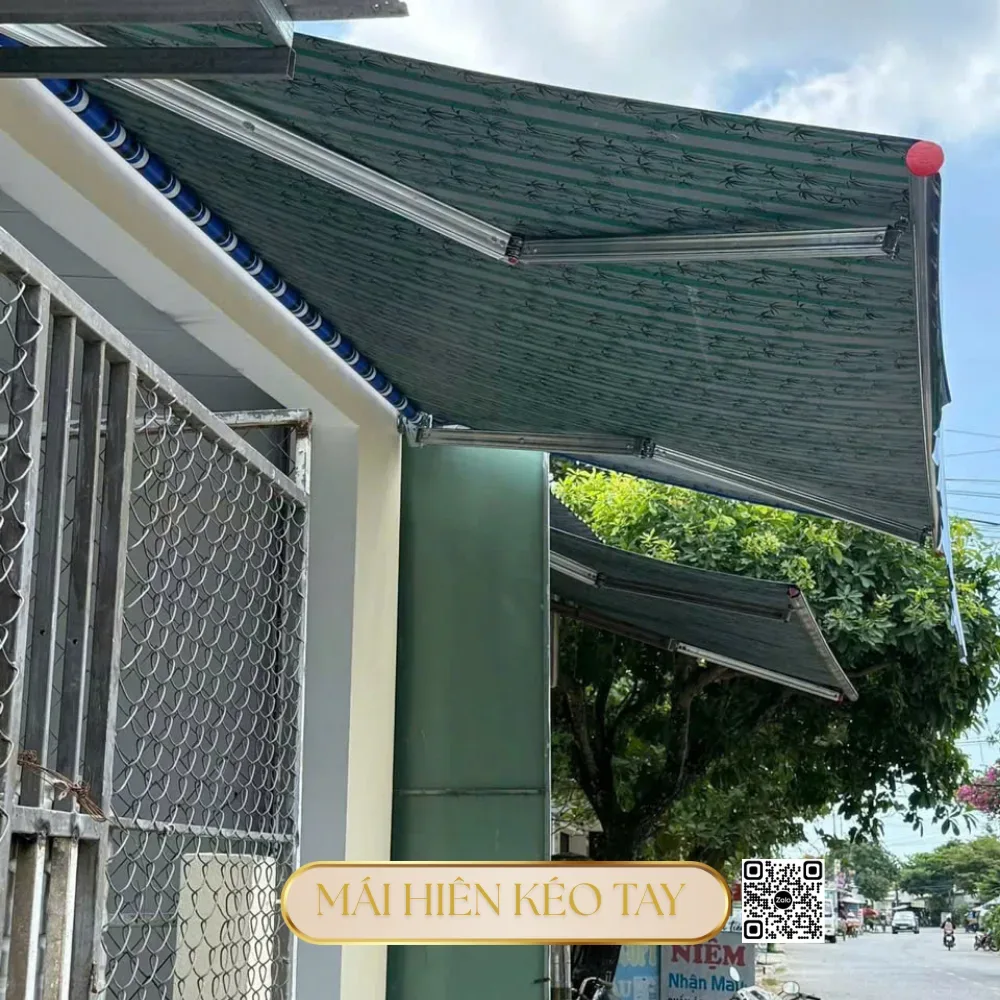
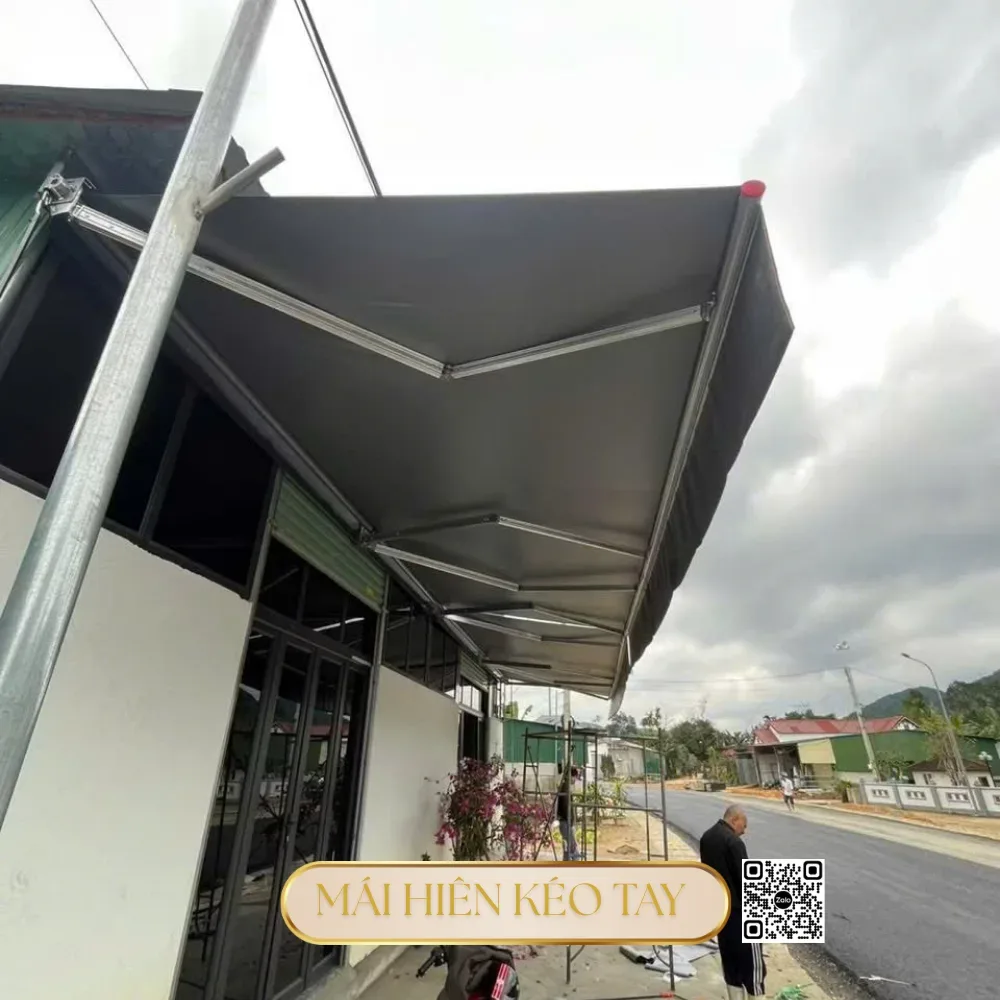
Asking “is sun-blocking fabric any good?” tells you almost nothing, because every type of specialized outdoor fabric blocks direct sunlight. The real test is wind, and it usually happens precisely when you are not home. When the awning is extended, the fabric becomes a surface that catches the wind. Wind pushes upward from below, transferring force into the two arms and then into the few mounting points on the wall. Serious damage to this type of product is almost always wind damage: bent arms, twisted frames, fabric tearing from the edge, or anchor points pulling out of the wall. Sun merely gradually fades the fabric—that is wear, not an accident.
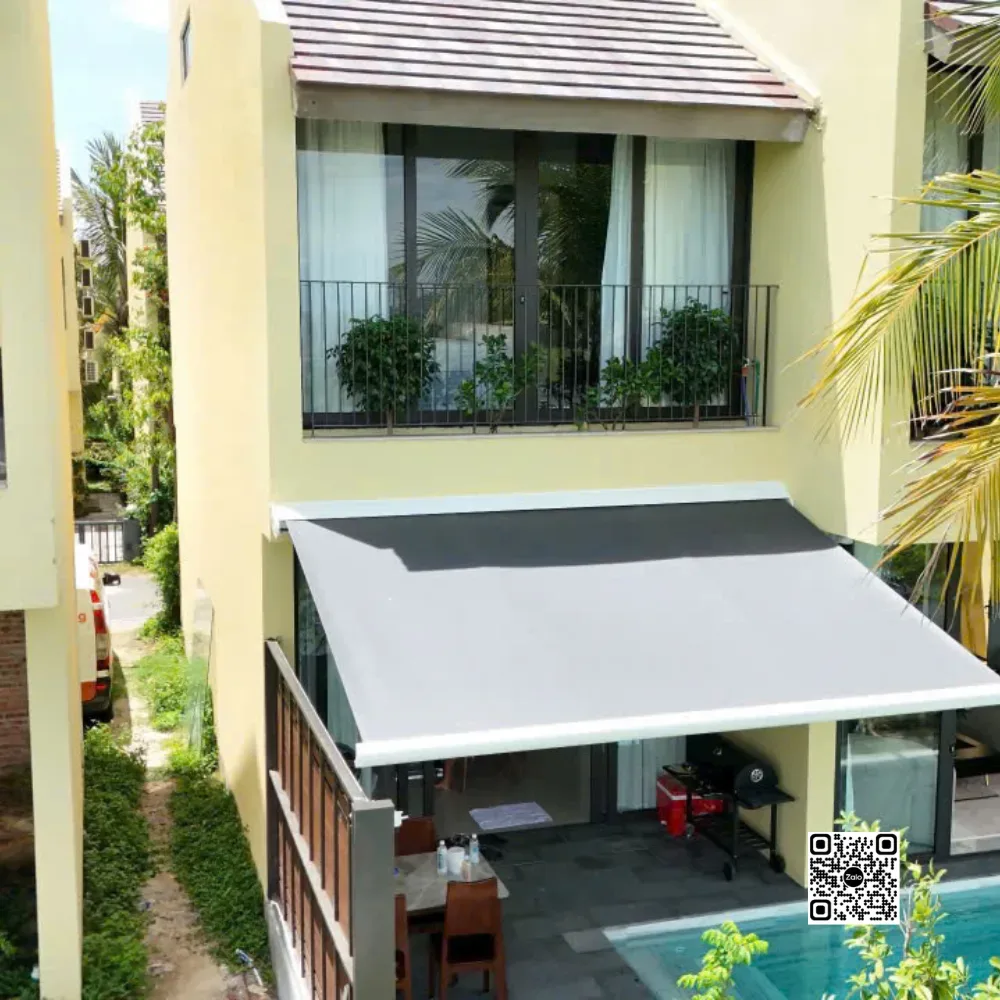
There is no single wind-rating figure for every awning system, because the threshold depends on the projection, frame quality, anchoring method, and condition of the wall. The operating principle does not change: when the weather turns windy, retract it—do not wait for rain. If the intended installation site often experiences gusts while you are usually away from home, an awning is the wrong choice from the outset, no matter how expensive the model is. You can also cross-reference this through the introduction to hall curtains in Cần Thơ Newspaper.
The wall mounting point determines service life, not the fabric
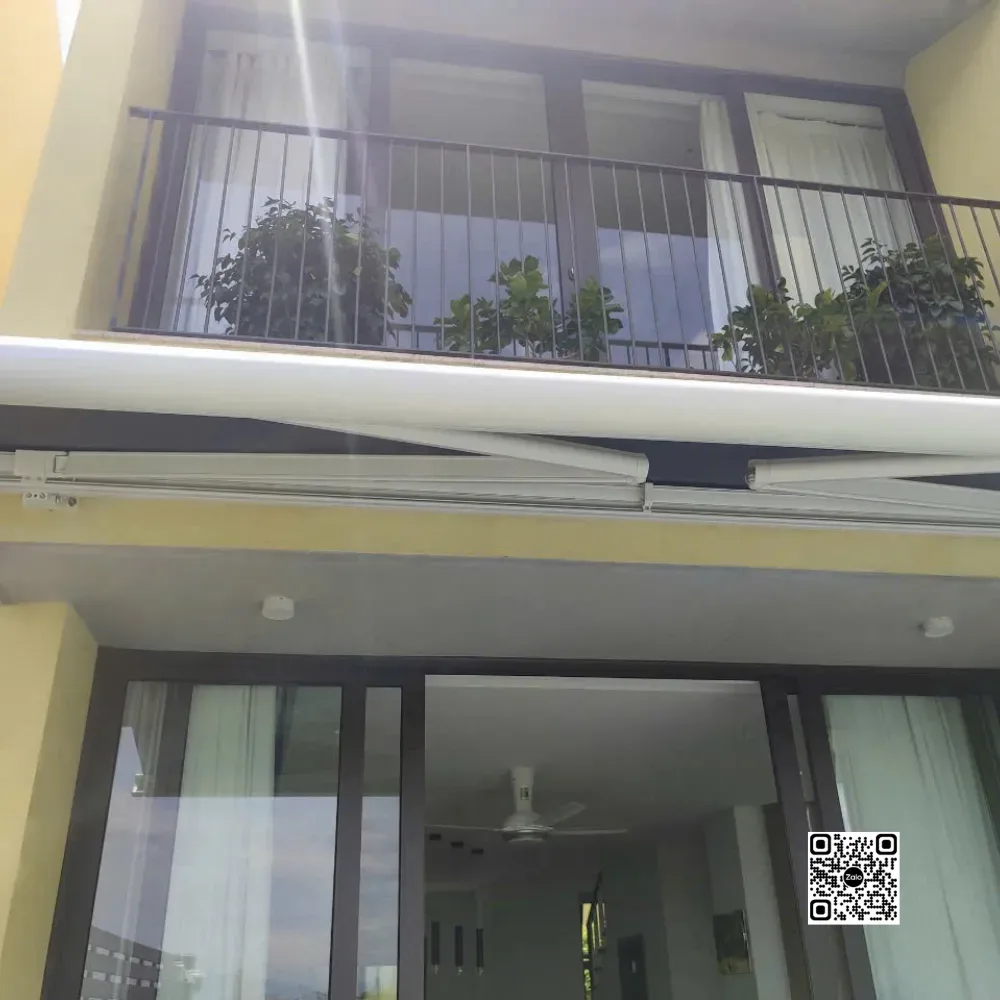
Customers ask about the fabric, the motor, and the color, but rarely ask about what bears the entire load: the few dozen centimeters of wall where the support bar is mounted. An extended awning is a cantilevered structure: the farther it projects, the greater the overturning moment at the anchor point, and it increases faster than the eye would expect. Hollow brick walls, newly built walls, walls clad in decorative stone, thin balconies, and thin concrete overhangs are all weak anchoring surfaces. A good awning mounted to a weak anchoring surface is still a bad awning.
When surveying the site, reverse the question: not “how far can this system project?” but “what projection can my house’s wall support?” If there is no beam, column, or solid concrete at the installation point for anchoring, the correct approach is usually to add a support frame or floor-mounted posts. A supplier who does not ask where you plan to mount it is shifting the risk onto you.
Four configurations currently sold and the type of home each suits
The four products in the catalog are not four price levels of the same thing; they are four different ways of solving the problem. Choosing the wrong category causes more regret than choosing the wrong fabric color.
Portable Folding Awning is for people who do not want to, or are not allowed to, alter the structure. This is the only category in the catalog worth considering for rental homes, cafés that only set out seating on weekends, or yards you are not yet sure you will use for long. The trade-off is that anything portable is not fixed—do not expect it to stay still like a system permanently anchored to the wall.
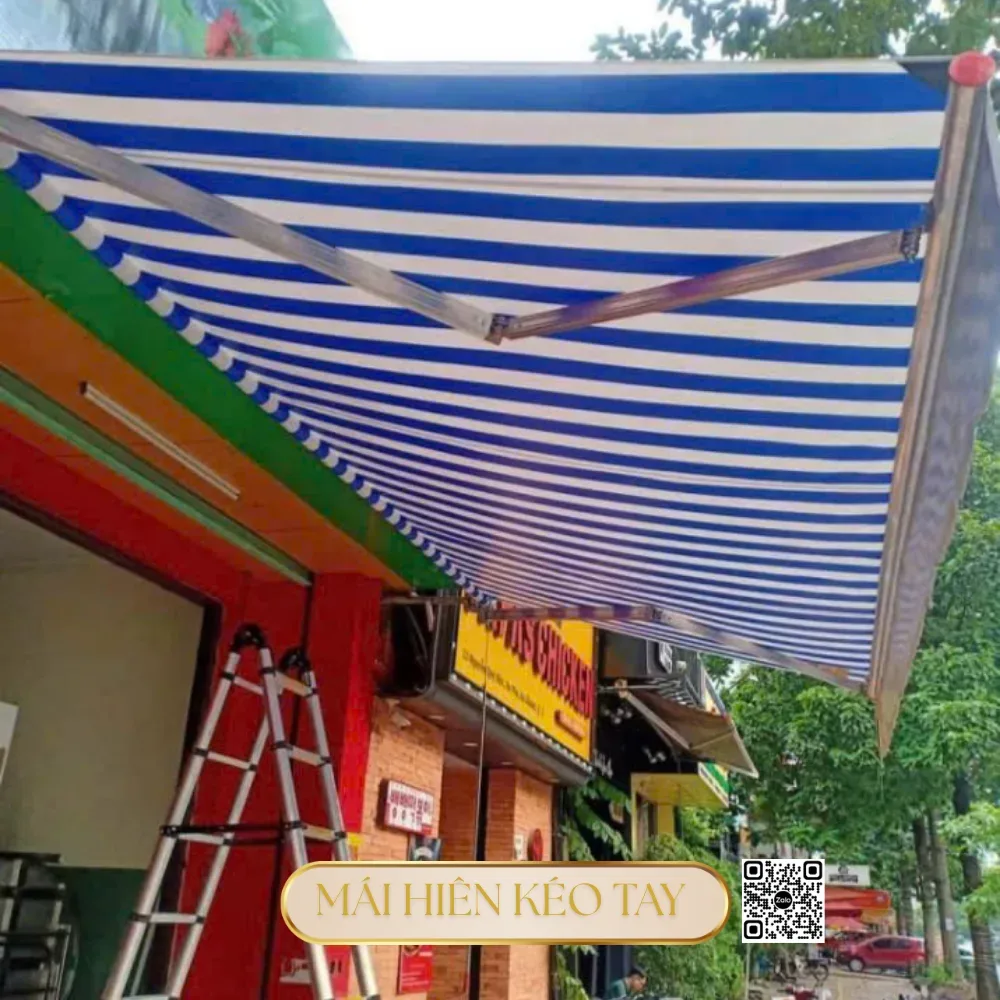
Manual Outdoor Awning is unfairly underrated: no motor means no electrical wires exposed to the sun, no circuit board, and no remote running out of battery. For an awning within reach that is operated once or twice a day, this is the option that creates the fewest worries later. The downside is real too: at larger sizes, operating it is strenuous and inconvenient—and when it is inconvenient, you develop the habit of leaving it out, which is exactly what damages an awning.
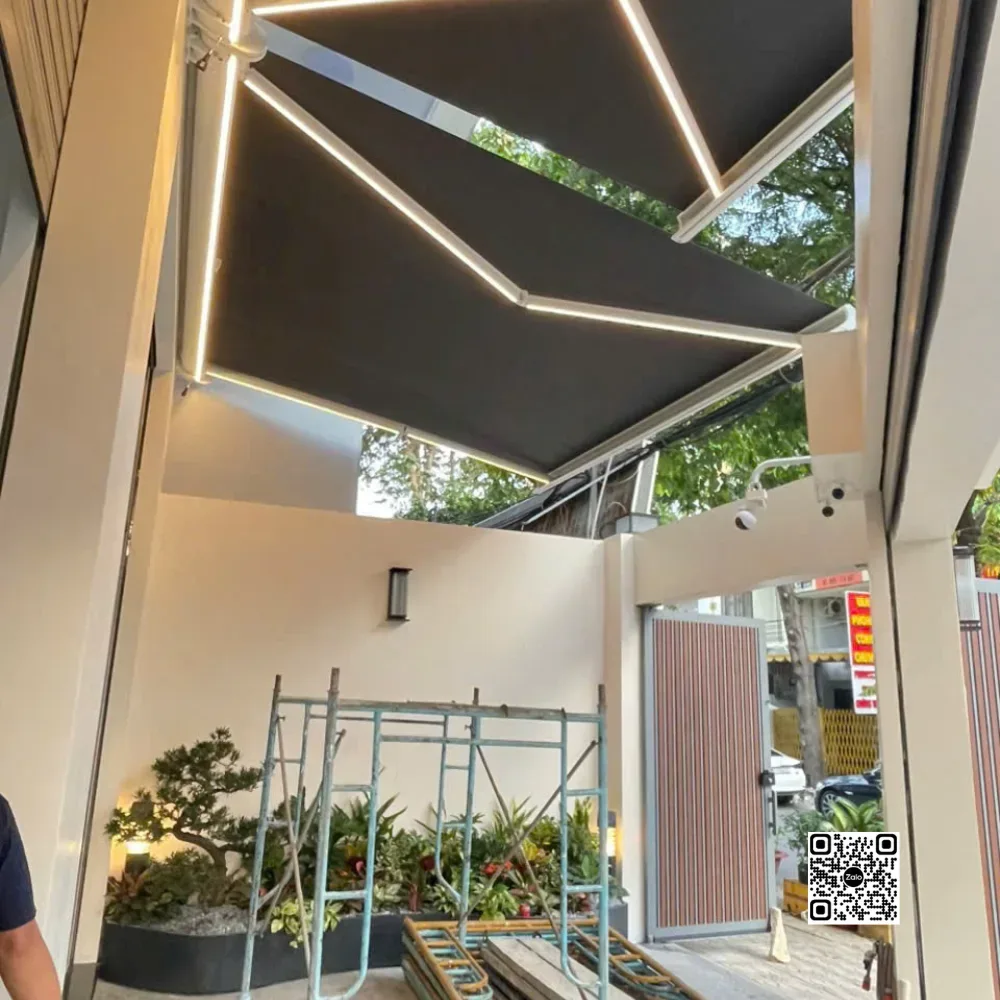
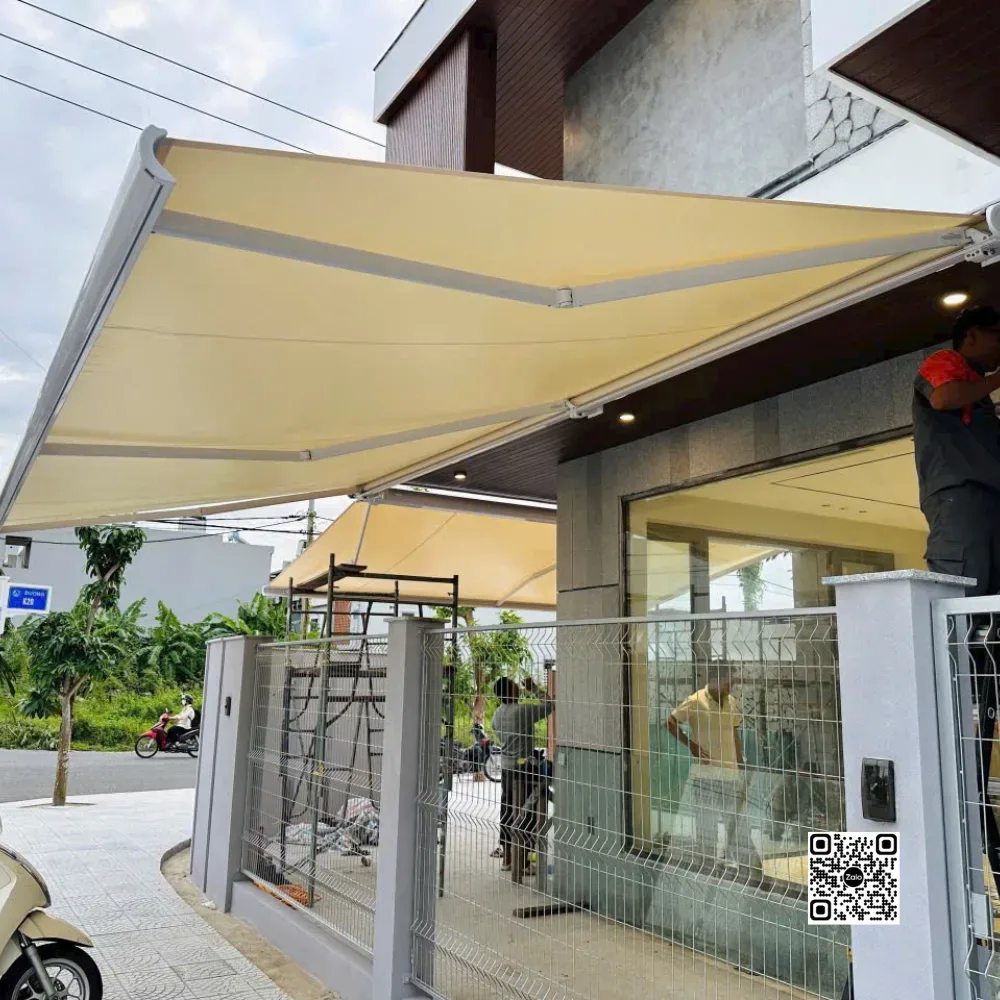
Outdoor Automatic Awning is the motorized version with remote control, according to the product description, intended for homes, cafés, and outdoor structures. It is the right choice when the installation point is too high to reach easily, or when the awning must be opened and closed several times a day—the kind of task no one will keep doing manually for more than a week.
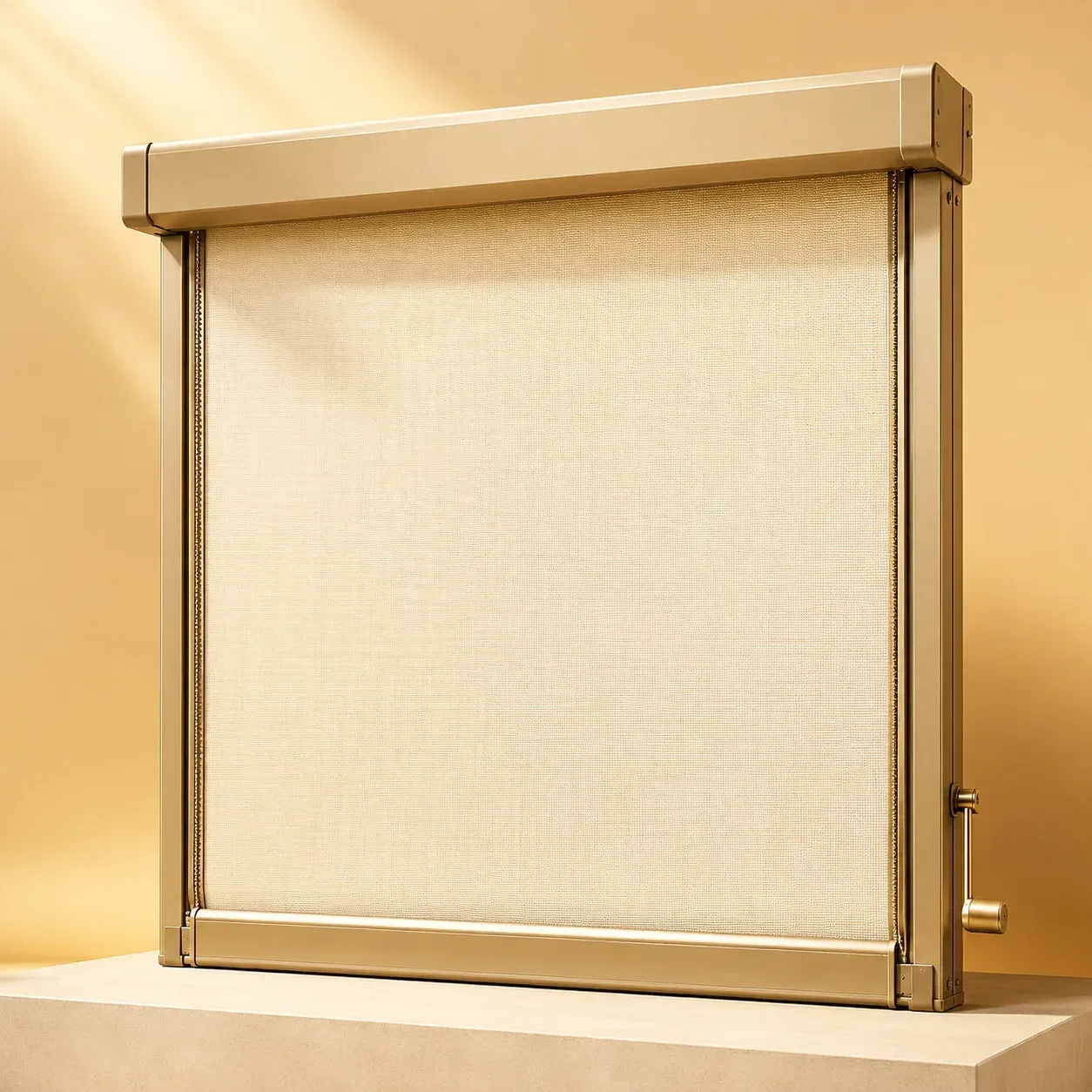
Automatic Pleated Retractable Canopy belongs to an entirely different family: it does not project from one side but folds along a support system, so the load is distributed between two ends instead of being concentrated entirely on the wall. This is the solution for skylights, courtyards, or places that already have a steel frame. The price to pay is that you need a frame, and building a frame is a construction item, not simply an installation.
Automation is genuinely convenient, but you are buying an additional chain of failure points
To say plainly what product pages rarely do: every additional component is another place that can fail. The manual version can fail at the crank and joints; the automatic version adds a motor, wiring, an outdoor power supply, a signal receiver, and the remote that is easily misplaced.
That is not a reason to avoid the automatic version, but it is a reason to ask three questions in advance: where will the power come from, and how will the wiring be routed so it is not exposed to the sun; if the motor fails, is there a backup manual crank mechanism for retracting the awning; and can the components be replaced individually later, or must the entire assembly be replaced? The second question is the most important—a system stuck in the extended position while the weather is turning windy is the worst situation for this product.
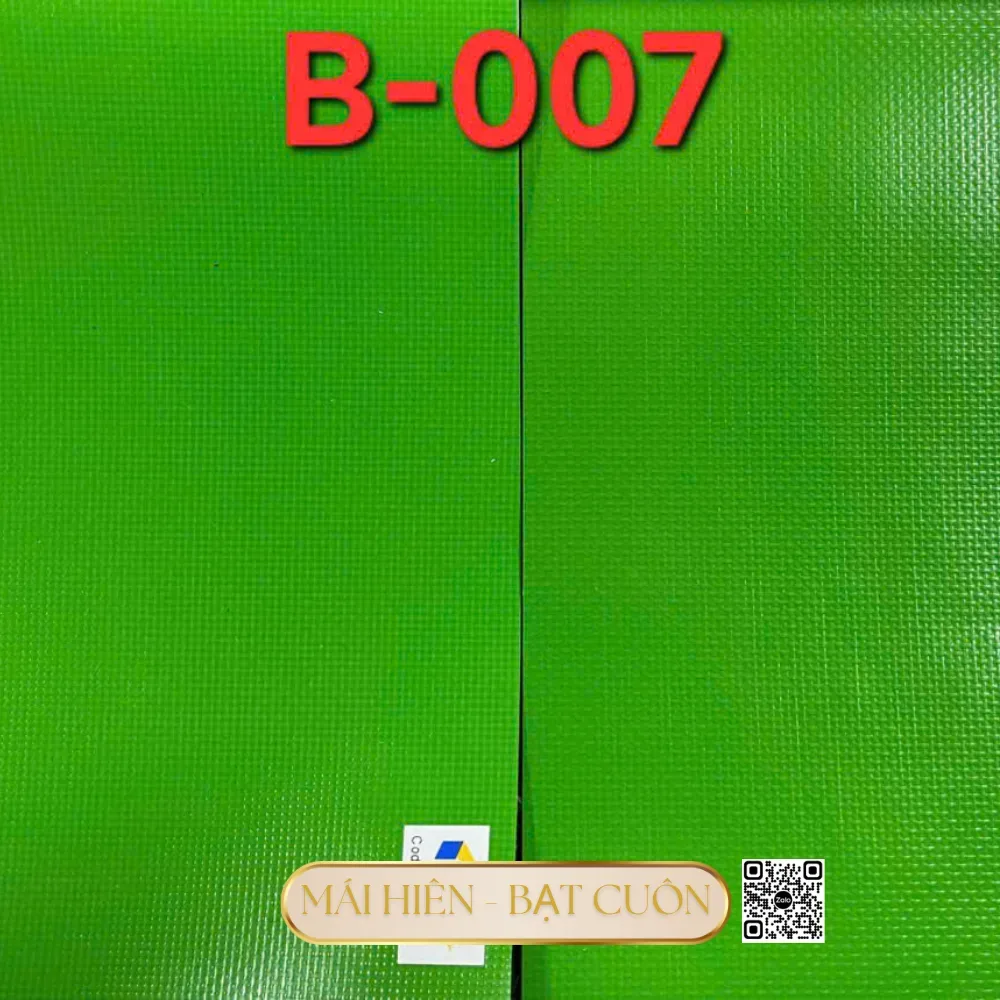
Conversely, there is one argument in favor of the automatic version that few people mention: laziness is a real technical factor. If retracting the awning takes three minutes of back-breaking effort, you will skip it; if it is just a button press, you will press it.
Send your dimensions and needs, and the Thanh Vy Curtains team will advise on options and quote for your actual space.
The water question: slope, pooling, and noise when it rains
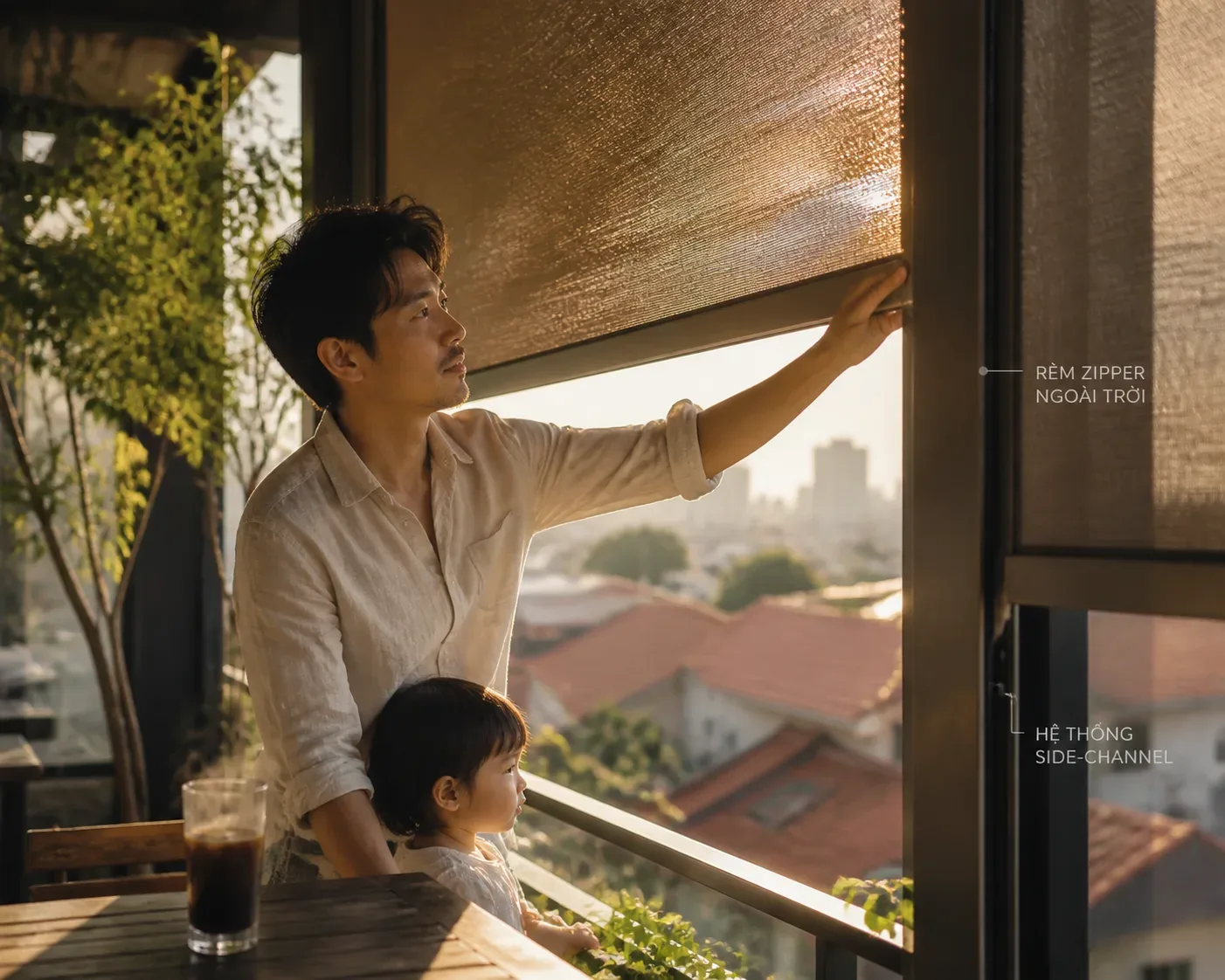
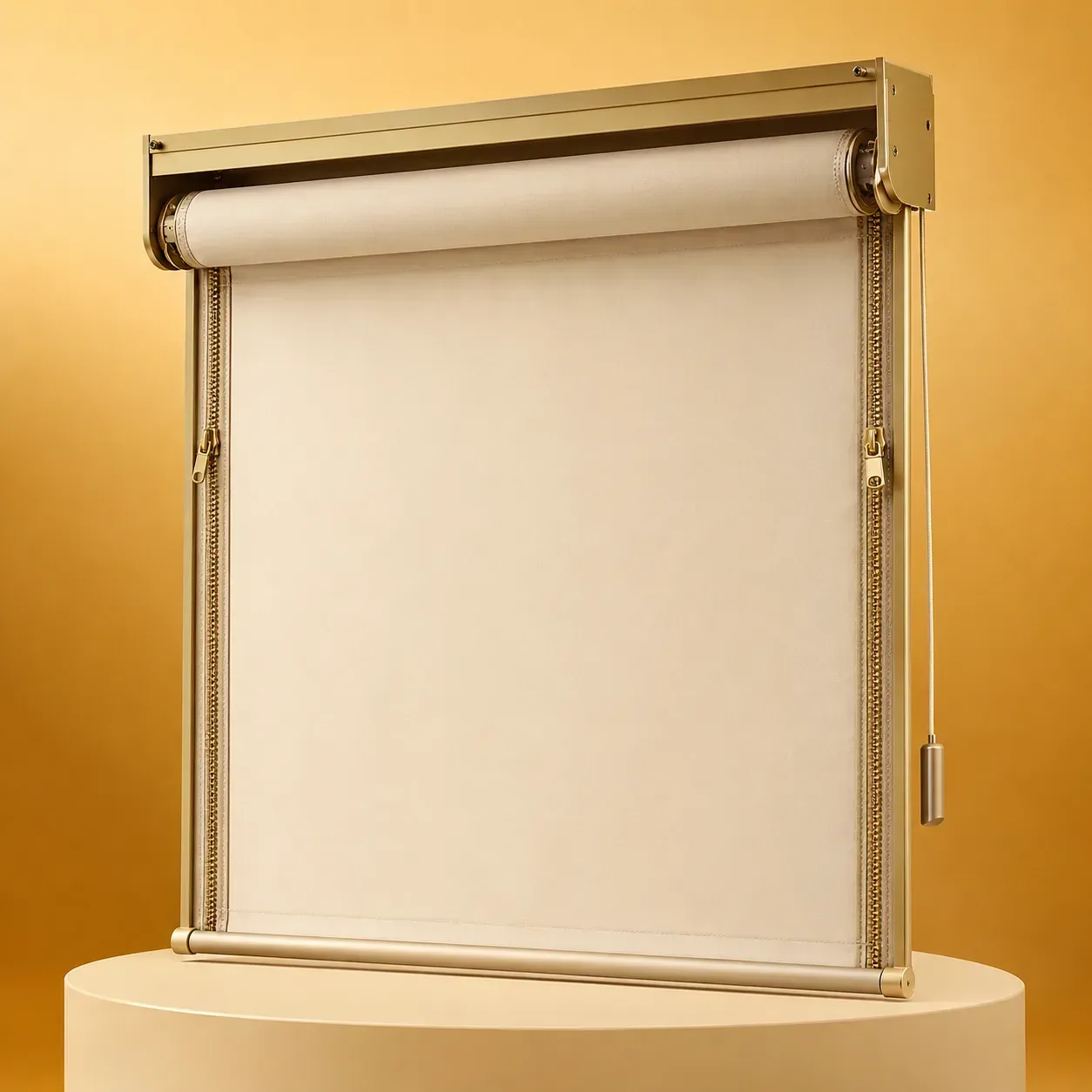
Retractable awnings provide much less rain protection than buyers expect—the second biggest drawback after wind. First, they only block water falling straight down, and rain here rarely falls straight down. When rain comes with wind blowing sideways, the entire area beneath the awning still gets wet. To block wind-driven rain from the side, you need to address the vertical surface with a different product category, such as outdoor zipper curtains. Information about the company also appears in the introduction to auditorium curtains in Báo Cần Thơ.
Second is water pooling. If the slope is insufficient or the fabric has sagged, water collects in a puddle in the middle of the sheet; that puddle is heavy, pulling the fabric down further, and the cycle grows until the frame sags or the fabric tears. This type of failure happens quietly—ask carefully about the drainage slope and how stretched fabric is handled.
Third, less serious but annoying every day: rain falling on taut fabric makes noise. If the awning is directly outside a bedroom window, consider this beforehand. Interested readers can review the role of windows before deciding.
Maintenance: the part few people ask about before installation
Awnings do not require much maintenance, but what they do require is often in hard-to-reach places: dust, leaves, bird droppings, and moss accumulate along the fabric edges; grooves and joints need cleaning; anchor points need to be checked for cracked bases or loose bolts. If the awning is on the second floor or higher, every cleaning requires scaffolding or a technician—so the cost of ownership does not stop at the initial installation price. Ask yourself: how will I access this spot?
Who should install an outdoor automatic awning
The group that benefits most clearly is homes with yards, porches, or facades exposed to angled sunlight at a fixed time: you know exactly what time of day that area becomes unusable, and you want to reclaim precisely those hours. The second group is restaurants and shops that need to adjust their space by time of day: extend it to add tables, retract it to restore an open frontage in the evening—here, the automatic version is worthwhile because it is operated frequently. The third group is people who cannot or do not want to build a permanent roof: homes in areas with facade regulations, or homes that are still expected to be renovated. Awnings can be removed, and that is a genuine advantage.
Who should not install one—speaking plainly to help you avoid wasting money
Do not install an awning that projects outward on a high-rise apartment balcony directly exposed to wind: wind at that height is strong and constantly changes direction, balcony railings are usually not a good anchoring base, not to mention the building management’s facade regulations—something to ask about beforehand, not afterward.
Do not install one if you want to “install it and forget it”: this product requires the habit of watching the sky and retracting it. If you are not prepared for that habit, choose a permanent roof instead and accept losing the open sky.
Do not install a fixed-wall-mounted version while renting a home. You will be drilling into someone else’s property, and when you move out, you will either leave it behind or remove it with almost no residual value.
Do not try to cover an overly wide span with a single unit: the larger the opening, the harsher the load on the anchor points, and the risk increases faster than the area gained. Two moderate-sized units, or a system with support legs, is usually the right advice even if it sounds less appealing. And finally, do not buy an awning to block wind-driven rain—it was not made for that.
Compared with permanent roofs, cantilever umbrellas, and facade-blocking curtains
Compared with permanent roofs made of corrugated metal or translucent panels: permanent roofs clearly win in durability, resistance to rain and wind, and not requiring operation; they lose because they are permanent—reducing daylight year-round, affecting the facade, and often involving permits. If you do not mind losing that open sky, a permanent roof makes more sense.
Compared with cantilever umbrellas: umbrellas are inexpensive, freely movable, and do not touch the wall; they lose in continuous coverage, the space taken up by the base, and are no less vulnerable to wind. Facade-blocking curtains are not competitors but complements: the awning handles the vertical direction, while the curtain handles the horizontal direction. If your budget only covers one, choose based on which problem is more bothersome in your own home. You can also refer to the concept of curtains in architecture to better understand the material aspect.
Conclusion: buy it for the right purpose and it is well worth it; buy it for the wrong purpose and you pay twice
An outdoor automatic awning is good for a narrow use case: reclaiming a yard for a few hours each day without sacrificing the open sky year-round, in a location with a solid anchoring surface and with users willing to retract the awning when the weather turns. Outside that context, it is an expense you can easily regret: damaged by wind, wet from wind-driven rain, difficult to clean, or left unused because the owner dislikes operating it. The four configurations in the catalog exist for four different contexts, so choosing the right group is more important than choosing the right price.
Quick answer: An outdoor automatic awning is worth installing when you need hourly sun protection, the wall is strong enough for anchoring, and you are willing to retract the awning when the weather turns windy. It should not be installed on a high balcony exposed to strong winds, in a rental home with a fixed-mounted configuration, or when the primary goal is to block wind-driven rain.
The final check is very simple: stand in the exact spot where you plan to install it during the most uncomfortable time of day, and ask yourself whether you are trying to solve direct sunlight or sunlight combined with wind-driven rain.
For further information, please contact Thanh Vy Curtains
We provide free consultation and on-site measuring at your home.

No comments yet!