



Reviewing Window Curtains in District 7 Through 3 Completed Projects: Why None Used a Single Curtain Layer
Three District 7 projects, three types of spaces, one common point
In District 7, there are three projects with enough data to evaluate. Three projects are not enough to make any statement beginning with the phrase homes in District 7 usually, and this article will not make any such statement. What these three projects do provide is three very specific situations, completely different in terms of space type, and one common point clear enough to be worth discussing.
One project is a condominium apartment, one is a seminar room in a school, and one is a spa. They differ so much that they seem impossible to compare. Yet all three ended up with the same type of solution, and that is the most interesting part of this data. The overall service picture for the area is presented on the District 7 curtains page; the section below only reads backward from the actual sites.
None of the three projects was solved with a single curtain layer
This is the common point. All three projects used two curtain systems combined rather than a single panel.
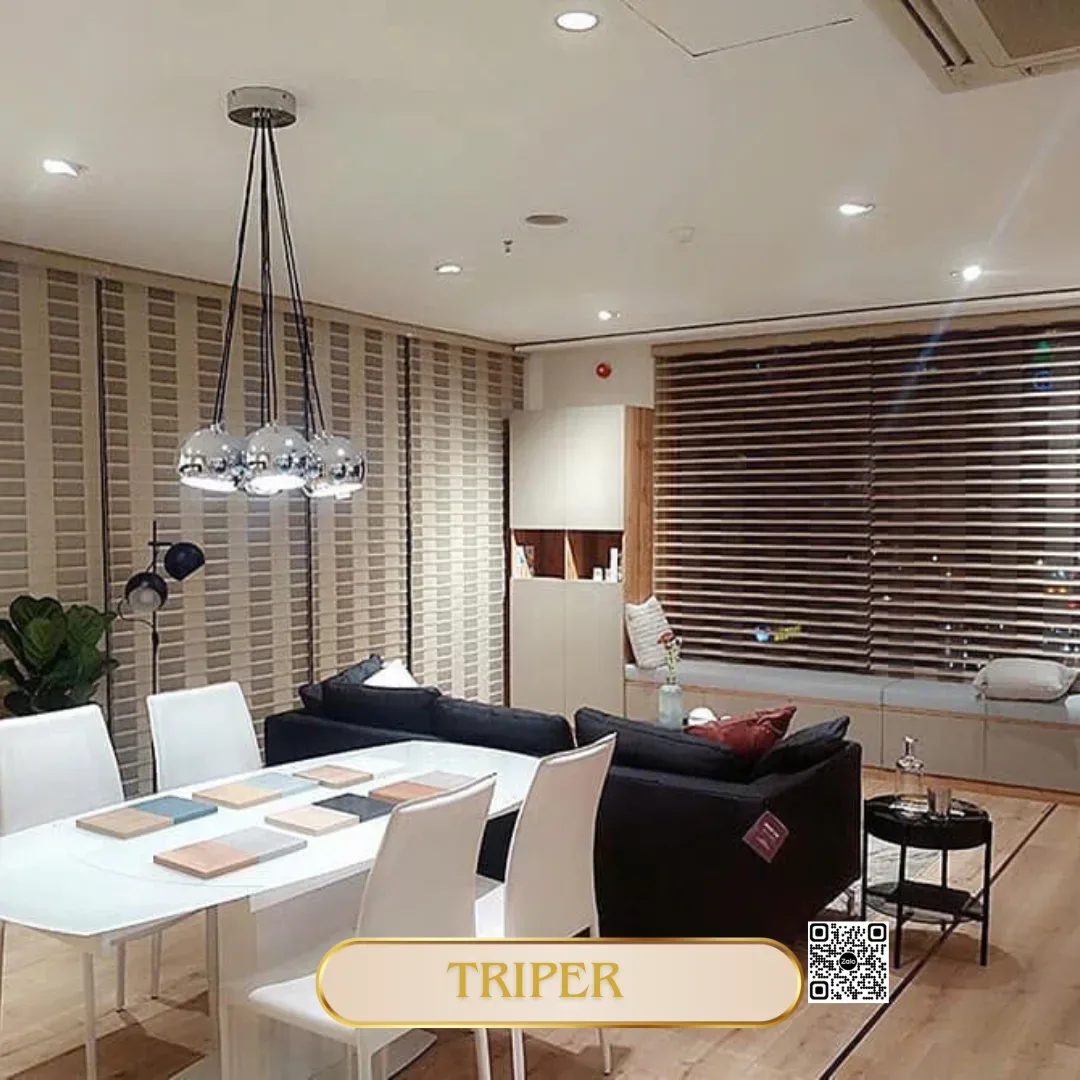
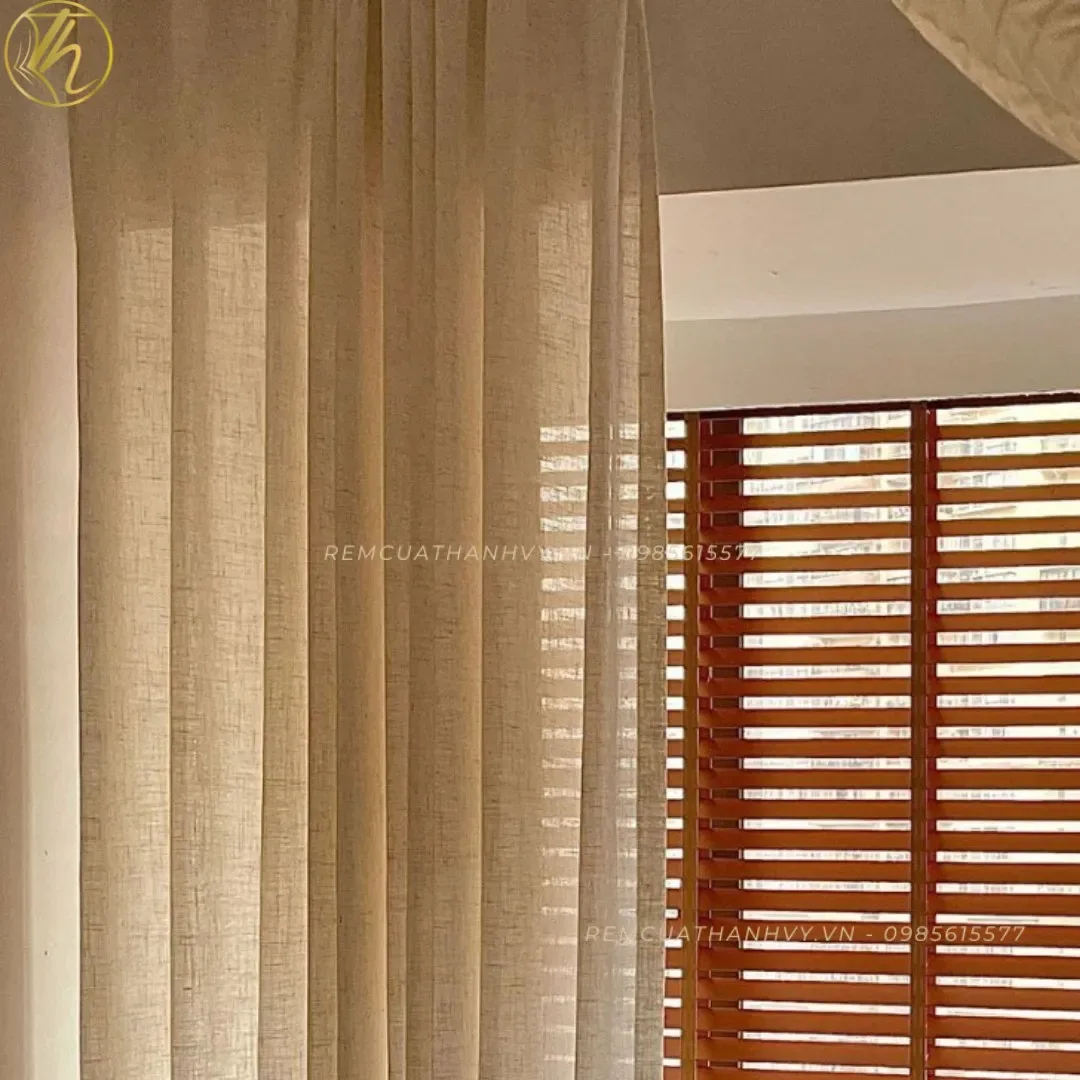
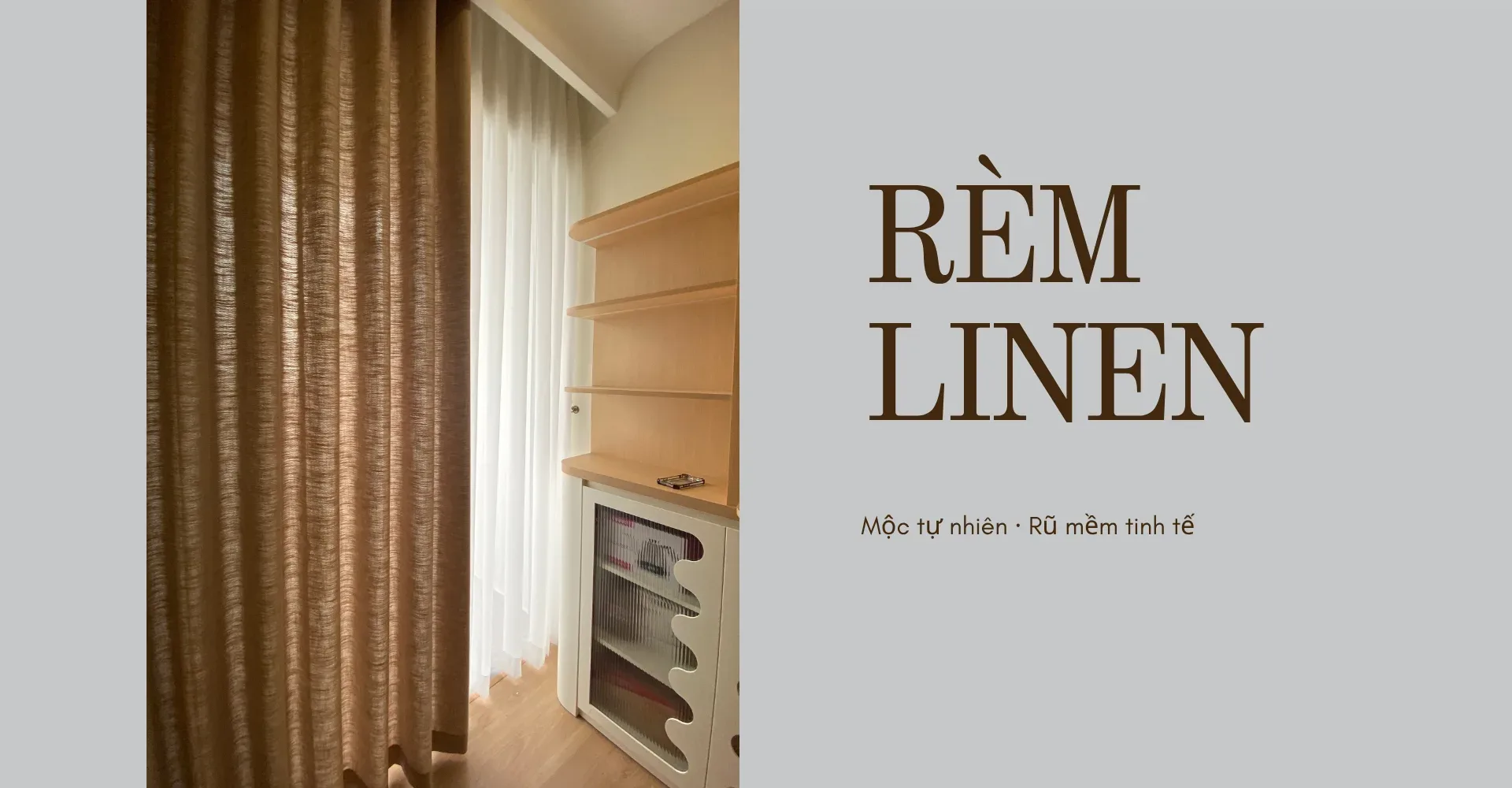
The M-One apartment uses linen voile curtains paired with horizontal bamboo wood roller blinds. The university seminar room uses single-layer fabric curtains paired with vertical roller blinds. The spa uses fabric curtains on sliding tracks paired with thermal insulation screens. Three contexts, three different pairs of materials, but the same logic: one layer handles daylight and an airy feeling, while the other handles privacy or sun blocking when needed. You can also refer to the characteristics of linen fabric to better understand the material aspect.
This is notable because most customers asking for prices ask about a single layer. The three projects here show that when a problem involves two opposing needs, forcing one curtain to handle both is usually a sure way to be dissatisfied at both ends. But it must be said immediately: three projects do not prove that every home in District 7 needs two layers. They only show that these three cases all arrived at that solution.
M-One apartment: the second layer is roller blinds because the apartment has no space to gather curtains
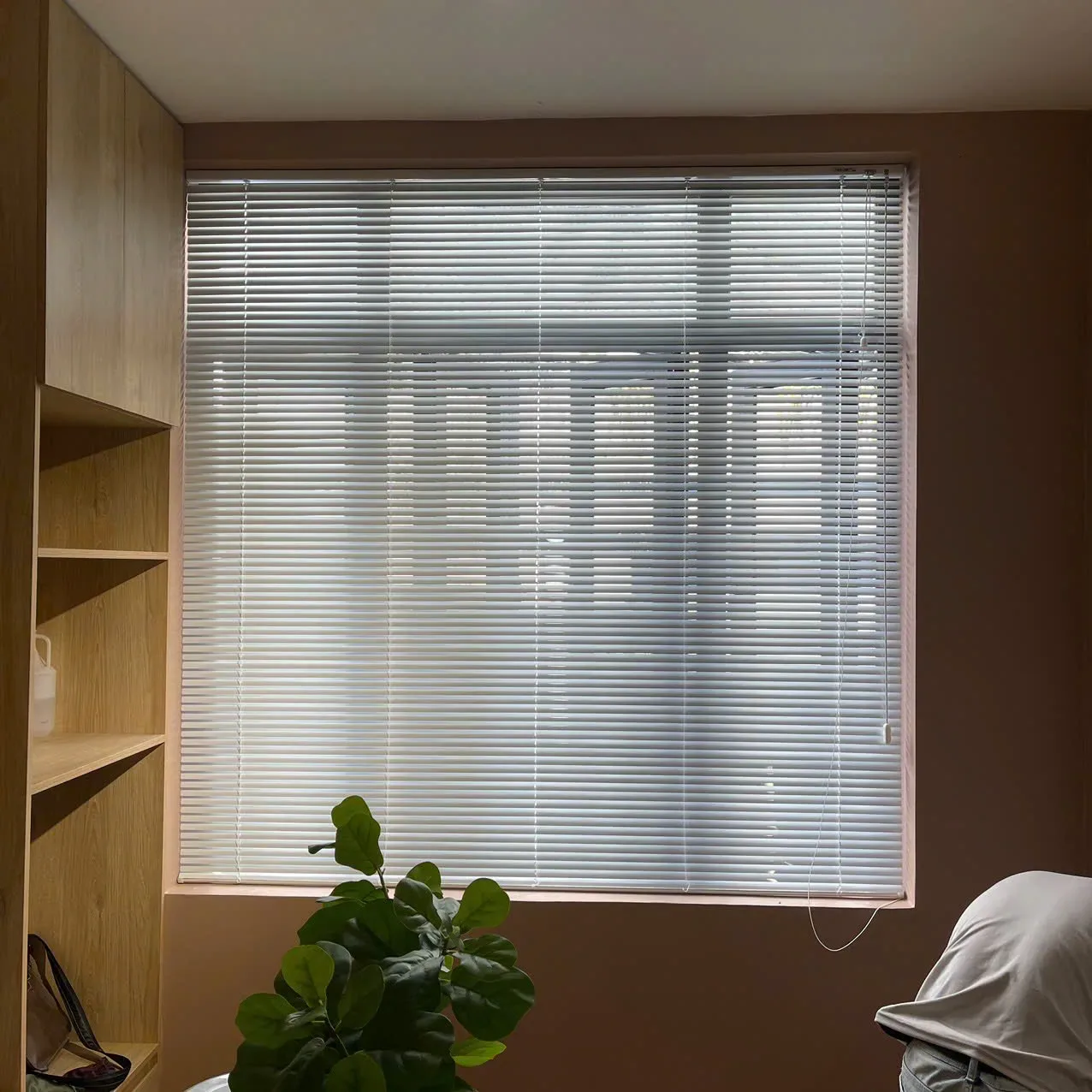
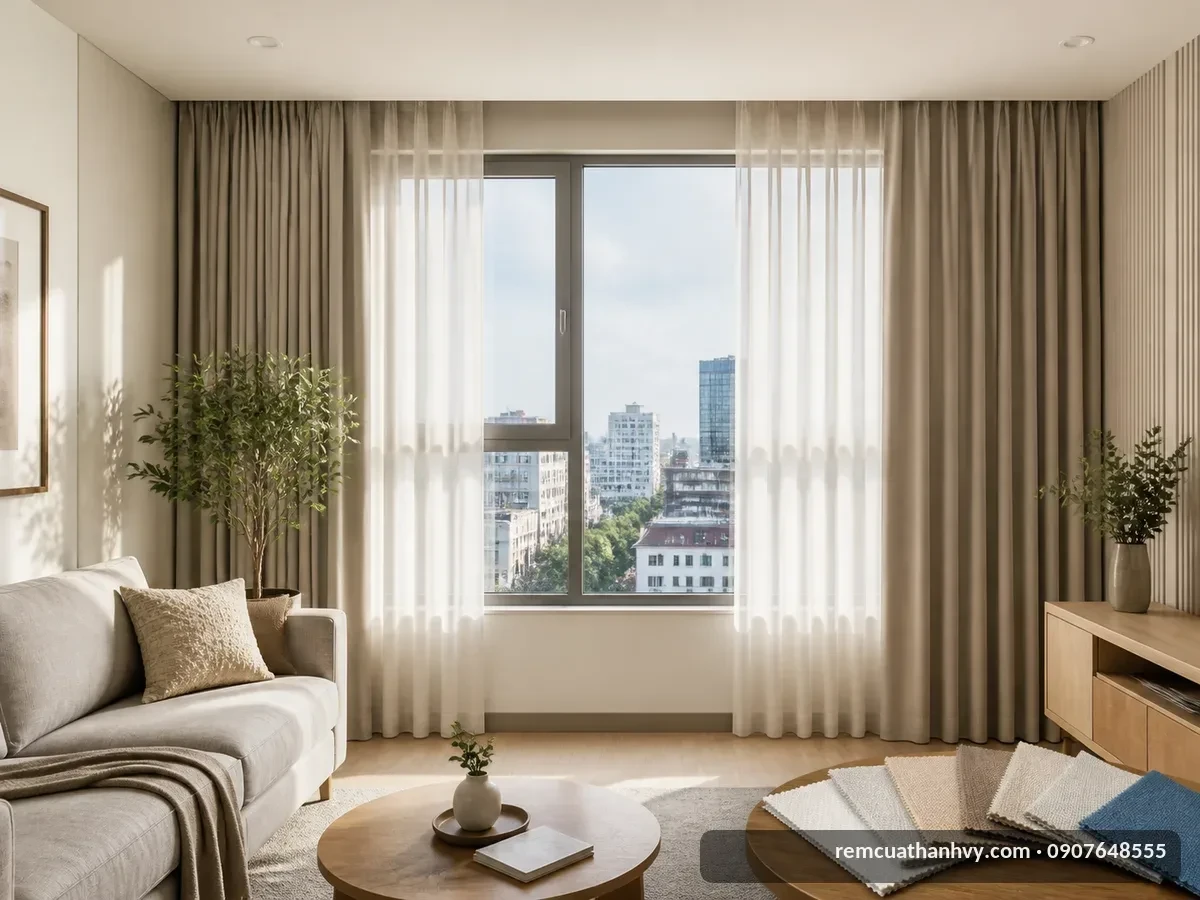
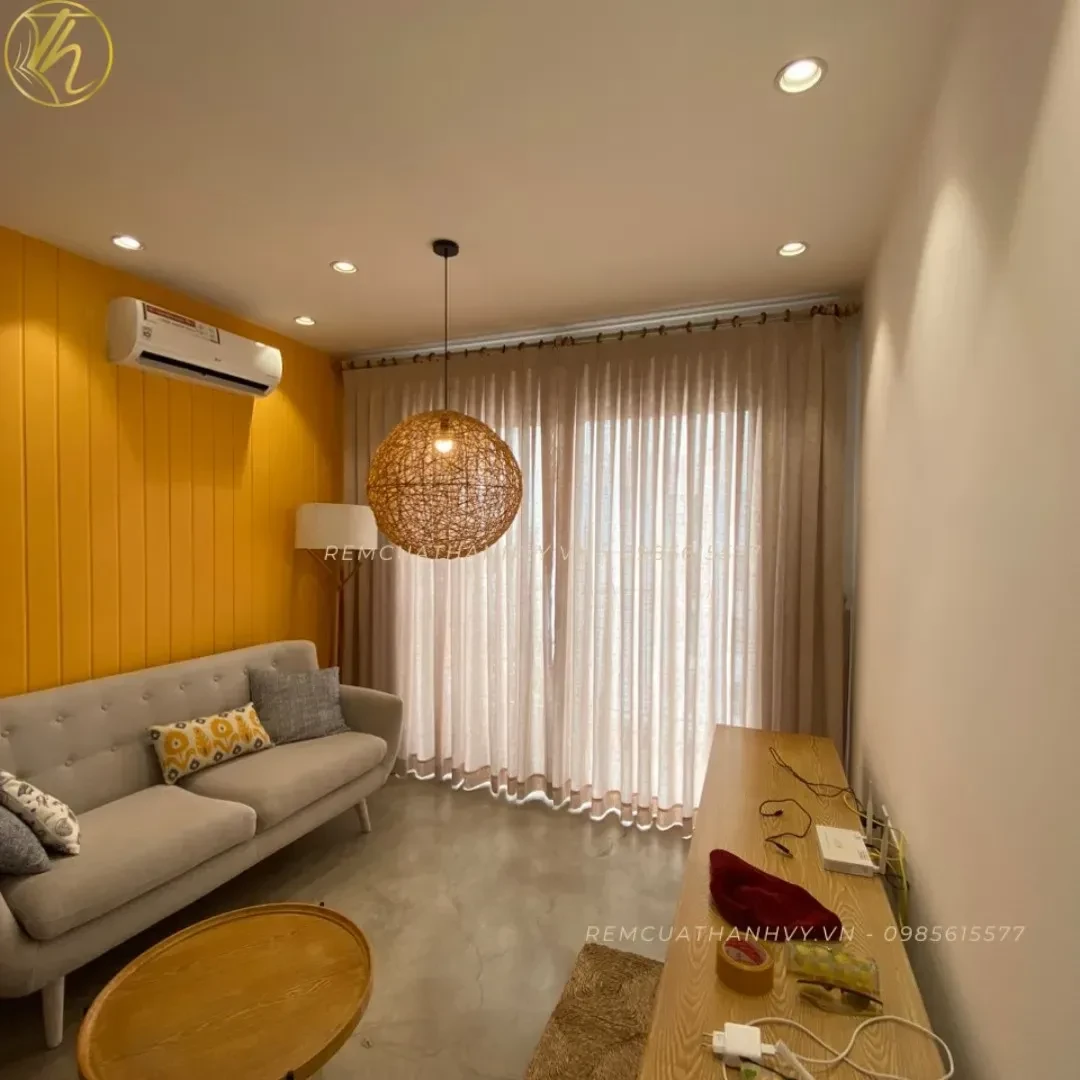
The project featuring linen voile curtains combined with wood roller blinds at M-One Nam Saigon on Bế Văn Cấm Street is the only residential project in the group. The site is a condominium living room with a wide window, a gray sofa, a yellow accent area, and one clearly recorded characteristic: the space is compact.
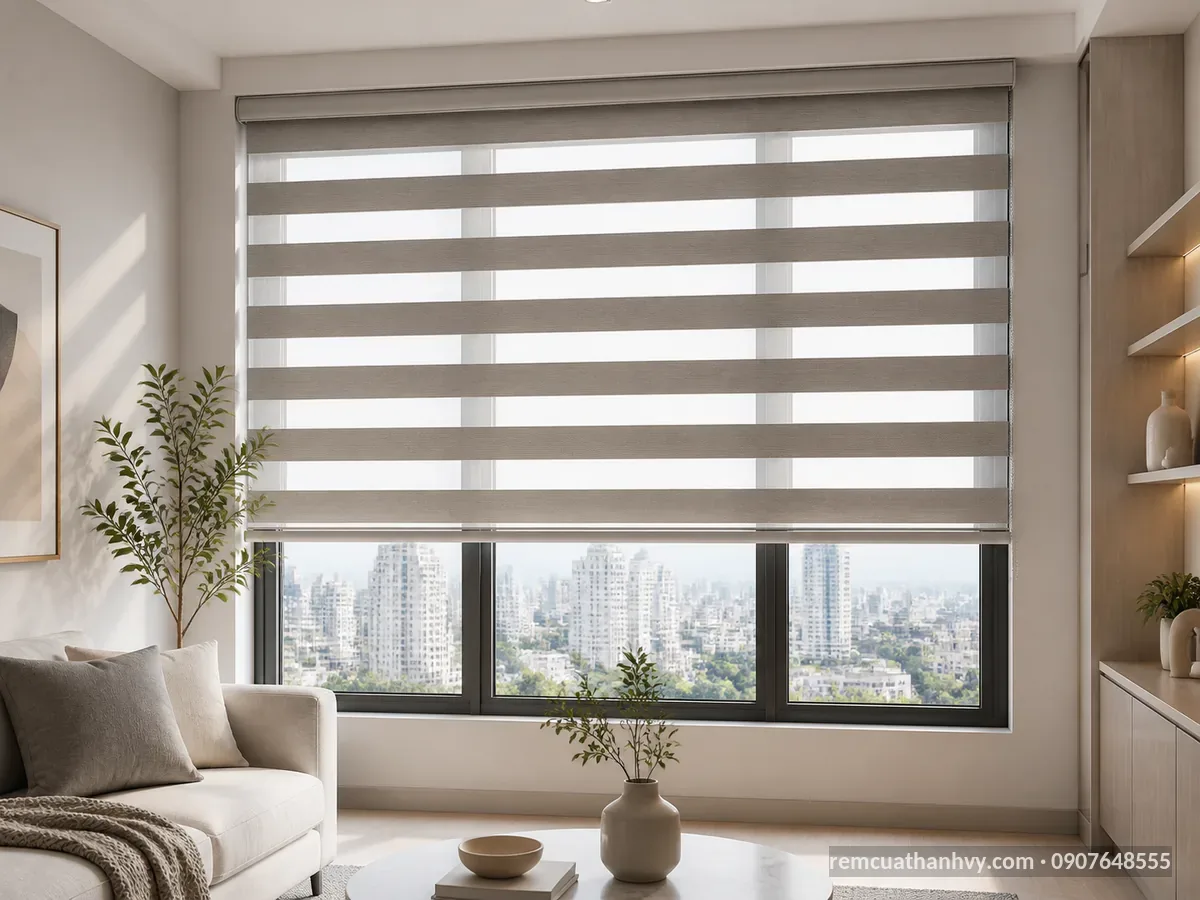
That compactness explains the choice. If the second layer were also fabric curtains, the two fabric layers would gather to both sides when opened and take up a significant amount of wall space at each edge of the window. In a large living room, that would not matter. In an apartment, that space is often exactly where a cabinet or walkway needs to be. Bamboo wood roller blinds retract vertically, rolling up close to the top edge of the window and taking up almost no horizontal space, so they provide sun blocking without taking up additional room.
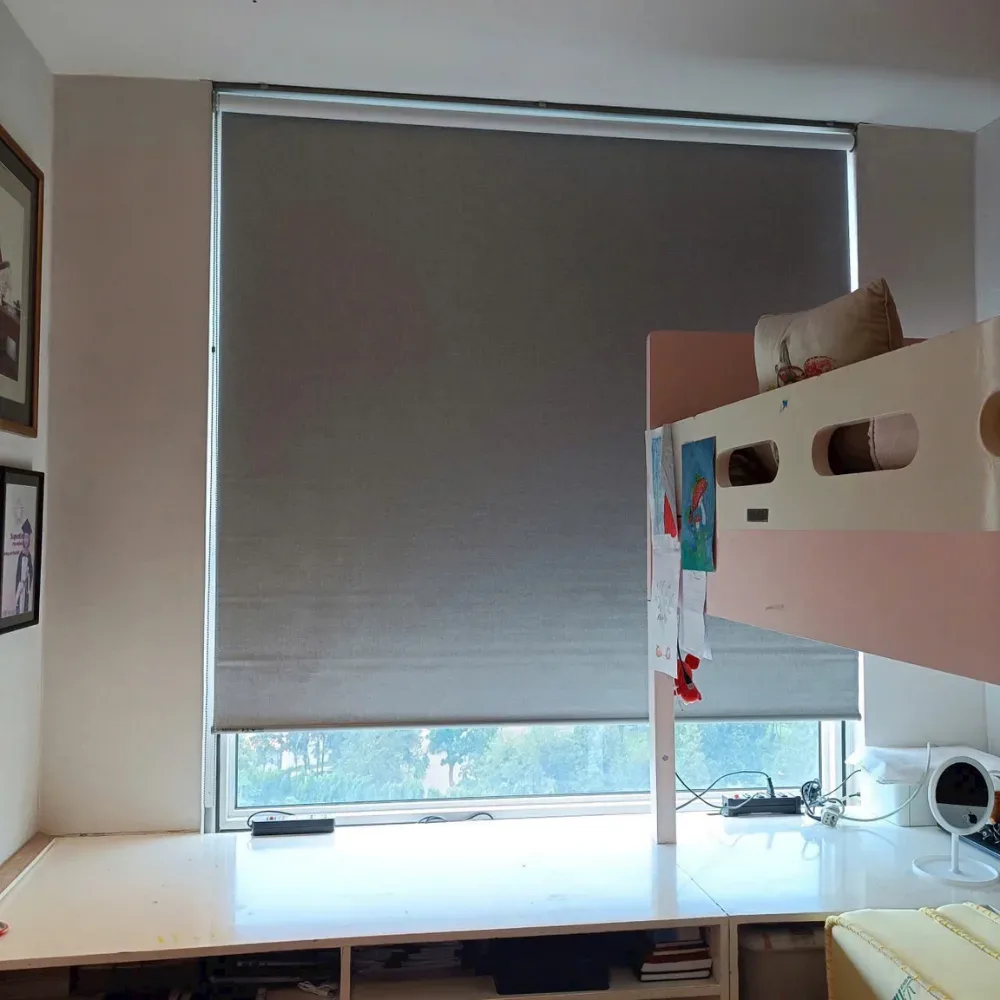
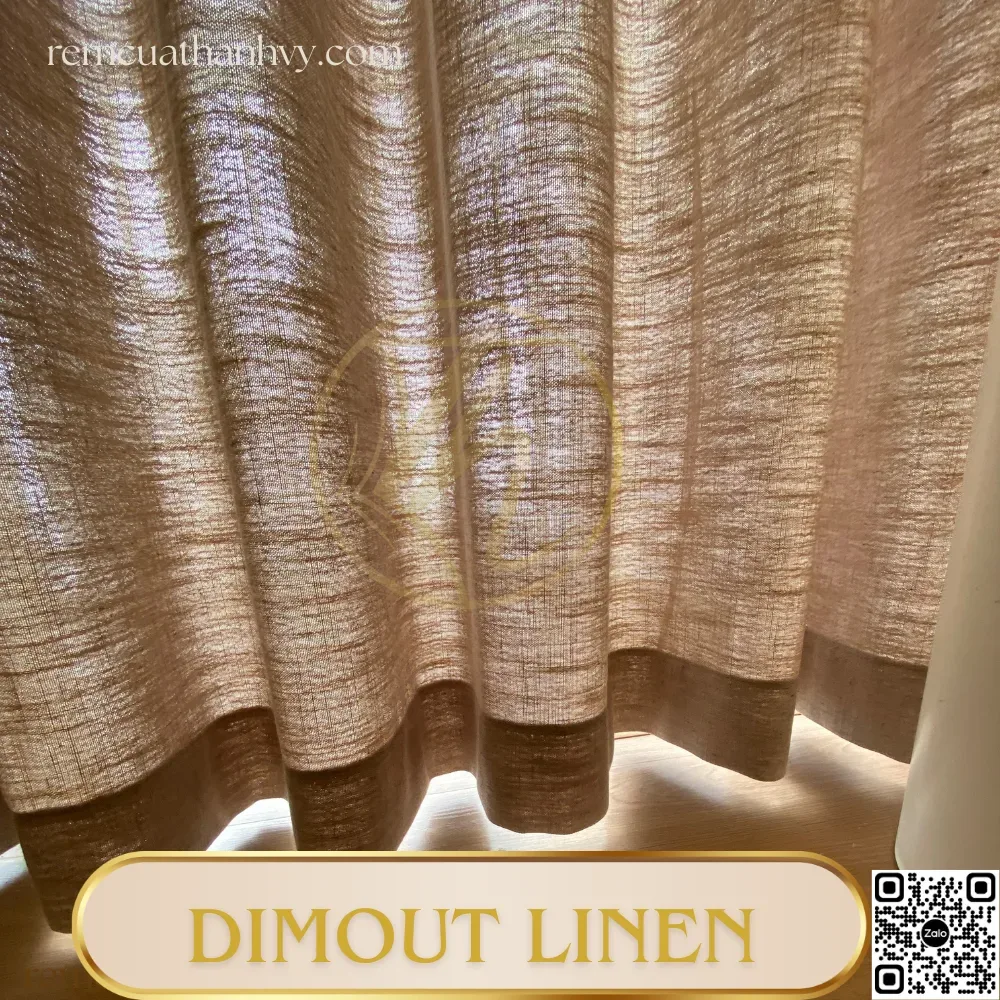
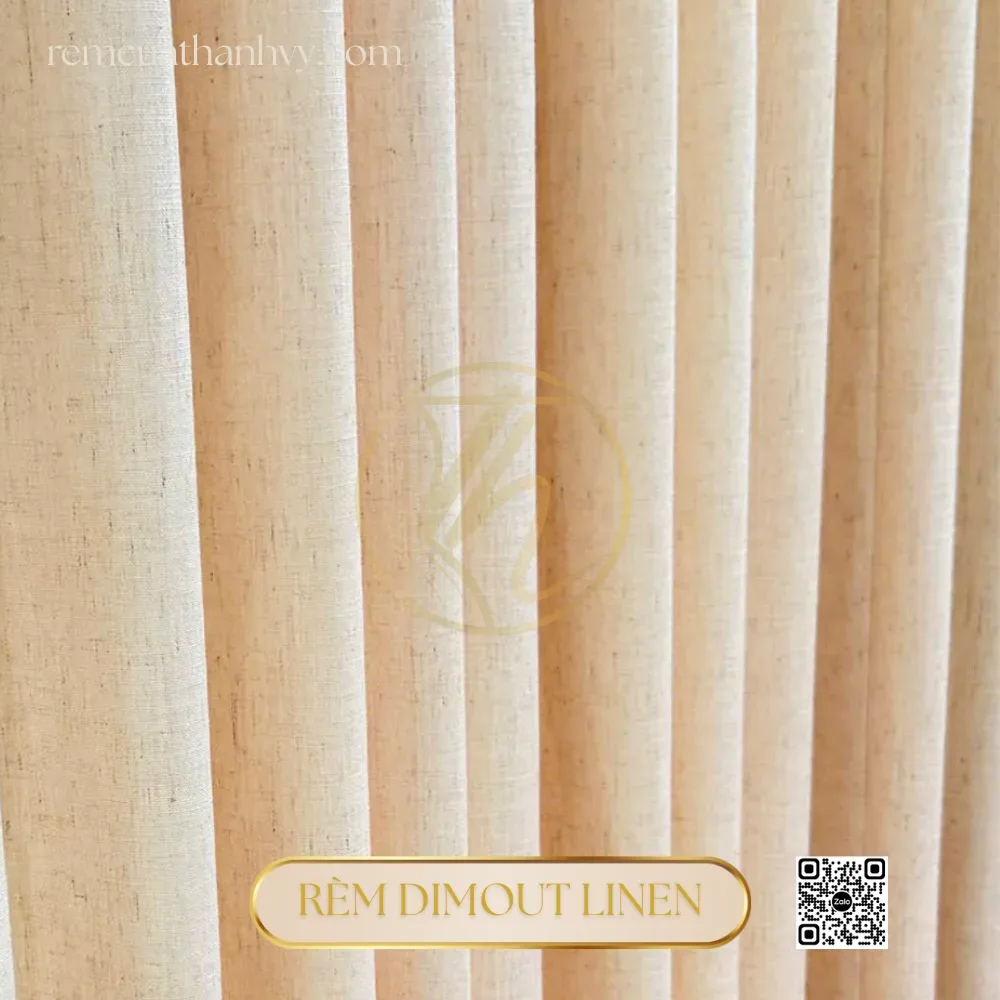
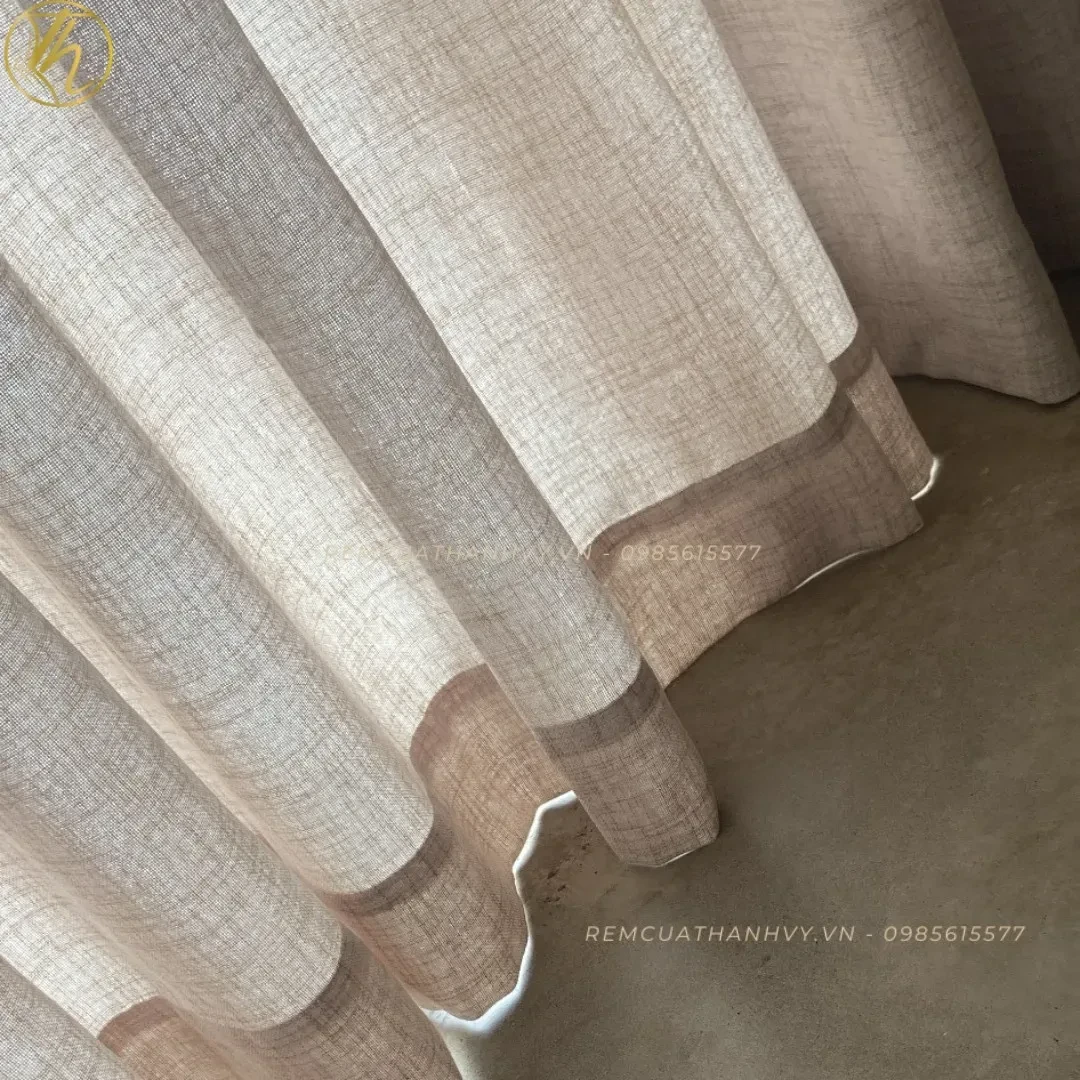
The linen voile handles the remaining tasks: maintaining a bright daytime feeling, softening sunlight through the wide window, and adding texture to the window area. The recorded result was even pleating, neatly finished fabric edges, curtains hanging straight without flaring, and dimensions covering the entire window area. Background information about polyester fibers in the textile industry helps provide a comparison when choosing materials.
This division of roles is worth learning from for apartments in general. But note: it works here because the opening is a window. For a door leading to a balcony, roller blinds would obstruct the walkway every time someone went in or out, and the problem would have to be recalculated from the beginning.
Bamboo wood roller blinds: being direct about what they cannot do
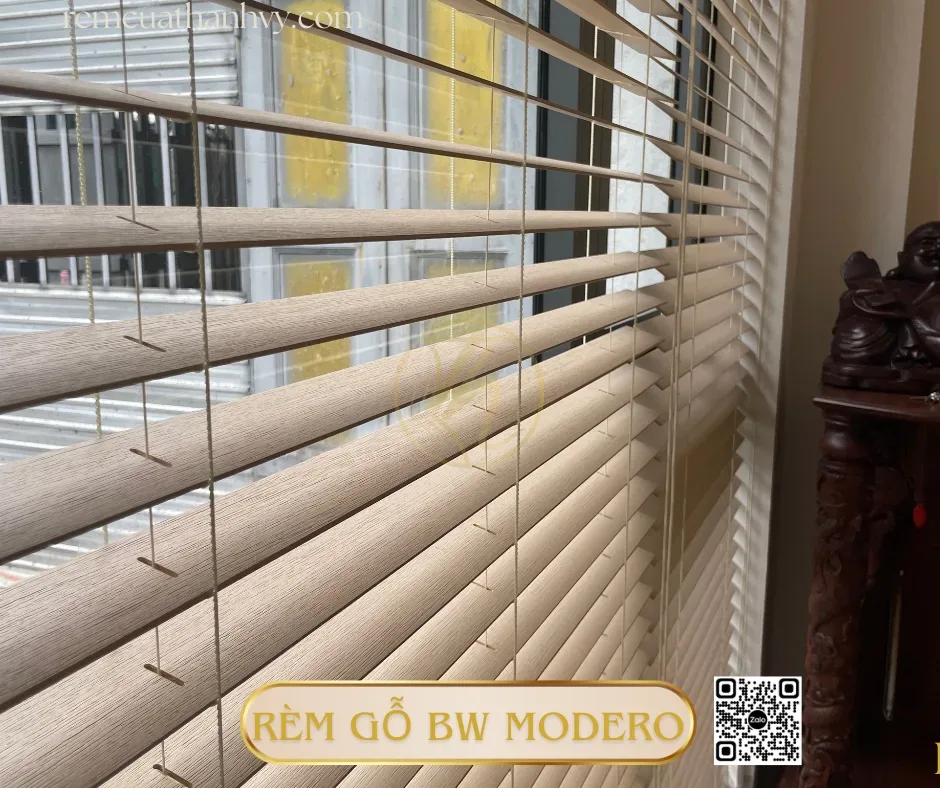
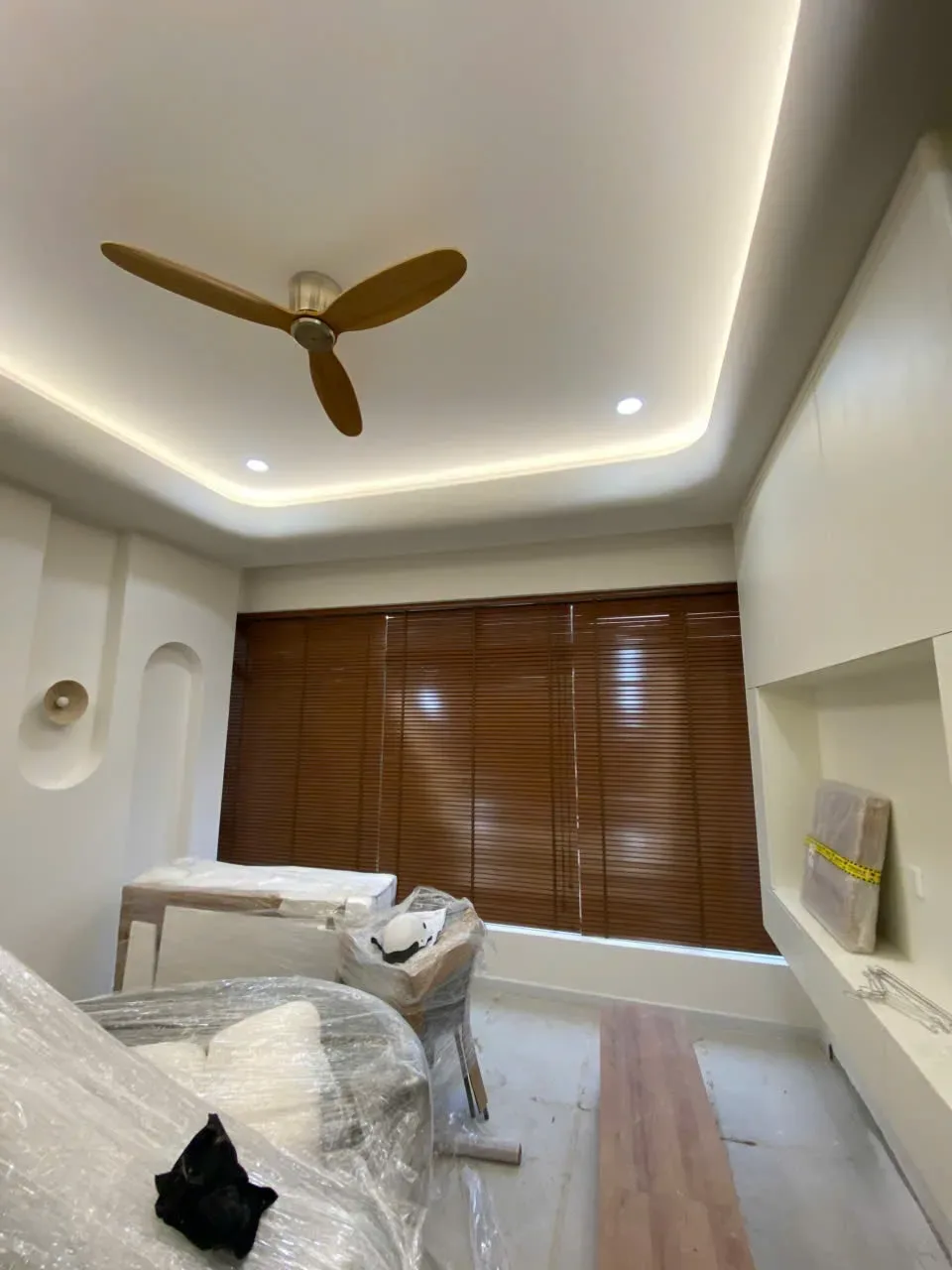
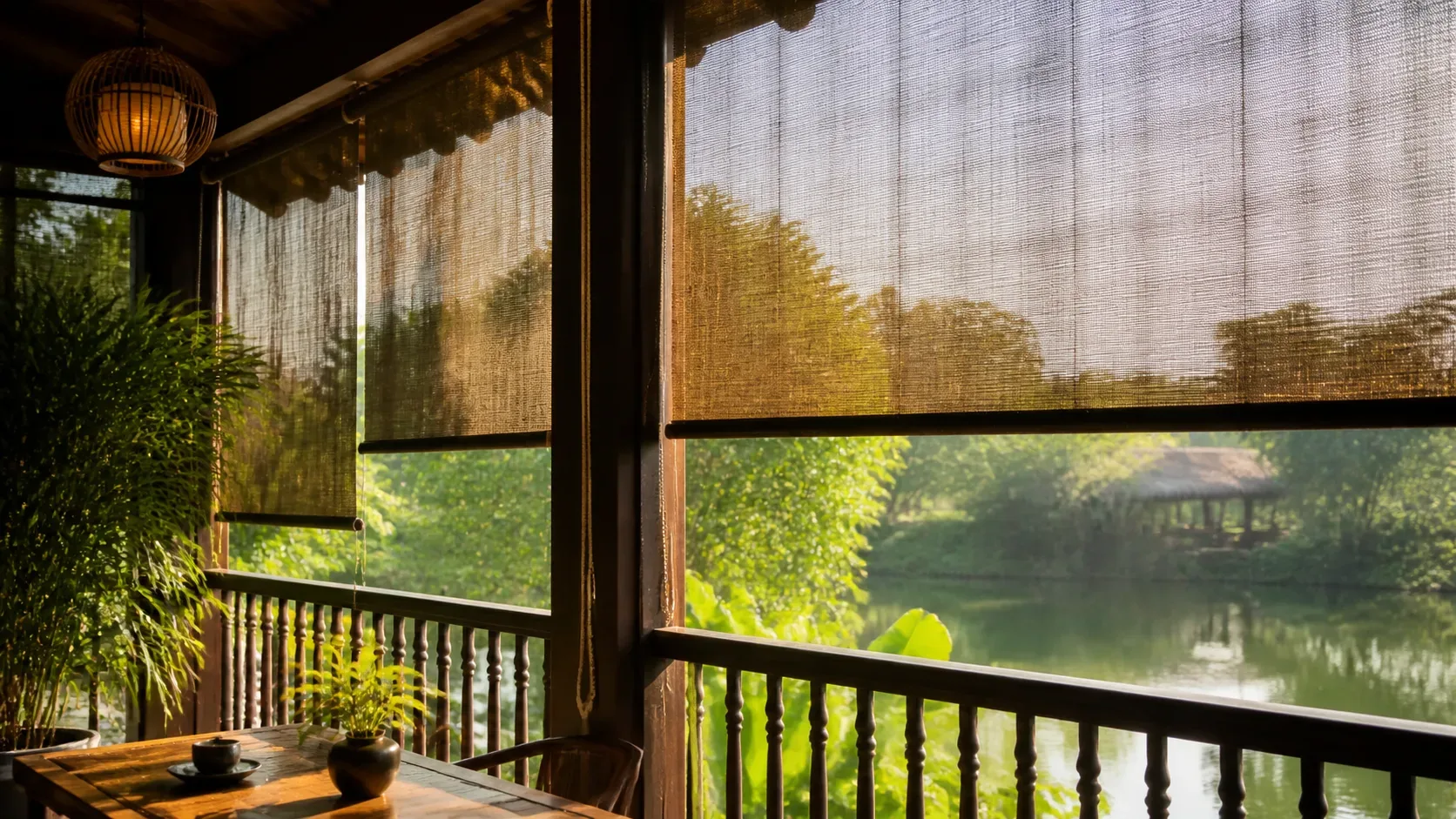
Bamboo wood roller blinds are easy to fall in love with through photos. The warm bamboo grain, natural material, and light filtering through to create a beautiful effect. But anyone choosing them with the expectation of complete coverage will be disappointed.
The horizontally joined bamboo body always has gaps between the slats, and light passes through those gaps. During the day, this is an advantage, as the room remains softly lit. At night, when the interior lights are brighter than the outside, the direction of visibility reverses and the openings become a problem. That is precisely why they do not stand alone at M-One.
The second point is cleaning. Bamboo surfaces have more grooves that hold dust than smooth fabric surfaces, and wiping each slat takes more time than people imagine when making their choice. For apartments on lower floors or near dusty roads, this is an amount of effort that should be calculated in advance rather than overlooked.
This is not meant as criticism. In the right position—a living room window where sun blocking is needed while saving horizontal space—it is difficult to replace. Just do not assign it a task it cannot perform.
School seminar room: why black wins here and usually loses at home
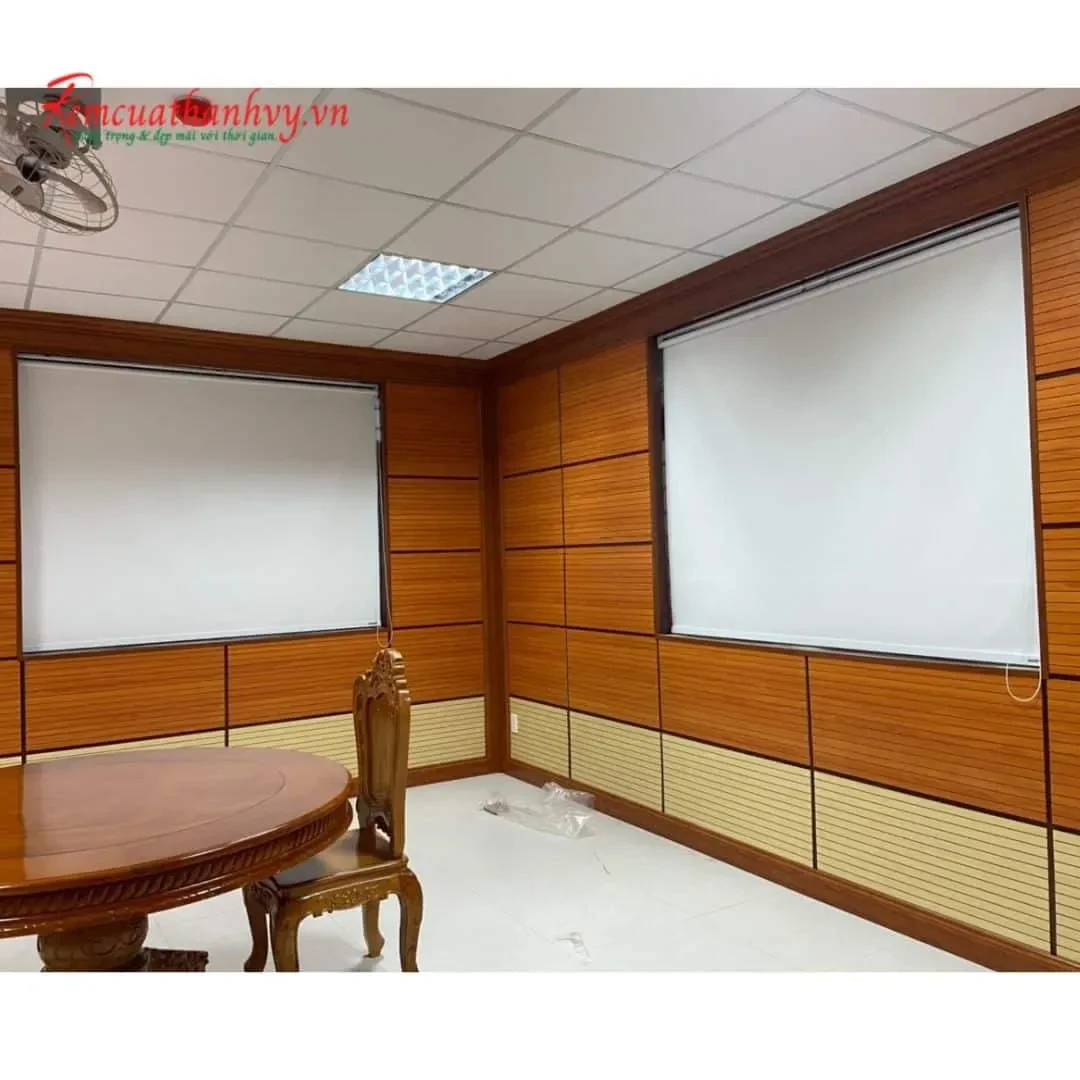
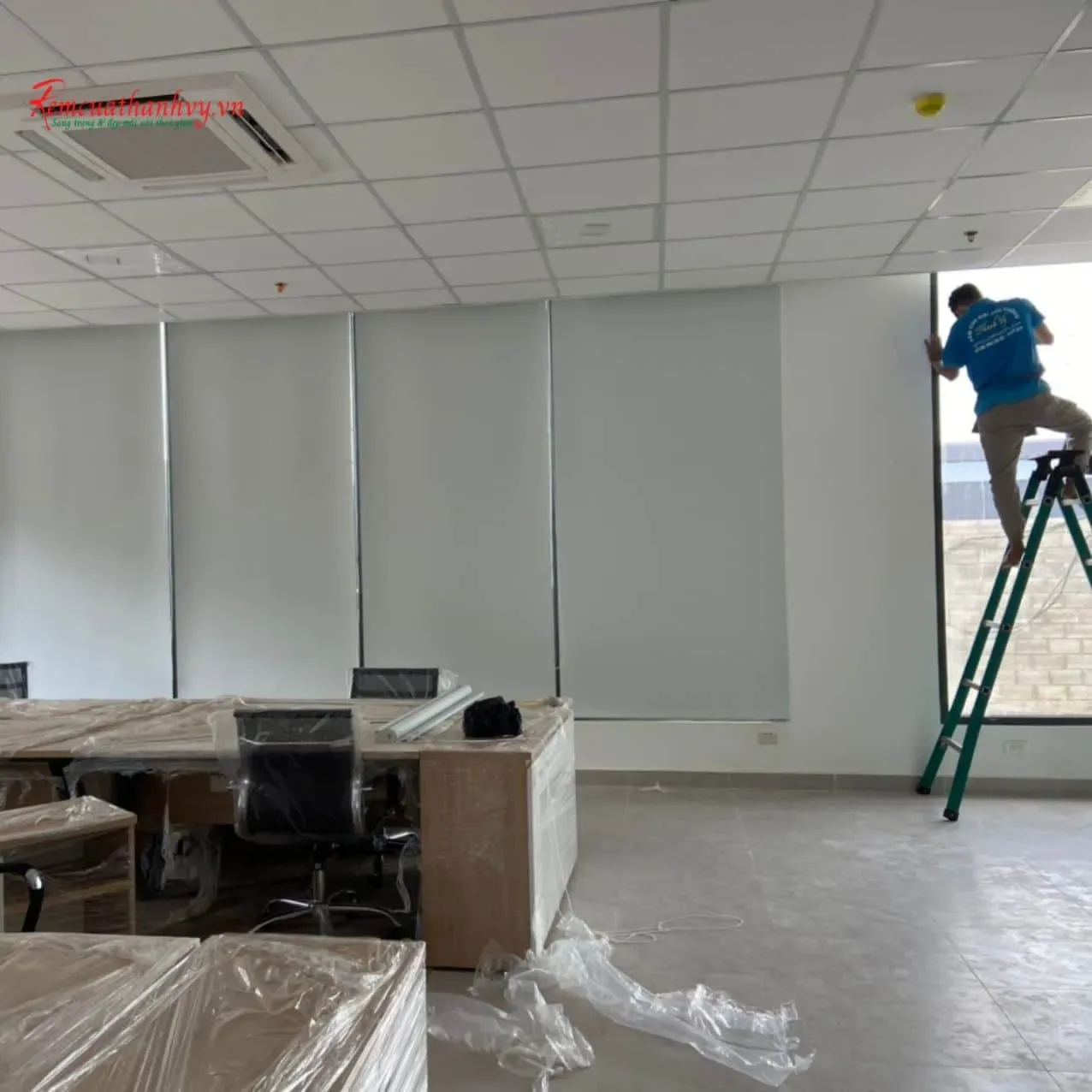
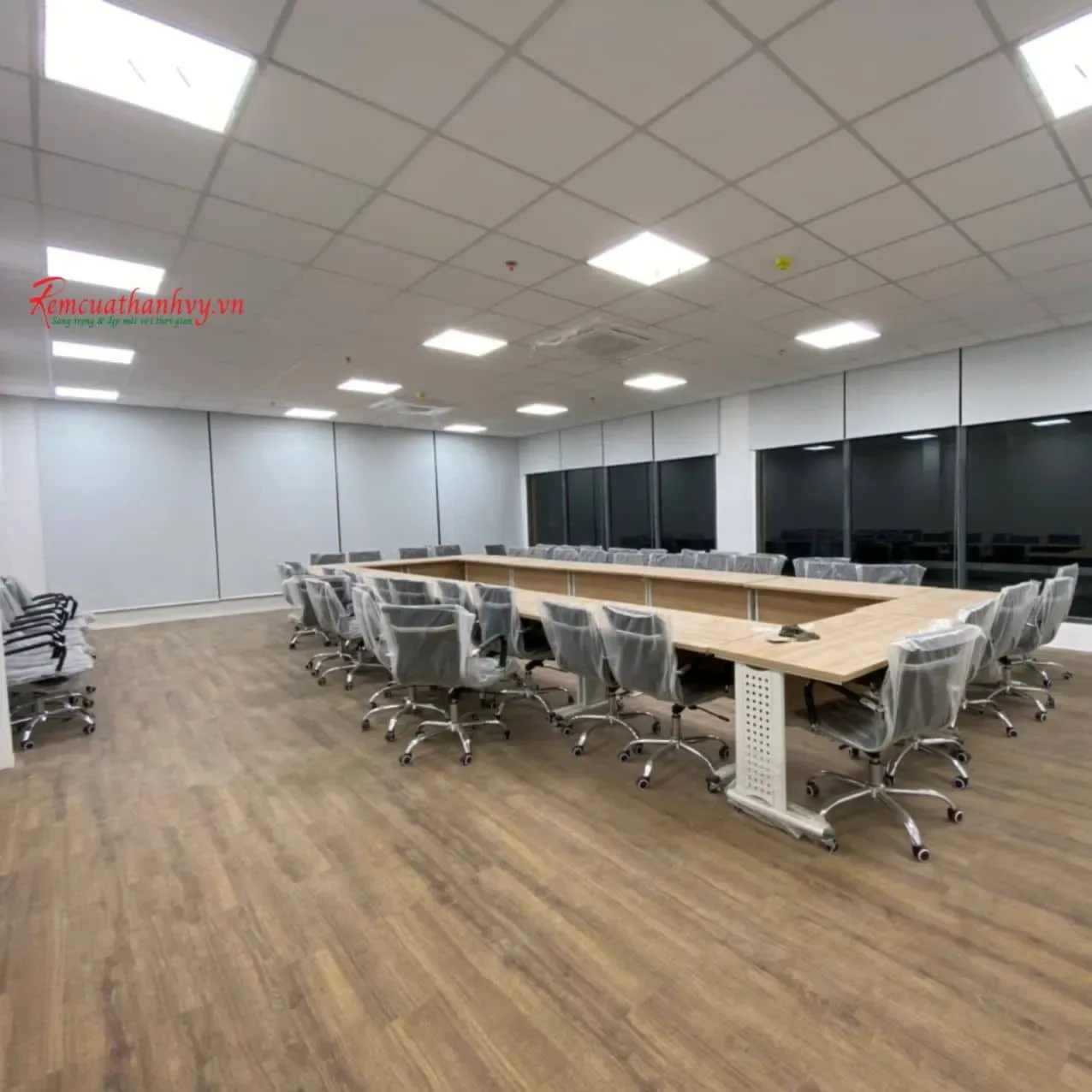
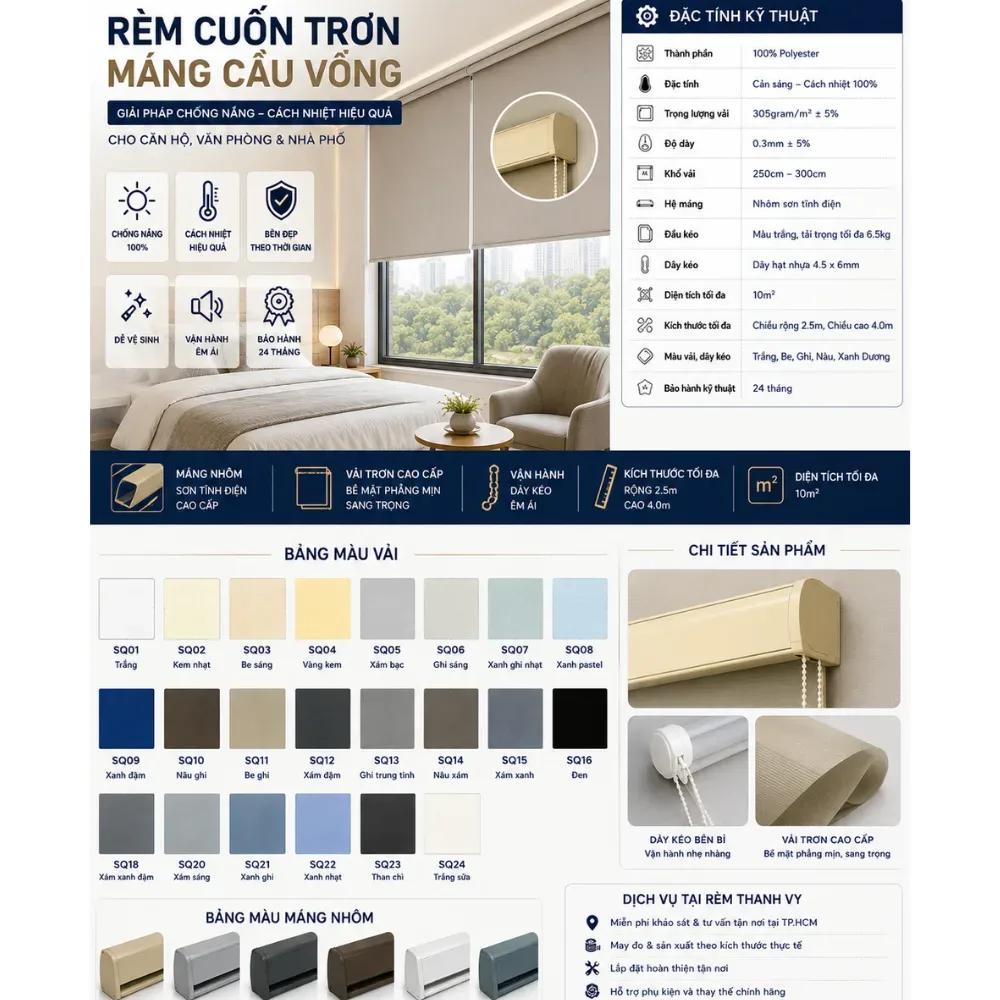
The project blackout fabric curtains for the seminar room at Taipei University in District 7 uses a charcoal-black tone, combining single-layer fabric curtains with a vertical blind system. The space is a multipurpose room that receives natural light from above, with an educational-style interior.
Black is the right functional choice here. A seminar room needs to be dark during presentations, and every light-colored option involves a trade-off in that regard. In addition, no one lives in a seminar room all day, so the heaviness of a large dark area is not as uncomfortable as it is in a residential space.
That is exactly why this configuration should not be brought home wholesale. A bedroom covered with black curtains achieves the goal of darkness, but in return creates a stuffy feeling and a window surface that absorbs all the room’s daylight. If the need is to sleep during the day, the more reasonable approach is usually to choose blackout fabric in a neutral tone and carefully address the gaps around the window frame, because most of the light that gets in passes through the edges rather than through the fabric.
Vertical blinds: an option that is easy to dislike when used in the wrong place
The vertical blind system in the school project does its job well: the slat angle can be adjusted to let in or block light, it allows ventilation while still providing coverage, and it suits wide or tall windows. You can also compare it with the introduction to auditorium curtains in Báo Cần Thơ.
But this is also the type of curtain criticized most when brought into homes. The reason is not quality but feel: vertical slats immediately evoke an office atmosphere, and when there is wind, they strike one another and create a noise that is very unpleasant in a bedroom. In a crowded auditorium, that sound gets lost; in a bedroom at two in the morning, it does not. Information about the company also appears in the Báo An Giang article about Thanh Vy premium fabric curtains.
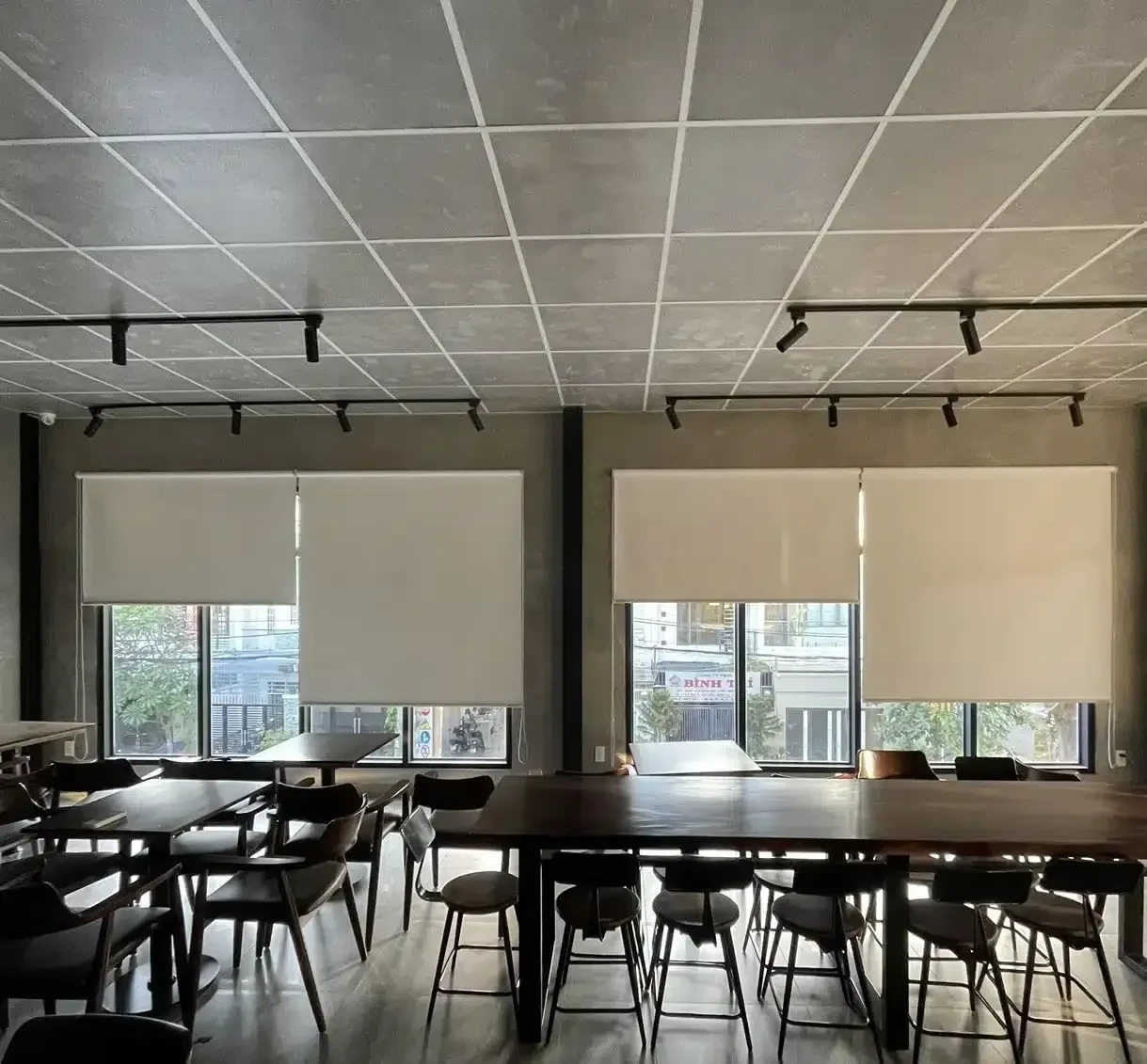
The practical conclusion: vertical blinds are a strong solution for workspaces, classrooms, and meeting rooms, and an option that should be carefully considered for residential rooms. The same product can receive an entirely different evaluation when the context changes.
Send your dimensions and needs, and the Thanh Vy Curtains team will advise on options and quote for your actual space.
Hi! Relax Spa: a recessed ceiling track is a decision that must be made early
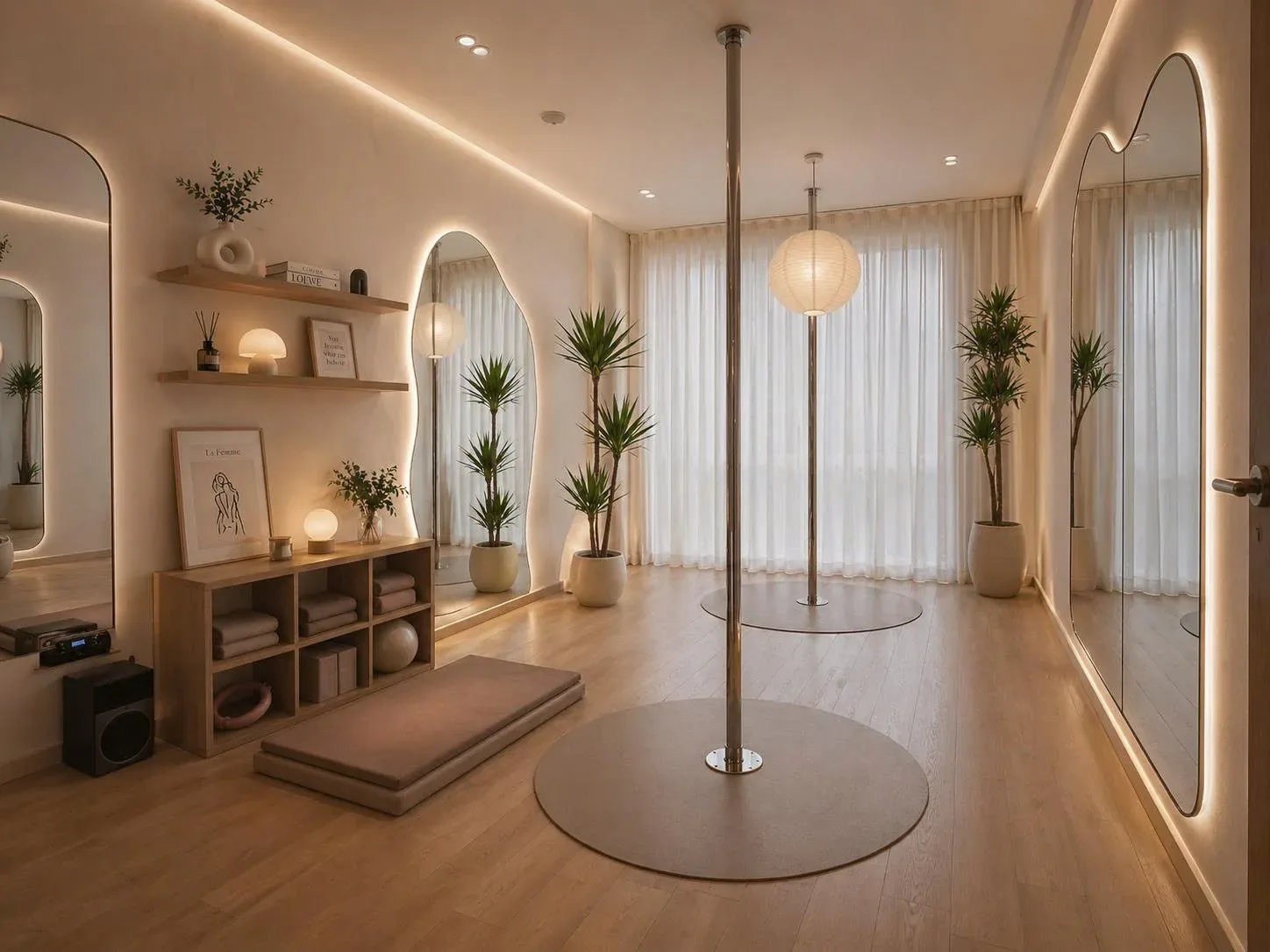
The project thermal-insulating fabric curtains for Hi! Relax Spa in District 7 has a technical detail more noteworthy than its aesthetics: the curtains run on a continuous recessed ceiling track. The space is a high-ceiling treatment area with pastel mint-green walls, laminate flooring, rooms divided by curtains, and a glass door system at the front for receiving guests.
A recessed ceiling track produces the cleanest visual result: no hanging rod is visible, the curtain line runs continuously from the ceiling down, and with a high ceiling, the effect is especially clear. But it is a decision that must be made before the ceiling is finished. If you wait until the ceiling is complete to think about the curtains, you either have to break into it again or accept an exposed track. This is a very common scheduling mistake in commercial spaces because curtains are often placed in the category of final tasks.
The rest of the project follows the same role-based logic as the two previous projects: one system handles room division and privacy for the treatment area, while another handles sun shading and insulation for the exterior glass facade. The cream-white color accented with gold was chosen to match the existing architecture rather than follow any trend.
Insulation is frequently requested but easily misunderstood
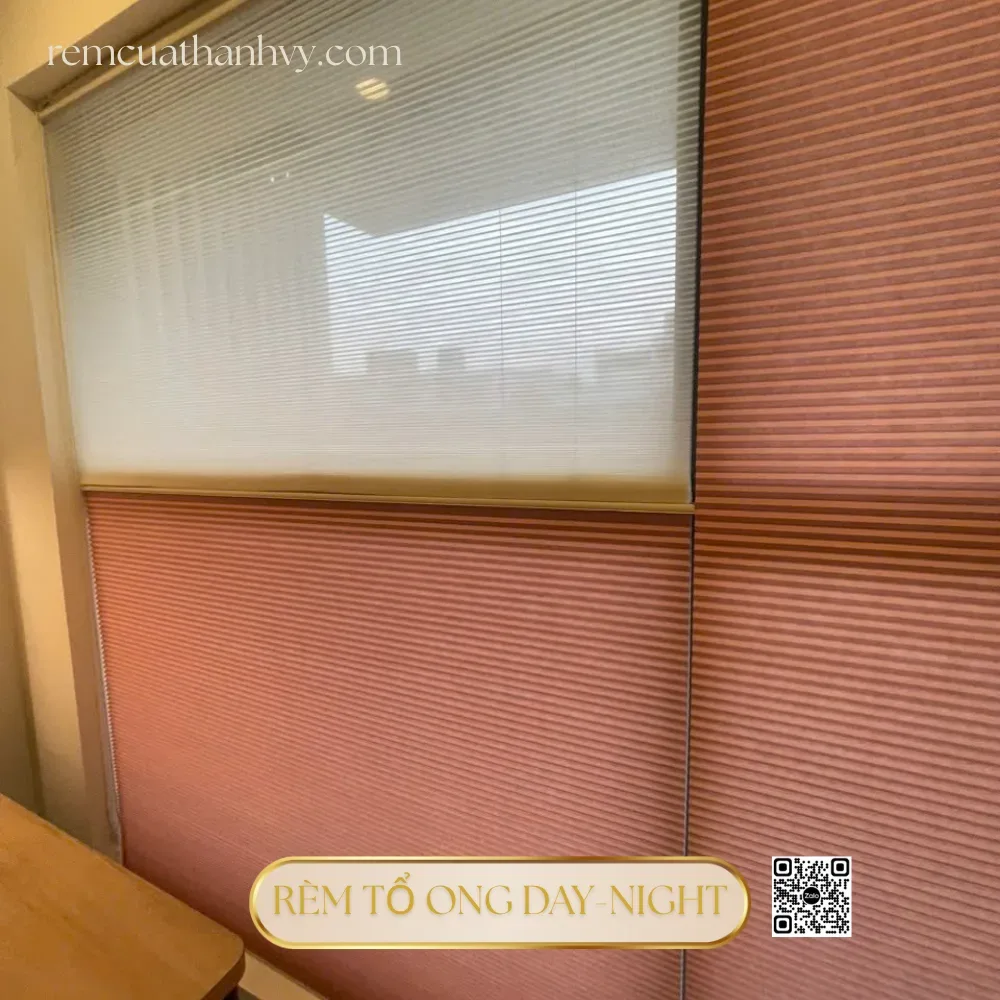
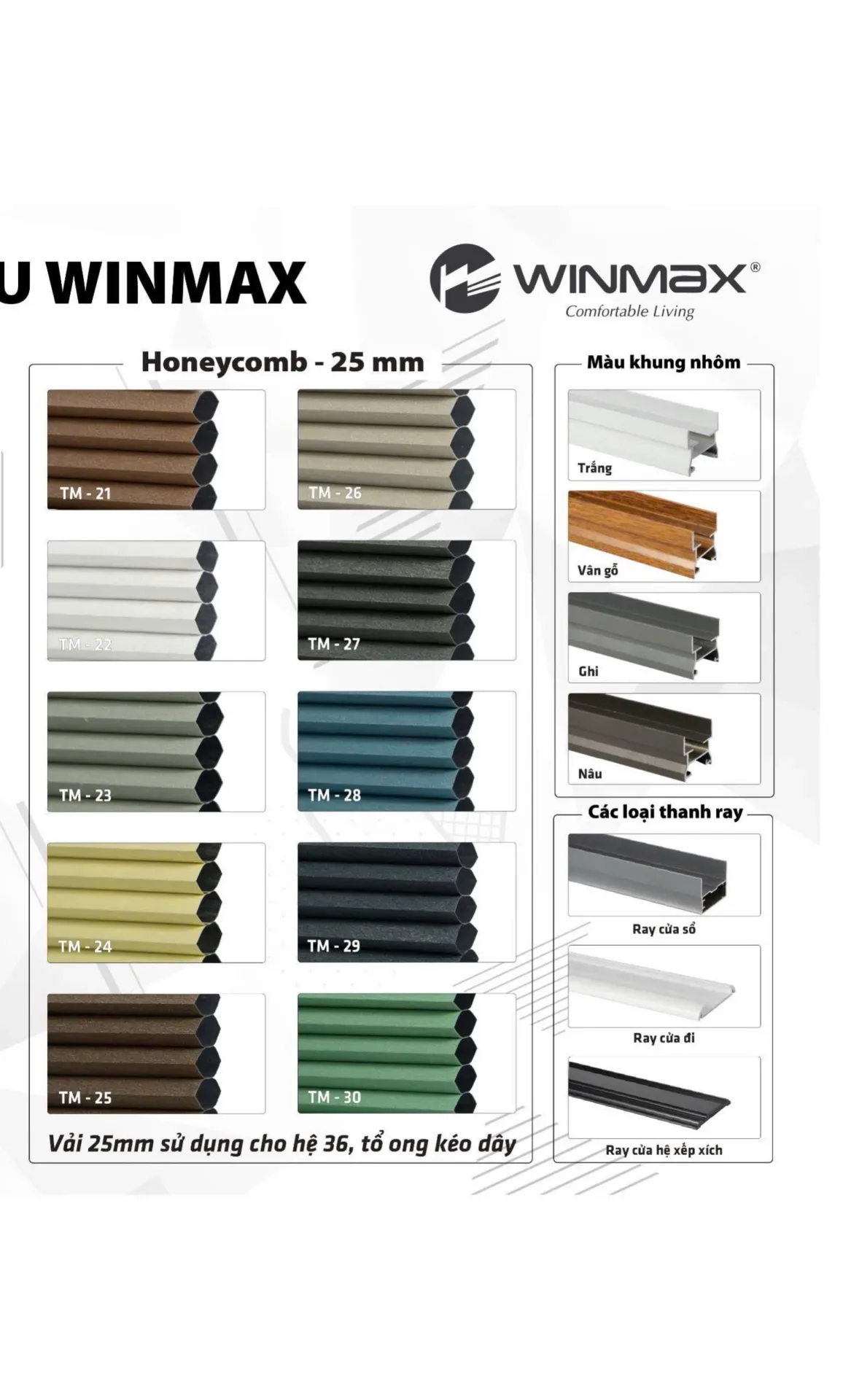
The term insulation appears in the spa project, and this is where careful wording is needed. Thermal-insulating curtains work by blocking solar radiation before it penetrates deep into the room and creating an additional layer of air between the fabric and the glass. They have an effect, and with a large glass facade, that effect can be felt.
But they do not turn a large glass facade into a wall, and this article will not provide any figure for the amount of heat reduction, because the data from the three projects did not measure that. Anyone who promises you a specific percentage based only on the type of fabric should be asked how they measured it.
What can be learned from this project is more specific: effectiveness depends on whether the curtains can fully cover the edges of the glass and whether they are hung close enough to the glass, not merely on the name of the fabric type written on the quotation.
What can and cannot be inferred from the three projects
What can be inferred: when a window has two opposing needs, assigning different roles to two layers is an approach that worked well in all three of these projects. What can be inferred: in narrow spaces, a vertically stacking layer saves more space than a layer that gathers to both sides. What can be inferred: the same product can be a good or poor choice depending on the context, as in the case of vertical blinds.
What cannot be inferred: anything about townhouses, row houses, or villas in District 7, because only one of the three projects is residential, and it is an apartment. What cannot be inferred: any conclusion based on sun direction, because the data does not record the orientation of any project. What cannot be inferred: lifespan or durability over the years, because there are no records after a period of use.
It should also be noted: all three projects were successfully completed from a construction standpoint. A set consisting entirely of successful results can describe the correct way to work, but it does not show what happens when things are done incorrectly. Read this as three examples, not a survey.
If you are in District 7 and do not know where to start
Start by separating your needs into two parts: how you want that window to look and function during the day, and how you want it to be in the evening. If the two answers conflict, you will most likely need two layers, just like all three projects above.
Next, measure the clearance on both sides of the window before choosing. That figure determines whether the second layer should stack horizontally or retract vertically, and it is what distinguishes a curtain set that is comfortable to use from one that always feels in the way.
Finally, if the space is still being completed, finalize the track plan before closing the ceiling. That alone saves more trouble than any choice of color. By area, you can view the measuring and installation schedule for curtains in Tân Thuận Ward, curtains in Tân Hưng Ward, or curtains in Phú Thuận Ward.
Quick answer: All three projects Thanh Vy completed in District 7, including an apartment, a seminar room, and a spa, used two curtain layers with separate roles instead of a single layer. The clearest lesson is to choose the second layer based on the clearance on both sides of the window and finalize the track before closing the ceiling; these three projects are not enough to draw any conclusions about townhouses in the district.
For further information, please contact Thanh Vy Curtains
We provide free consultation and on-site measuring at your home.
Related projects
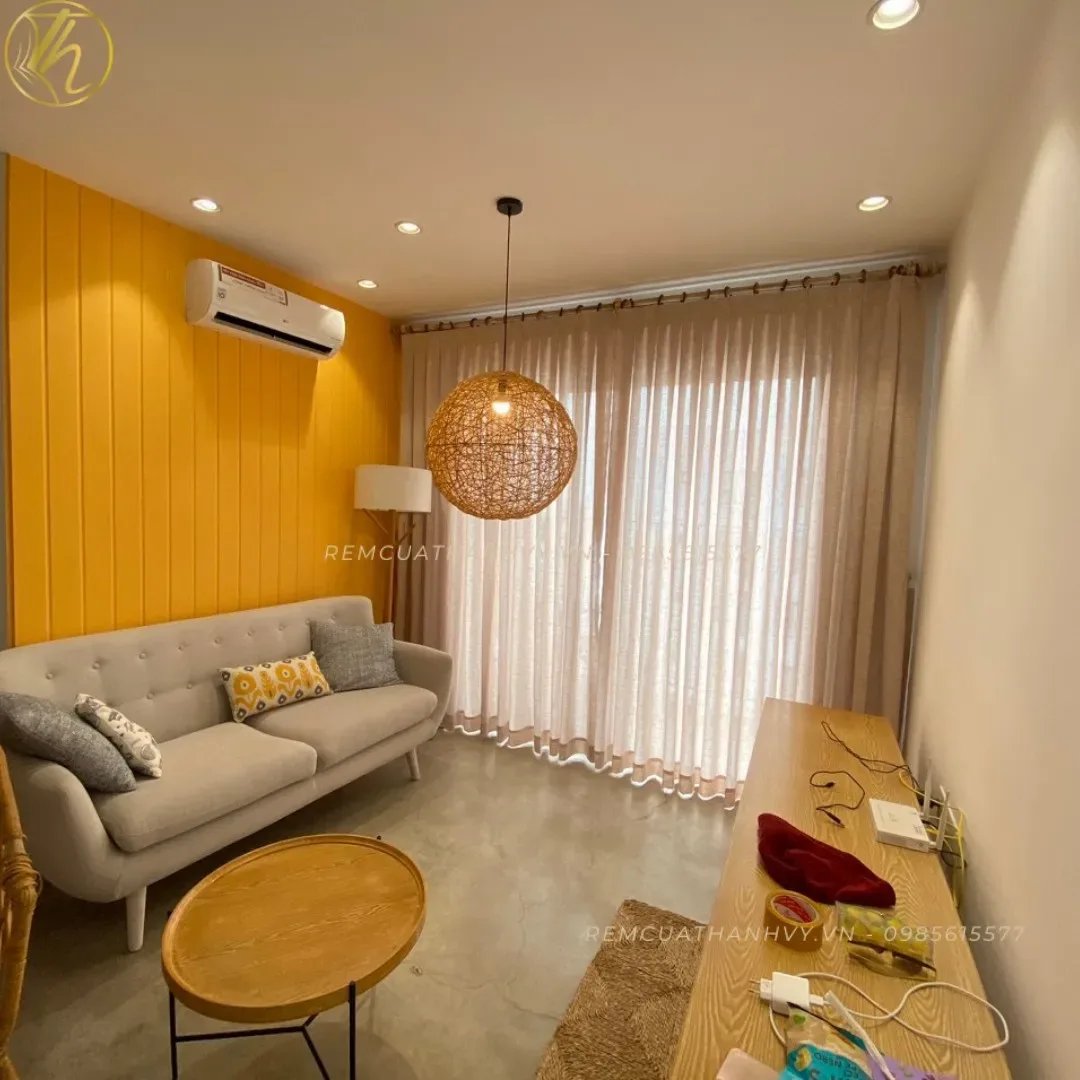
Linen Sheer Curtains Combined with Bamboo Roller Blinds at M-One Nam Sai Gon, District 7
This project at an apartment in M-One on Be Van Cam Street, District 7, is [...]
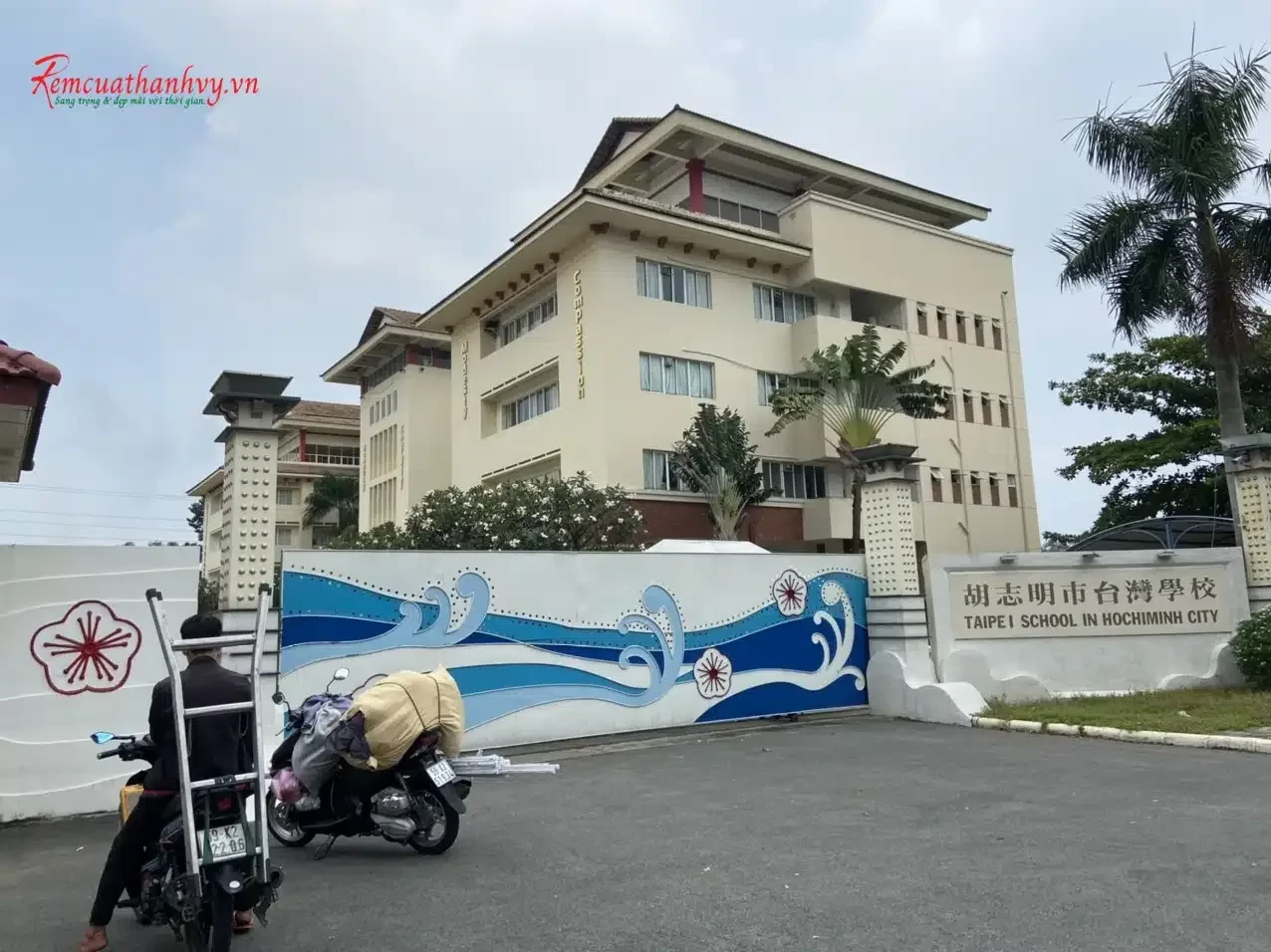
Blackout Fabric Curtains for the Conference Room – Taipei University, District 7
This project was carried out in the multipurpose/conference room of Taipei University, District 7 — [...]
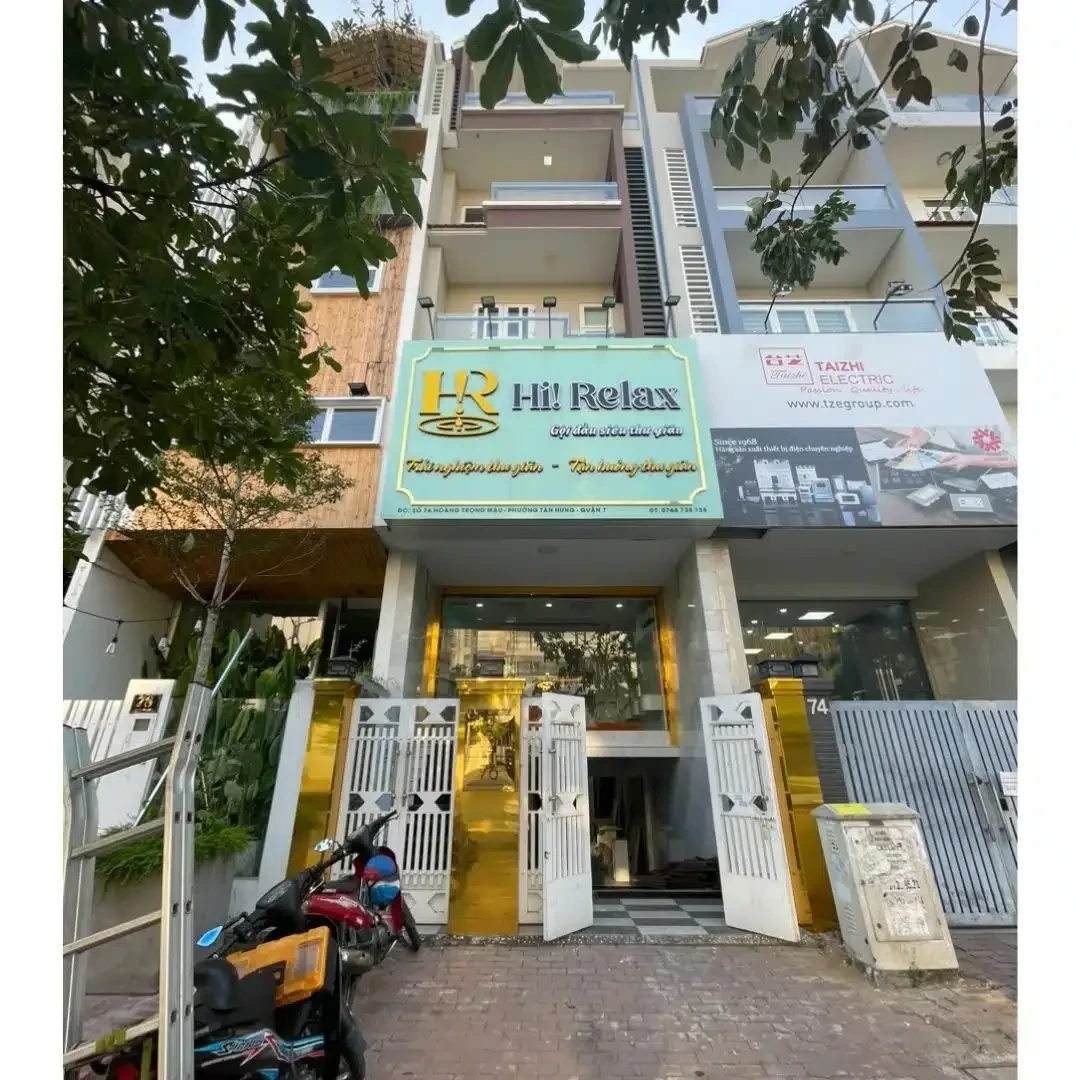
Thermal Insulation Curtains for Hi! Relax Q7 Spa – A Private, Modern Treatment Space
The curtain installation project for Hi! Relax Spa at 74 Hoàng Trọng Mậu, Tân Hưng, [...]
Related areas
Curtains in District 7: Priorities when choosing for each space
Thanh Vy Curtains provides optimal curtain solutions for living spaces in District 7, using durable [...]
Curtains in Tan Thuan Ward, District 7: On-site measurement and installation at your new address
Curtain measurement and installation in Tan Thuan Ward, District 7. This is a new ward [...]
Curtains in Tan My Ward, District 7: on-site measuring and installation at the new address
On-site curtain measuring and installation in Tan My Ward, District 7. The new ward was [...]
Curtains in Tan Hung Ward, District 7: On-site measurement and installation at new addresses
Curtain measurement and installation in Tan Hung Ward, District 7. The ward was newly merged [...]
Curtains in Phú Thuận Ward, District 7: On-site measuring and installation at your address
Curtain measuring and installation in Phú Thuận Ward, District 7. The new ward was merged [...]

Curtains in District 4: What to prioritize when choosing for each space
Thanh Vy Curtains provides professional curtain solutions in District 4 with experience accumulated from many [...]
Curtains in District 8: Priorities when choosing for each space
Rèm Cửa Thanh Vy provides professional curtain solutions in District 8 with a wide range [...]

Curtains in Binh Chanh: What to prioritize when choosing for each space
To choose the perfect curtains in Binh Chanh, you should prioritize color-fast, sun-blocking fabrics combined [...]


No comments yet!